
Formula 1 loves to talk about heritage right up until the invoice arrives. Zandvoort, the sand-dune throwback that gave Max Verstappen his own personal amphitheatre for six years, is bowing out this weekend not because anyone stopped loving it, but because nobody in the Netherlands fancied covering the bill any longer.
That’s the uncomfortable truth buried underneath all the misty-eyed tributes doing the rounds in the paddock. Drivers adore this place. Fans packed it out. And it’s still getting binned.
A track everyone loves, a business nobody can justify
Unlike Silverstone, Spa or pretty much any other heritage circuit propped up by state money or deep-pocketed promoters, Zandvoort’s organisers never had a government safety net. No subsidy, no bailout, just raw commercial risk carried entirely on their own books. With Dutch enthusiasm for F1 arguably peaking a few seasons back and Verstappen’s championship dominance fading against McLaren’s recent charge, the organisers took one look at the numbers and decided six years was a good run to end on rather than gamble on a seventh.
It’s a rare moment of financial sanity in a sport that usually prefers vanity projects and Gulf-state cheque books to actual business logic. Zandvoort chose to walk away with its dignity intact rather than limp on and get quietly axed later. Credit where it’s due.
Drivers actually mean it when they say they’ll miss this place
Paddock nostalgia is usually manufactured on demand, but the tributes for Zandvoort carry more weight than the usual farewell-tour platitudes. Oscar Piastri, last year’s winner here, told Motorsport.com that as a pure driving challenge, Zandvoort ranks among the best on the calendar, even if he’s less convinced about its merits as a race track.
“If you’re to replace it with Imola or with Spa in the future, then I’m pretty happy with that. But if it’s for potentially another street circuit that’s maybe not the best, then there’s a sweet spot to find. But it’ll be missed because it’s a cool place.” – Oscar Piastri
Lando Norris was equally blunt about what’s being lost, pointing to the atmosphere rather than the racing itself. Nico Hulkenberg, who actually won here back in 2006 in the long-forgotten A1GP series, compared the Zandvoort weekend to a club night rather than a grand prix, which tells you everything about why this place built such a cult following in the first place.
Even Lance Stroll, not a man overburdened with sentimentality about circuits, pointed out that Zandvoort’s gravel traps and lack of run-off actually mean something. Put a wheel wrong here and you pay for it, unlike the sanitised asphalt run-offs that let modern F1 drivers treat mistakes as a minor inconvenience rather than a genuine consequence.
The irony nobody wants to say out loud
Here’s the bit that doesn’t fit neatly into the goodbye montage: the very thing that made Zandvoort special, its narrow, undulating, old-school layout, is also why it can’t really host modern F1 cars properly. Overtaking is scarce, the circuit is genuinely too cramped for cars this wide and this fast, and the show suffers for it most years. Drivers love driving it. They’re considerably less enthusiastic about racing on it wheel to wheel.
That contradiction has always been the quiet subtext of the Zandvoort revival. It only happened at all because one Dutchman turned into an unprecedented commercial phenomenon, and F1 was happy to ride that wave for as long as the stands stayed full. Now that Verstappen is fighting Red Bull’s mediocre 2026 machinery rather than the world championship, and with McLaren hoovering up wins instead, the commercial calculation looks rather different. Fewer eyeballs, same running costs, no subsidy. The maths was never going to end any other way.
Verstappen’s send-off deserves better than his car is giving him
For Max Verstappen personally, this weekend was supposed to be a proper celebration. Fresh off signing a new Red Bull deal running through to the end of 2030, he arrived at his home race as a four-time champion bidding farewell to the track that turned him into a national obsession. He won the first three editions here and finished runner-up in the two that followed.
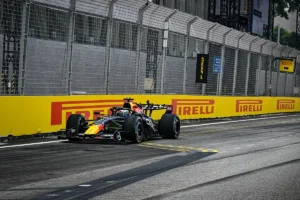
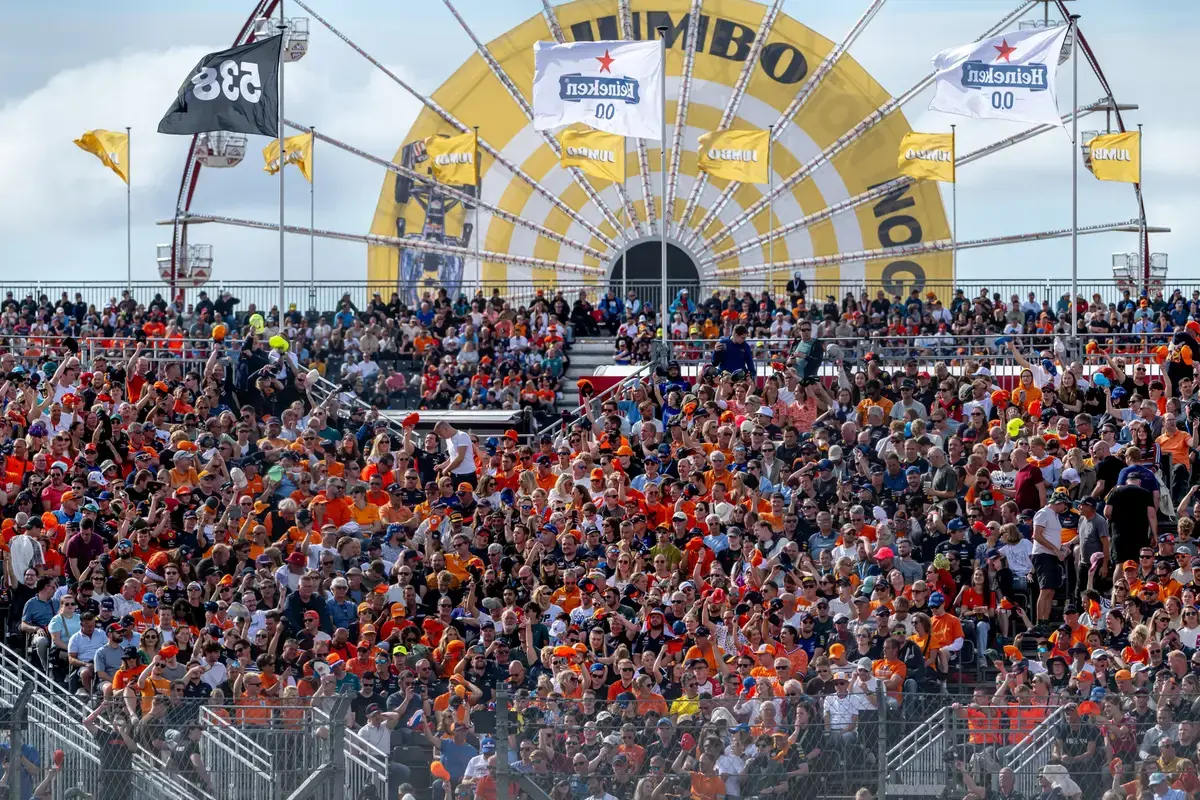
Instead, he’s spent the weekend wrestling a Red Bull that lacks grip and balance, scraping to sixth in sprint qualifying while wondering aloud whether the car can be fixed before the main event. It’s a slightly deflating way to say goodbye to a circuit that made him, but then again, Verstappen has never needed the car to be perfect to make Zandvoort feel like a home game. A hundred thousand fans in orange were never going to stop turning up just because Red Bull’s floor isn’t working.
The cynical conclusion
Zandvoort’s exit is a reminder that F1 nostalgia is worthless without a functioning business model behind it. Drivers will write heartfelt tributes, fans will wave their flags one last time, and F1 will happily wheel out another glossy street circuit with none of the character and all of the sponsorship money next season. Everyone agrees Zandvoort is special. Nobody, crucially, was willing to underwrite that specialness with actual cash. That’s not a tragedy, it’s just how modern Formula 1 works.