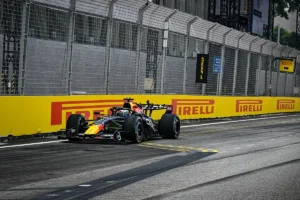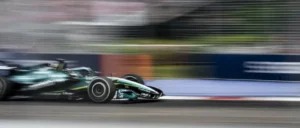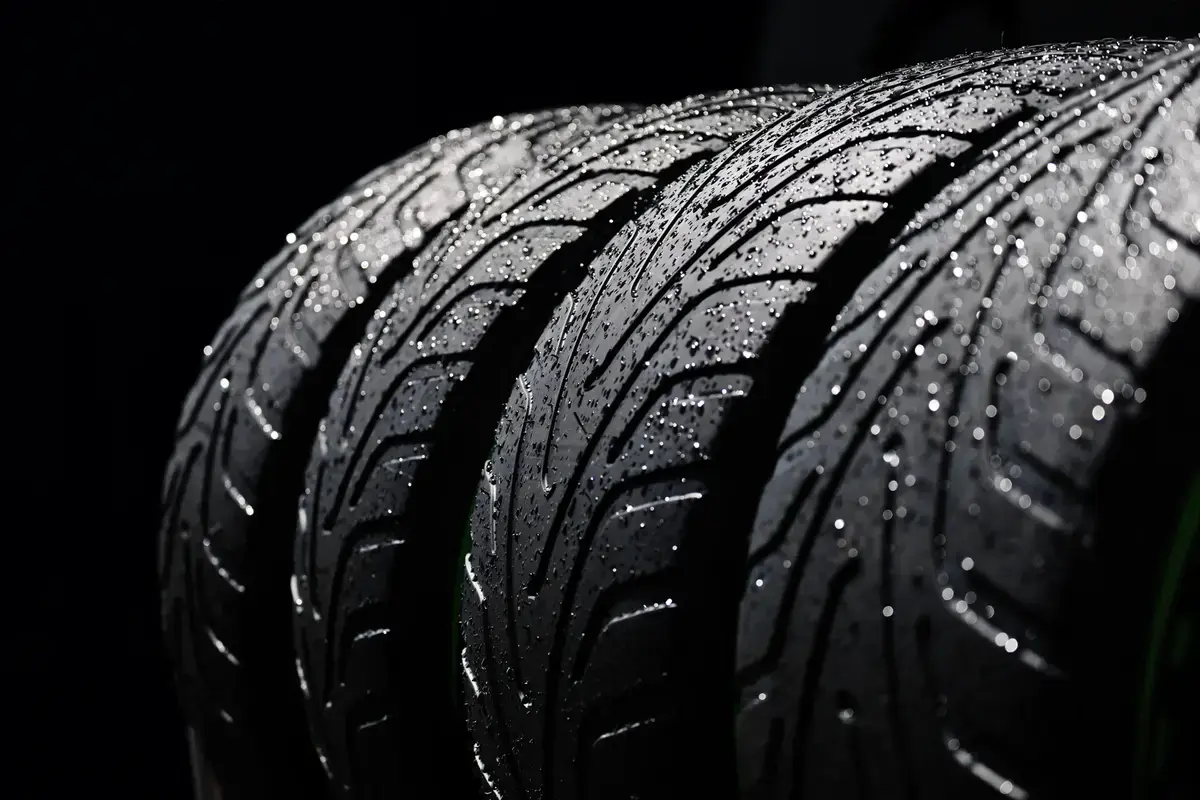

Pirelli has picked its tyres for a circuit nobody has ever raced on, using data nobody could actually collect from cars driving on it. That is not a criticism so much as an admission of how tyre planning works when Formula 1 rolls into a venue for the first time, and this weekend at the Madring is exactly that: a brand-new circuit hosting Round 14, the Spanish Grand Prix, with three years of simulation behind it and precisely zero laps of real data.
The compounds themselves are unremarkable on paper. Pirelli has nominated the C2 as the hard, C3 as the medium and C4 as the soft, which sits in the middle of its range rather than reaching for the most extreme options in the fridge. Drivers get two sets of the white-marked hard, three sets of the yellow medium and eight sets of the red soft, plus the usual standby allocation of green intermediates and blue wets that will almost certainly sit untouched given the forecast, a point covered in detail already on this site. Anyone reaching Q3 gets an extra set of softs, and the rule requiring two different slick compounds in the race remains in force provided the track stays dry, which in Madrid in September feels like a safe bet rather than a caveat.
A Track Pirelli Has Never Actually Tested
Here is the part that should make everyone slightly nervous: Pirelli’s entire compound selection is built on simulation, not experience. The manufacturer says its work on the Madring began three years ago when designers handed over the layout, at which point engineers modelled the trajectories cars would take and calculated the loads the tyres would face. Only once the circuit was actually built did Pirelli engineers turn up in person to measure the asphalt’s roughness and refine those simulations into a technical briefing for the teams.
That is a perfectly sensible process, and also exactly the kind of process that occasionally gets embarrassed by reality. Simulations are only as good as the assumptions feeding them, and there is no substitute for twenty cars actually hammering around a surface at racing speeds. Pirelli would never say this out loud, but “tyre management likely to be a big talking point” in the official preview is corporate shorthand for “we genuinely aren’t certain how this is going to behave once the rubber goes down.”
Why the Surface Is the Real Story
The layout itself sounds properly demanding. Pirelli describes the start-finish straight and Turn 1 as separated by just 200 metres, a fast opening sector giving way to a run of medium and low-speed corners including the banked Turn 12, before a closing sequence of 90-degree corners that Pirelli compares to Baku. From an energy perspective, Pirelli ranks Madrid among the five most demanding circuits on the calendar, with lateral forces in the same territory as Barcelona and Silverstone, which is not a comparison Pirelli throws around lightly.
The standout feature is the corner Pirelli calls the “Monumental”, which the manufacturer says generates the highest vertical load of the season, a combination of its banking and its length. Expect drivers to take wildly different lines through it depending on how much exit speed they are willing to sacrifice for the following corner, and expect at least one team to get that trade-off spectacularly wrong on a Sunday when track position matters more than usual.
Then there is the small matter of grip, or the lack of it. Pirelli says the asphalt is “very smooth” and therefore offers relatively low grip in its natural state, which is why the surface has been treated with high-pressure water jets, the same trick used at Singapore, to strip away dust and oily residue left over from a freshly laid track. Whether that treatment actually delivers a representative surface for Sunday’s race is the sort of thing nobody will know until qualifying, and possibly not even then.
Nobody Really Knows What This Weekend Looks Like
None of this stops Pirelli, the teams or F1 itself from projecting total confidence, because that is the job. But strip away the technical briefing documents and what you actually have is a tyre company making its best educated guess about a track it has simulated extensively and driven on never. Add a smooth, low-grip surface that has needed artificial treatment just to behave like a normal circuit, and Madrid’s inaugural weekend looks less like a known quantity and more like a live experiment with twenty-two drivers as the test subjects.
The championship picture adds its own layer of intrigue to how teams approach the tyre puzzle. Kimi Antonelli arrives having won at Monza and leads the standings for Mercedes by a distance that makes tyre strategy almost academic for him, unless something unexpected shakes up the order. A circuit nobody understands is precisely the kind of variable that could do exactly that, for better or worse.
Qualifying takes place on Saturday 12 September at 14:00 UTC, with the race following on Sunday 13 September at 13:00 UTC, check the calendar for your local time. By Sunday evening we will know whether Pirelli’s three years of homework paid off, or whether the Madring just taught everyone a very public lesson in the limits of simulation.