
Arvid Lindblad’s Dutch Grand Prix was ruined before Turn 1 was even a memory, and now the stewards are copping criticism from inside F1’s own broadcast booth. When even the people paid to defend the sport’s decisions start calling a penalty harsh, you know something’s off.
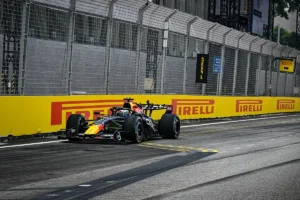
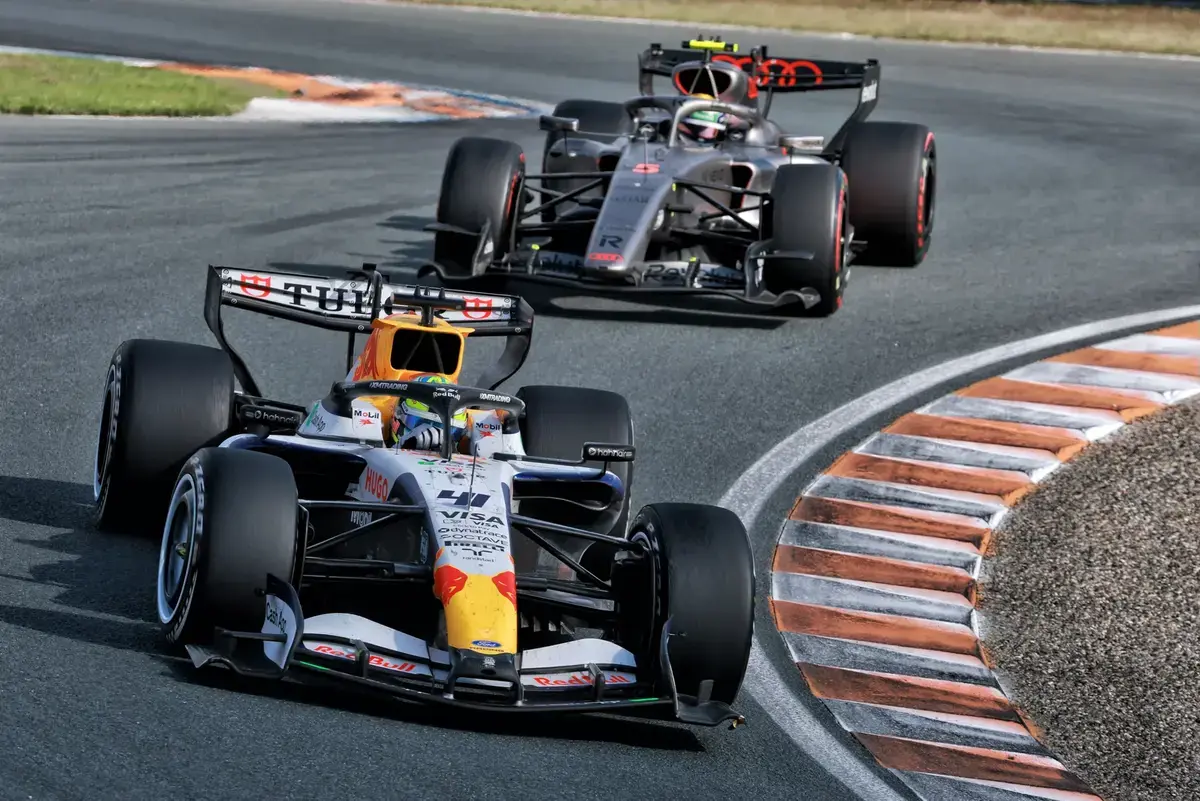
The chaos at Zandvoort began when home favourite Max Verstappen speared off at Turn 14 on the opening lap, scattering debris and panic across the circuit. Lindblad, running just behind the stricken Red Bull, did what any sensible rookie would do: he took evasive action, avoided becoming part of the wreckage, and tried to hold his line through the mess. For his trouble, he got a drive-through penalty.
What actually happened
As Lindblad dodged Verstappen’s carnage, he passed Pierre Gasly’s Alpine heading into Turn 1. Simple enough in isolation, except the stewards ruled it a yellow flag infringement and handed the 19-year-old a drive-through, a penalty severe enough to end any hope of a points finish. The problem, as Lindblad himself pointed out, is that he never actually saw the yellow flags in question. He was too busy trying not to hit a stray Red Bull tyre.
“Max lost it, then he came across the track, and there was debris everywhere. I couldn’t really see anything. I tried to avoid making contact. I think I almost hit one of his tyres. Then I was just holding my line and trying to just go straight to not have any incident or anything.” – Arvid Lindblad
He continued, with the resigned tone of a man who knows arguing with stewards rarely changes anything.
“Then I passed Pierre into Turn 1. But I didn’t see any flags or anything. So it was a bit of a shame. I also think the penalty is a bit harsh. I think we can all be honest. It took me out of the race, basically. It was quite extreme for such an incident, but fine. It is what it is.” – Arvid Lindblad
Brundle sides with the rookie
Speaking on F1 TV’s post-race broadcast, analyst Alex Brundle didn’t hold back either, arguing that punishing a driver for a secondary overtake made while genuinely trying to avoid an accident sets an unreasonable standard. As reported by Motorsport.com, Brundle laid out exactly why the ruling didn’t sit right with him.
“I think it is harsh. The accepted way to go about it as a driver is if you’re effectively avoiding the crash, you avoid the crash and you do everything that you can to make sure that you don’t become part of the accident. It’s difficult to then add in extra things that the drivers have to be aware of during an incident to make sure that they don’t then pass a car secondarily to that.” – Alex Brundle
Brundle’s key point is the one that actually matters here: proximity and intent. A driver scrambling to avoid a spinning Red Bull and a mountain of carbon fibre debris has roughly zero bandwidth left to also monitor exactly who he’s overtaking in the process. Demanding split-second, forensic-level flag awareness from a driver mid-evasive-manoeuvre is asking a lot from anyone, let alone a 19-year-old in only his rookie campaign.
“It depends how far you are away from the incident. But if you haven’t actually passed a yellow flag and if you’re actually trying to get around the incident, I think it’s harsh then to penalise you for passing another driver while you’re actually taking evasive action.” – Alex Brundle
A pattern of inconsistency
This isn’t happening in a vacuum. F1’s stewarding this season has already drawn fire on multiple fronts, from Colapinto’s sponsor saga to McLaren dragging a Gasly-related penalty dispute all the way to a Paris courtroom, as covered in our piece on Stella’s fight over F1’s penalty loophole. The common thread is a governing body that seems to apply the letter of the rulebook without much regard for context, and drivers are increasingly vocal about it, publicly, on camera, without the usual diplomatic hedging.
For Lindblad, currently sitting eleventh in the championship with 23 points for Racing Bulls, this penalty cost him a shot at a decent points haul in a race that was already unfolding chaotically thanks to Verstappen’s home-soil disaster, a moment we also examined in Verstappen’s Zandvoort farewell message. It’s a cruel irony that the driver who crashed and triggered the whole mess walked away with nothing worse than bruised pride, while the rookie trying to avoid him got the sporting equivalent of a parking ticket for jaywalking to dodge a falling piano.
The real question nobody’s answering
Should drivers be held responsible for split-second decisions made while actively trying not to crash? Common sense says no. But common sense and FIA stewarding decisions have had a rocky relationship all season, and Zandvoort’s Turn 1 farce is just the latest exhibit. Until the FIA clarifies exactly how much awareness it expects from a driver mid-evasive-action, expect more of these rulings, and more pundits, drivers and fans left scratching their heads.
Lindblad handled it with more grace than the situation deserved. “It is what it is,” he shrugged. Maybe it’s time the stewards showed a bit more of that same self-awareness.