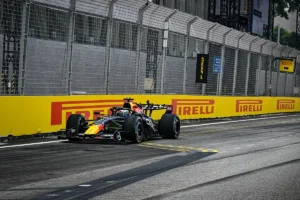

Formula 1’s rulebook has a hole in it big enough to drive a Red Bull through, and this week McLaren dragged the FIA to Paris to make them admit it. The row over Pierre Gasly’s reinstated Monaco podium was never really about Gasly. It’s about a system that lets some drivers dodge a penalty simply because of how they chose to serve it.
What actually happened in Monaco
Rewind to June. Gasly was hit with two five-second penalties for speeding in the Monaco pit lane, same offence that also caught Oscar Piastri, George Russell and Lewis Hamilton. Piastri and Hamilton took their hit during the race. Russell fluffed his and ended up with a drive-through instead, limping home twelfth. Gasly and teammate Franco Colapinto did neither, they simply had ten seconds added to their finishing time after the chequered flag, the standard route when a driver decides an extra pit stop costs more than it saves.
That decision turned out to be the difference between keeping a podium and losing one. Alpine later discovered, and successfully argued via a right of review, that the official timekeepers had measured the pit lane 77cm short. The average speed calculation, distance over time, was therefore wrong from the start. Stewards agreed the discovery was “new, significant and relevant” and scrapped both of Gasly’s penalties. He jumped back to third, and Isack Hadjar, Piastri, Liam Lawson and Arvid Lindblad were all bumped down a place as a result.
Why nobody else got the same treatment
Here’s the part that should annoy anyone who likes fairness in sport. The rulebook has no mechanism for undoing a penalty that a driver has already served. Piastri and Russell physically drove through their sanctions during the race, so even once it was proven the measurement was wrong, there was nothing to give back. Gasly and Colapinto, whose penalties existed only as numbers added after the fact, could simply have those numbers deleted. Same mistake, wildly different consequences, purely down to timing and a technicality nobody thought to legislate for.
Mercedes reportedly got as far as ringing lawyers over Russell’s situation before deciding against a challenge. McLaren and Red Bull went further and took it to the FIA’s International Court of Appeal, filing against decisions one and two of document 99 from that Monaco weekend. Hearings began on Monday morning, closed to press and public, in Paris.
Stella’s ‘double intent’
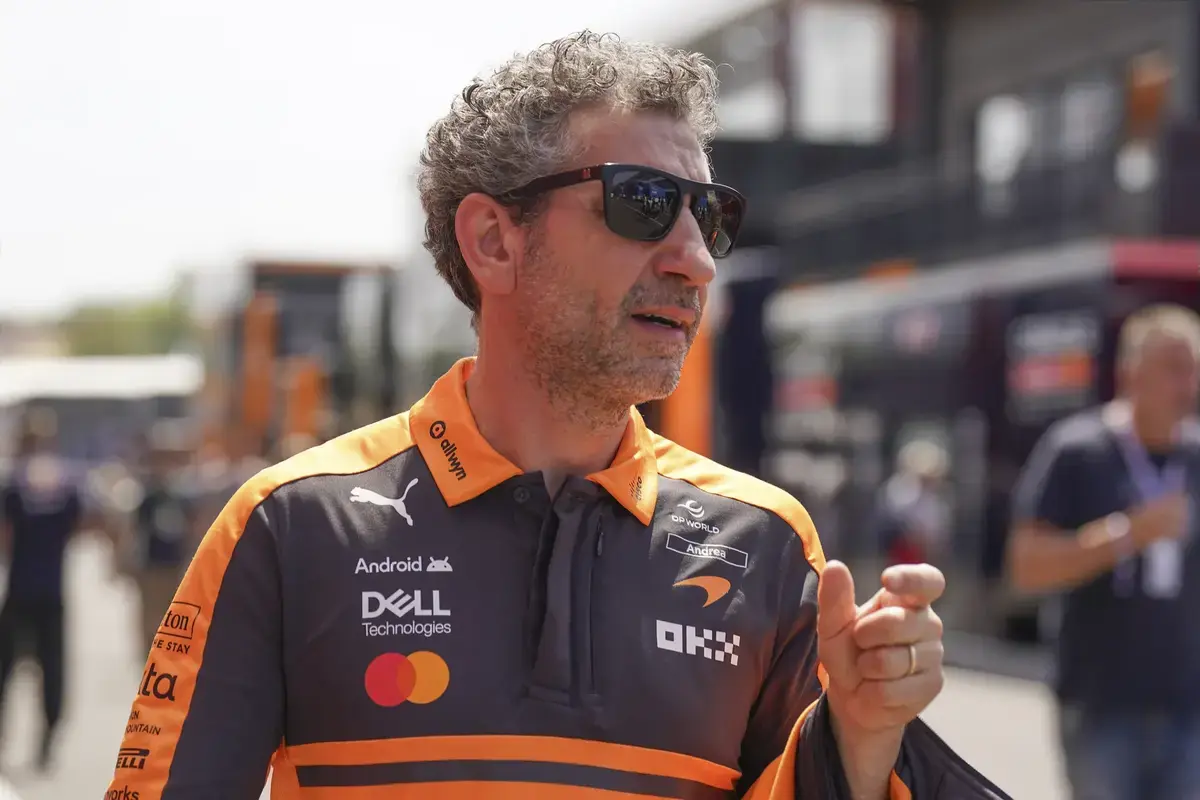
McLaren boss Andrea Stella laid out exactly why the team bothered, speaking to media including RacingNews365. He was refreshingly blunt about the fact this isn’t purely a noble crusade for sporting justice, there’s cold, hard championship arithmetic involved too.
“We go to the hearing at the International Court of Appeal with a double intent. The first intent is more general than the interest of McLaren. We think that the process that happened after the race in Monaco needs to be reviewed, because of fairness for all competitors.” – Andrea Stella
The second reason is far less altruistic, and fair enough, since this is a business built on points and prize money.
“We not only get this level of concern, but we also got materially penalised for having served a penalty that is not appealable, and this even cost us points in the championship. So there’s a general interest for Formula 1 and the integrity of the sport, and there’s a material interest for McLaren in terms of our championship impact.” – Andrea Stella
Why this matters more than one Monaco podium
Strip away the legal jargon and this is about a loophole that rewards drivers for gaming the timing of their punishment rather than the punishment itself. If your team calculates that eating a time penalty after the flag is cheaper than pitting, and it later turns out the penalty was wrong, you get a free reset. If your team plays it straight and serves the penalty on track, you’re stuck with the consequences forever, correct or not. That’s not a technicality, that’s an incentive structure that actively punishes compliance.
For Alpine, the stakes were never abstract. Gasly’s Monaco podium was worth 15 points, a meaningful chunk of the team’s tally as they scrap for sixth in the constructors’ standings. Isack Hadjar lost what would have been his first F1 podium in the process, through no fault of his own, caught in the crossfire of a measurement error he had nothing to do with. McLaren, meanwhile, sit third in the constructors’ table on 263 points, comfortably clear of Red Bull in fourth but still hunting Ferrari and, more distantly, a runaway Mercedes. Every point matters, and Stella clearly isn’t willing to write this one off as bad luck.
It’s also worth noting the timing. This hearing lands just as Formula 1 heads into the tail end of a season already dominated by team orders controversy at Mercedes, as covered in our look at what happens if Russell leads at Monza, and a paddock still buzzing after Verstappen’s chaotic home farewell at Zandvoort. The FIA does not need another credibility headache right now, and yet here it is, entirely self-inflicted.
The verdict nobody can predict
A ruling is expected later that day, and whichever way it goes, someone is going to feel cheated. Overturn the Monaco decision and Gasly loses his podium for a second time this year, hardly a good look for a governing body that already reversed itself once. Uphold it and the FIA effectively confirms that a penalty’s fairness now depends on how quickly a driver chooses to serve it, which is a genuinely bizarre principle to enshrine going forward.
Either way, don’t expect Formula 1 to emerge from this looking sharp. A sport that prides itself on split-second precision somehow measured a pit lane wrong by 77 centimetres and then built an entire legal circus around who got punished for it. Stella is right to demand clarity. Whether the FIA actually delivers any is, as ever, a different question entirely.