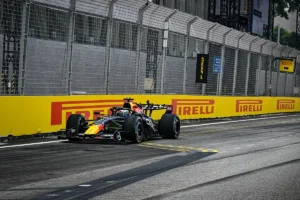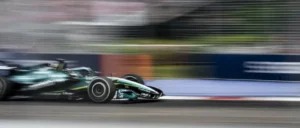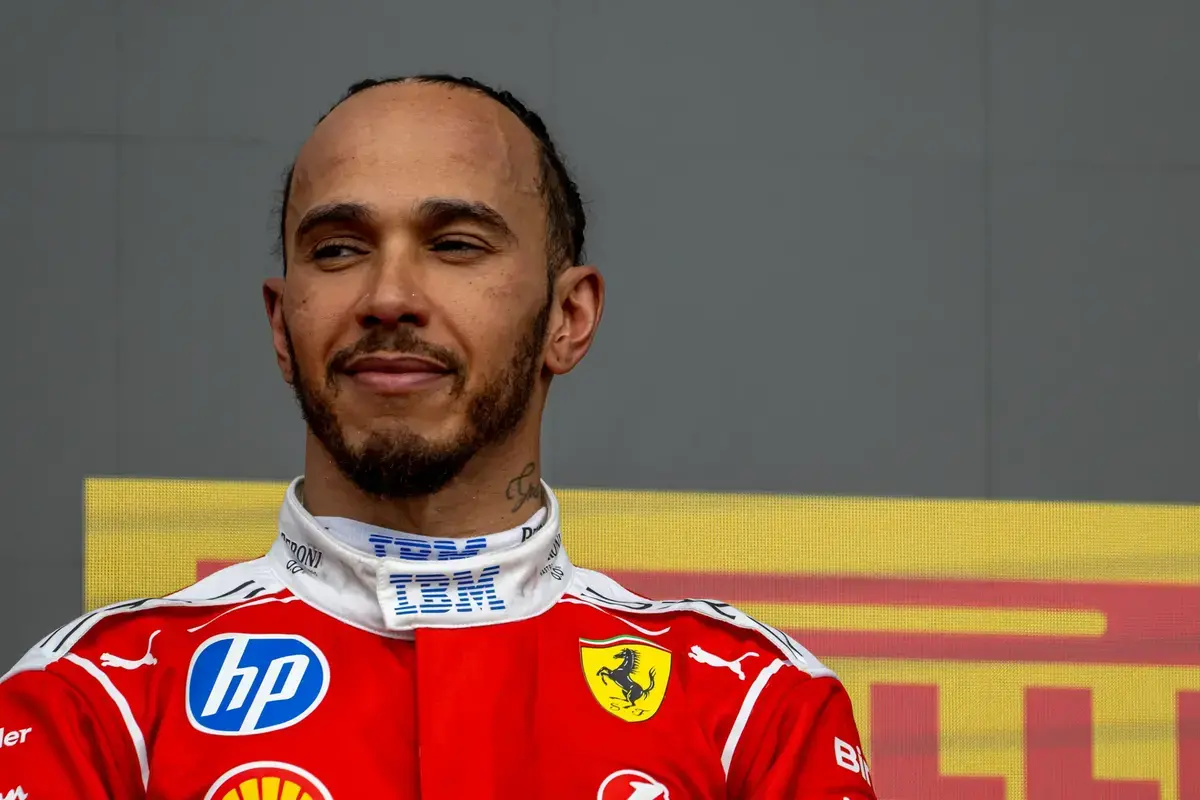

Lewis Hamilton has done something rather delicious. Standing in the Ferrari garage, nine races into 2026, he has calmly predicted that his former team will suffer grid penalties before the season is out. Whether that counts as analysis or a gentle twist of the knife is, frankly, a matter of perspective.
The Reliability Gap Nobody at Mercedes Wants to Discuss
George Russell lost a battery in Canada in what the team called a “catastrophic” failure, with the damaged unit too dangerous to fly and forced onto a cargo ship back to Europe. Kimi Antonelli, meanwhile, retired from the Barcelona GP with a power unit issue before his wheel shield failure at Silverstone ended his British GP in misery. You can read more about that particular disaster here.
Ferrari, by contrast, has completed almost every race distance without drama in 2026, with only Leclerc’s Monaco crash interrupting an otherwise clean sheet. Mercedes leads the constructors’ standings by 78 points, but the gap in reliability tells a different story entirely.
What Hamilton Actually Said
“You’re seeing engines in general have had more issues this year than they normally would have, and I don’t know what the situation is with the battery side of this for George and for Kimi, but at some point there must be a penalty, I would imagine.” – Lewis Hamilton
For 2026, each driver is permitted a maximum of three energy stores across the season. Both Russell and Antonelli have already used three each, and that is before considering whether the failed units can even be recycled back into the pool. If they cannot, a fourth energy store means a grid penalty, full stop.
History Has a Warning Here
Grid penalties for power unit elements were a persistent headache in the early V6 hybrid era and nearly derailed Honda’s return with McLaren in 2015. The FIA is already looking at engine regulation overhauls for 2031, but that is cold comfort for Russell and Antonelli if they are starting races from the back of the grid in Singapore.
Ferrari’s Quiet Confidence
Hamilton was effusive about Ferrari‘s execution, praising the pit crew, the factory, and the consistency that he believes will “ultimately make the difference this year.” It was the kind of PR-polished answer that also happened to be a pointed observation about the team he left behind.
Mercedes has the fastest car. It may also have a ticking clock in the power unit allocation. Sometimes the sharpest weapon in the championship fight is not a quicker car. It is simply not breaking down.