
It started as a panic measure. Now it is apparently just the way things are done. Formula 1’s five-second pre-start warning, introduced at the beginning of the 2026 season to stop drivers getting stranded on the grid like confused tortoises, has been confirmed as a permanent part of the start procedure. FIA single-seater director Nikolas Tombazis has made clear it is not going anywhere, even as he quietly admits the original safety justification no longer really applies.
How a Safety Crisis Became a Standard Procedure
Cast your mind back to the frantic months before the 2026 season. The wholesale overhaul of the power unit regulations had stripped out the MGU-H, the component that previously helped mask turbo lag in the lower rev range. Without it, getting a Formula 1 car prepped and ready to launch cleanly from a standing start became a genuinely awkward exercise. Drivers practising race starts during pre-season testing were struggling, and it was not a pretty sight.
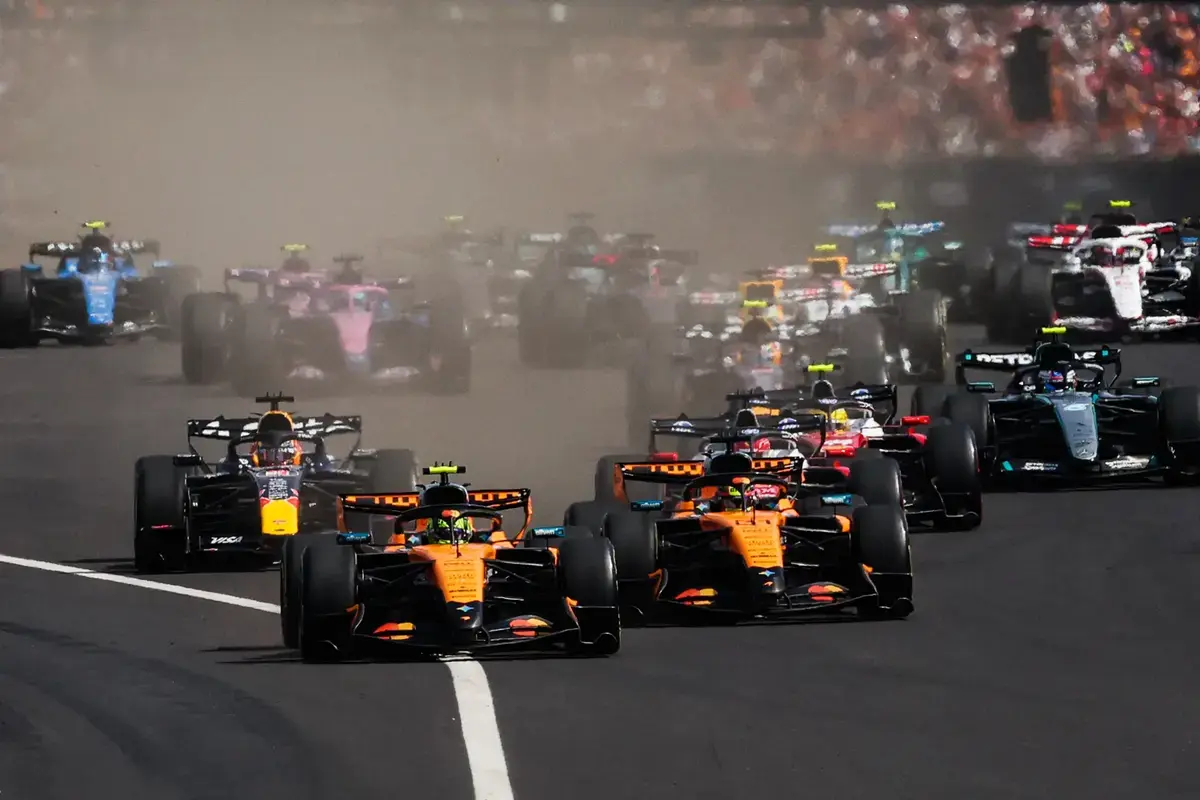
The concern was not theoretical. Teams and engineers were genuinely worried that, come the first race, a slow-moving car could cause carnage behind it. A ripple effect at race start speeds is not something anyone wants to be explaining to a stewards’ panel. Red Bull, Mercedes, Ferrari, all of them were flagging the issue. The FIA listened and acted, introducing the five-second warning signalled by a flashing blue panel on the starting gantry. Drivers get those five seconds before the standard red light sequence begins, giving them extra time to get their cars into the right state for launch.
Australia Proved the Problem Was Real
Even with the new warning in place, the opening races of 2026 delivered a few uncomfortable moments. The most notable came in Australia, where Liam Lawson had to take evasive action to avoid driving into the back of Franco Colapinto‘s slowly-moving Alpine. It was the sort of incident that makes sporting directors age ten years in about three seconds.
The FIA responded with a second layer of intervention: MGU-K assistance. Under this system, a car that leaves the line sluggishly can receive a boost from the Motor Generator Unit-Kinetic to help it get moving at something approaching a normal pace. The official description is that it helps “mitigate start-related risks,” which is regulatory language for “we do not want another near-miss like Australia.”
As reported by PlanetF1, Tombazis outlined the thinking behind these layered solutions clearly enough.
“From when we discussed the Miami package in late April until now, we’ve been working on some emergency recovery, so electrical parts to help recover a car that has a very slow start and therefore not to risk cars stalling.” – Nikolas Tombazis
So Why Is the Warning Still There?
Here is where it gets interesting. Tombazis is essentially saying that the MGU-K assistance has done the heavy lifting on actual safety. The five-second warning is no longer primarily about preventing a catastrophic pileup at the start. It has been rebranded, quietly and without any great fanfare, as an operational convenience.
“I think the five seconds are an established process now, I don’t see why it would change in this regulation cycle. That does not have to do with safety. It has just to do with having different cars arriving on the grid at different times, and drivers need to be able to prepare in order to have, let’s say, a proper start. I don’t think it’s so much a safety topic. The electrical part is more of a safety topic.” – Nikolas Tombazis
Translated from official-speak: the warning is staying because it is useful, teams have built their procedures around it, and nobody is clamouring to remove it. Fair enough, perhaps. But there is something slightly amusing about a measure introduced with genuine urgency to prevent grid chaos being quietly reclassified as routine housekeeping within a single season.
The Broader 2026 Start Problem
It is worth stepping back for a moment and appreciating just how disruptive the MGU-H removal has been to something as supposedly simple as a race start. The MGU-H was not merely an energy recovery device. It was a sophisticated tool for managing turbocharger response, and its absence left engineers scrambling to rethink systems that had been refined over a decade. The teams who adapted fastest to the new power unit architecture, principally Mercedes, have largely reaped the rewards in the 2026 standings.
For context, Kimi Antonelli leads the drivers’ championship on 219 points, with Mercedes sitting comfortably at the top of the constructors’ table on 379. Whether superior start preparation contributed to that dominance is difficult to isolate, but it certainly has not hurt. The teams that struggled most with the new regulations in the early rounds gave away points in ways that are now very difficult to recover.
The five-second warning, whatever its original purpose, at least gave everyone a slightly more level platform. Lawson, who has had his own eventful 2026 season, will know better than most how unforgiving the start phase has been this year. You can read more about that situation in our piece on whether Lawson’s Red Bull return is a free hit or his last chance in F1.
A Rule That Evolved in Real Time
There is a broader point here about how modern Formula 1 regulation works. The FIA spotted a problem, introduced a partial fix, monitored its effects, added a second layer of intervention, and then formalised the whole arrangement as permanent procedure. That is, to be fair, roughly how responsive regulation should function. The alternative, ignoring the issue until something genuinely went wrong, does not bear thinking about.
What is less inspiring is the pace at which these things become accepted as natural. The five-second warning feels embedded already. Teams plan around it, drivers have incorporated it into their mental start routines, and Tombazis is talking about it in the same tone one might use to describe the pit lane speed limit. It exists, it works well enough, and questioning it would feel faintly eccentric.
Will It Ever Disappear?
Tombazis says he sees no reason for it to change within this regulatory cycle. Given that the 2026 regulations are intended to run for several years, that means the five-second warning and its flashing blue gantry panel are going to be a fixture of race weekends for the foreseeable future. Any revision would require a deliberate, formal decision rather than simply letting the measure expire.
In the grand tradition of Formula 1 temporary measures that somehow become permanent, the five-second warning appears to have completed its metamorphosis. Introduced in a hurry to address a crisis, retained because it proved useful, and now simply part of the furniture. The MGU-H may be gone, but its ghost is still shaping how every grand prix gets underway.