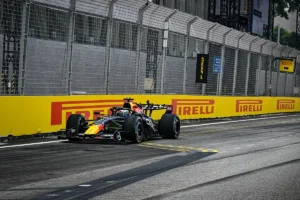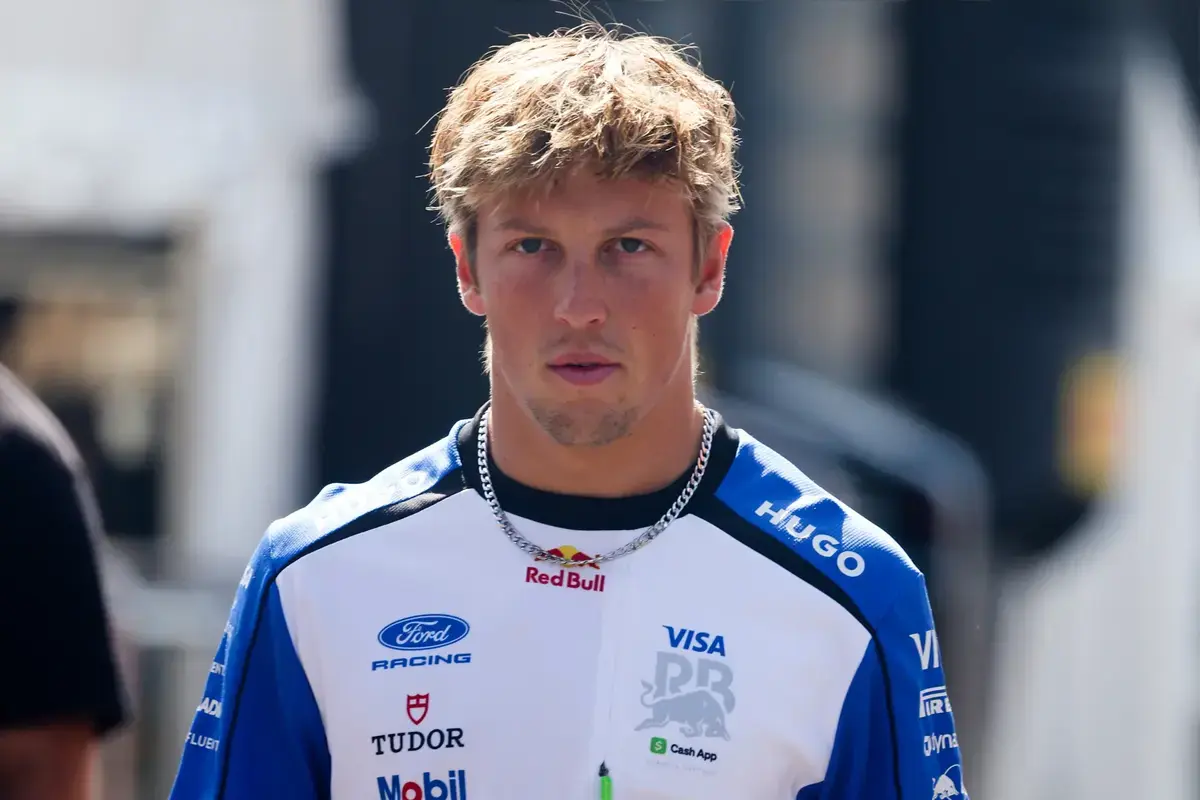

Liam Lawson is back in a Red Bull Racing car. That sentence alone would have seemed implausible six months ago, yet here we are at Zandvoort, where a wrist injury to Isack Hadjar has handed the New Zealander one of the most compelling storylines of the 2026 season. And if you think this is just a quiet stand-in weekend with nothing much riding on it, you have not been paying attention.
The Domino Effect Nobody Planned For
When Hadjar confirmed he would miss the Dutch Grand Prix through injury, Red Bull triggered a chain reaction that has sent ripples through the paddock. Liam Lawson steps up from Racing Bulls to drive the RB22 alongside Max Verstappen. In turn, reserve driver Yuki Tsunoda drops into Lawson’s vacant Racing Bulls seat, partnering Arvid Lindblad. Two drivers, two teams, one weekend to potentially reshape both their futures.
Tsunoda, to his credit, kept it warm and professional, as reported by PlanetF1.com:
“Happy to get back behind the wheel this weekend and step in for the team. Wishing Isack Hadjar a speedy recovery!” – Yuki Tsunoda
Racing Bulls, for their part, praised the “adaptability” of both men. Adaptability. Yes, that is one word for being dropped into a different car at a moment’s notice with your professional future quietly hanging in the balance.
What Is Actually at Stake for Lawson
Let us be clear about what Lawson is walking into. He has never driven the RB22. He has had minimal preparation time. The 2026 power unit regulations have made energy harvesting and deployment a genuine skill set that takes weeks to master, not hours. And his teammate is Max Verstappen, a man who has a habit of making every other driver in the same machinery look slightly inadequate.
On paper, this is a free hit. The baseline expectation is that he struggles, so anything above that reads as progress. The problem is that Formula 1 does not actually work like that, and Lawson knows it better than anyone. His first Red Bull stint in early 2025 was a disaster, and the sport has a long memory. He was arguably set up to fail back then, promoted too quickly, given insufficient support, and axed before he had any realistic chance to find his feet. That reflected terribly on the Red Bull organisation. But the narrative that stuck was not Red Bull’s poor management. It was Lawson looking all at sea in those opening rounds.
He has spent 2026 quietly rebuilding. Sitting ninth in the drivers’ championship with Racing Bulls, he is the best-placed driver outside the top four teams and has been impressively close to Hadjar, the man who replaced him. That is a meaningful achievement. The trouble is that Arvid Lindblad‘s bright rookie season has pulled focus, and with Red Bull junior Nikola Tsolov leading the Formula 2 standings, the conveyor belt keeps moving regardless of Lawson’s form. His F1 future, prior to this weekend, was starting to look either short or permanently limited to a midfield benchmarking role. Red Bull confirmed the driver changes ahead of the Dutch GP weekend, and with them came the weight of everything Lawson needs to prove.
The Lindblad Question Nobody Wants to Answer
There is a genuinely interesting debate about whether Red Bull made the right call here. Lawson is the logical choice on experience, particularly given how demanding the 2026 hybrid systems are. He has lived with these power units all season and understands the harvesting demands in a way that matters when you are trying to race competitively rather than just complete laps.
But the contrarian view has merit. Lindblad has been exceptional this season. He has been within a tenth of Lawson in qualifying on average, he outpaced Lawson clearly at Spa, and he has handled the pressure of a rookie campaign with unusual composure. Ferrari threw a then-complete rookie in Ollie Bearman into a race weekend at Jeddah in 2024 and it worked out rather well. Mercedes used George Russell as a stand-in for Lewis Hamilton at the 2020 Sakhir GP and got a preview of exactly what they were getting before signing him full-time.
Red Bull used to pride itself on being bold. Some are now wondering whether the new regime, under Laurent Mekies and the post-Horner structure, has quietly become more conservative. Choosing the safe option is not inherently wrong. It is just worth noticing.
Tsunoda’s Crossroads at Zandvoort
Tsunoda’s situation carries its own weight, and it deserves more attention than it is getting. After 92 starts with Racing Bulls across five seasons, a brief and difficult stint alongside Verstappen at Red Bull in 2025, and then a full year as reserve driver with nothing to show for it, he is now genuinely at a fork in the road.
The IndyCar rumours have not gone away. Felix Rosenqvist’s move to McLaren’s IndyCar operation has left a seat open at Meyer Shank Racing, a Honda-powered team that would suit Tsunoda’s style and connections. If he makes that switch, the overwhelming likelihood is that he never races in Formula 1 again. IndyCar is not a sabbatical from the F1 grid. It is, for most drivers, a permanent departure.
So this weekend at Zandvoort, slotting back into the Racing Bulls car he knows so well, represents perhaps Tsunoda’s last realistic window to remind Formula 1 teams that he is worth a seat. He does not need to win. He needs the kind of performance that makes a sporting director sit up and think. Nyck de Vries managed it at Monza in 2022 and walked into a full-time seat weeks later. Tsunoda has far more experience than de Vries had that day in Italy. The question is whether he can channel it.
Meanwhile, the midfield is sharper than ever at Zandvoort, which makes any strong result from the Racing Bulls garage more difficult but also more visible.
Laurent Mekies and the Ghost of 2025
One factor that genuinely matters here is that the Red Bull team Lawson is joining is meaningfully different from the one that discarded him. Mekies, now running the senior operation, has worked with Lawson before at Racing Bulls and understands how to get the best from him. The steering setup changes that unlocked Lawson’s performance as last season progressed were not accidental. Someone understood what he needed and provided it.
If Red Bull extends that same understanding into this weekend, giving Lawson the confidence and technical support he was denied during his 2025 nightmare, there is a realistic chance he does something worth talking about. If, on the other hand, he is essentially thrown in and expected to perform by osmosis, the result will be predictable and unfair in equal measure.
The team orders debates elsewhere on the grid may dominate the headlines, but inside the Red Bull garage this weekend, a quieter, more personal story is playing out.
A Weekend That Matters More Than It Should
Here is the cynical truth about Formula 1 in 2026: Lawson has been performing consistently, professionally and impressively in a midfield car all season, and it has barely moved the needle on his perceived status. One strong weekend in a Red Bull, however, could change the conversation entirely. That says something unflattering about how this sport measures value, but it is the reality Lawson must work within.
He does not need to beat Verstappen. Nobody expects that. He needs to be close enough, composed enough, and quick enough to force the people making 2027 decisions to factor him into their thinking rather than around him. For Tsunoda, the bar is similar but the timeline is tighter.
Both men arrive at Zandvoort with something to prove and a narrow window in which to prove it. In a sport that rarely offers second chances, they have each found one. Whether Red Bull and Racing Bulls have truly set them up to use it is a different question entirely, and one that only Sunday afternoon will answer.