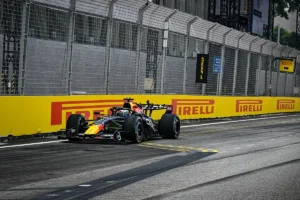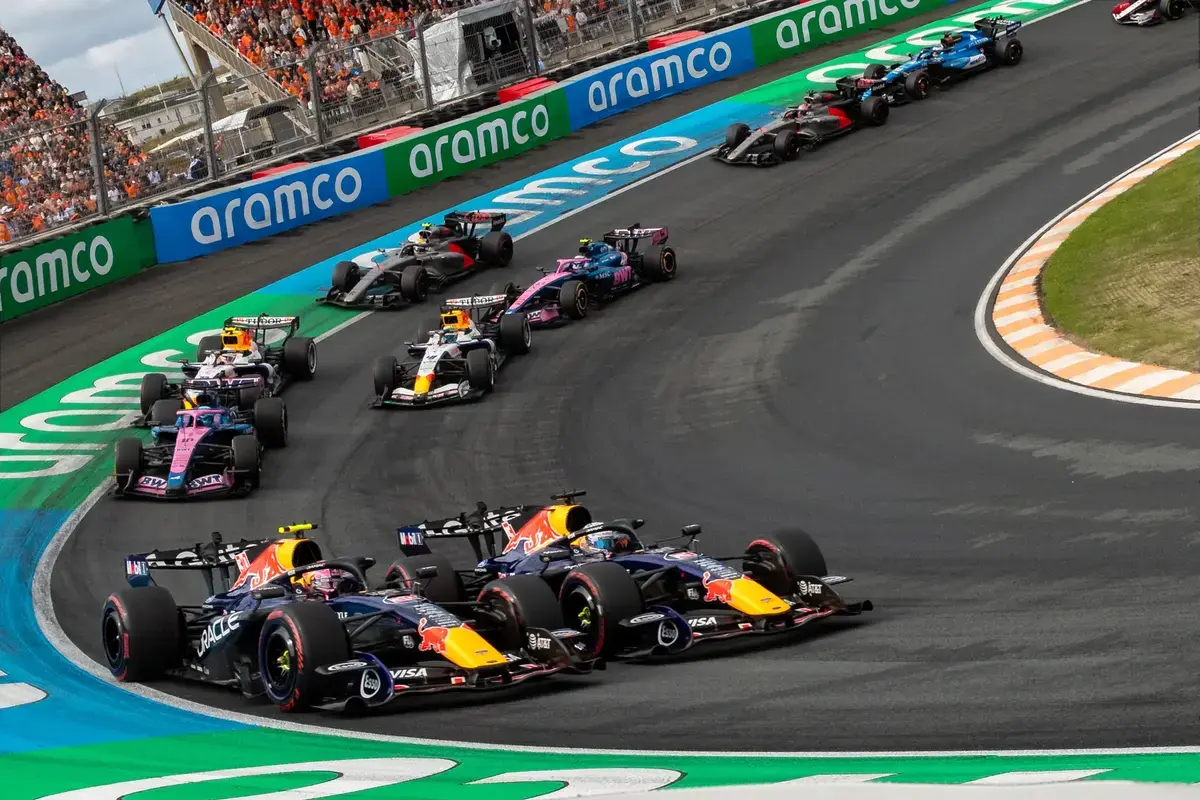

Red Bull Powertrains walked into Formula 1 as the new kid on the engine block this year, no history, no legacy dyno data, nothing but ambition and a Ford badge. Eight months later, the FIA has confirmed, in black and white, that this rookie outfit still builds the strongest engine on the grid. Awkward for everyone else. Delicious for Red Bull.
The verdict nobody wanted to admit
The FIA has now published the results of its second Additional Upgrades and Opportunities (ADUO) assessment, the mechanism designed to stop any one manufacturer running away with the power unit war. Covering everything from the season-opening Australian Grand Prix through to the Hungarian Grand Prix, the verdict is unambiguous: Red Bull-Ford’s internal combustion engine remains the most powerful unit in Formula 1, exactly as it was after the first review period.
That single sentence is the whole story. Mercedes, so often assumed by paddock consensus to be sitting on the best engine after steamrolling the opening rounds, is officially 2 to 4 percent down on power. Ferrari, Audi and Honda are all more than 4 percent adrift, lumped together in the “needs serious help” category. Honda’s brand-new powertrain, introduced at the Dutch Grand Prix, wasn’t even part of this assessment, so their true position remains a mystery for another day.
Why this stings more than it should
Remember when Red Bull team boss Laurent Mekies practically demanded a recount after the first ADUO findings leaked, insisting there was “not a single data point” backing up the claim that his team had the strongest engine? That demand for a review has now backfired spectacularly. The FIA looked again, dug through a second, larger dataset, and arrived at exactly the same conclusion. Red Bull-Ford is still the benchmark. If anything, round two should have been the moment doubt crept in. Instead, it hardened the case.
There’s a certain dark comedy in a first-year power unit manufacturer, building an engine from scratch with no factory heritage to lean on, topping the charts while Mercedes’ famously dominant works team gets told to go and find more horsepower. The paddock spent half the season assuming Mercedes had the best engine simply because Kimi Antonelli and George Russell were hoovering up points. Turns out chassis and strategy were doing a lot of the heavy lifting that people assumed came from the power unit.
What the handouts actually mean
Being behind the benchmark isn’t all bad news if you’re Mercedes, Ferrari, Audi or Honda. The system is built to hand the strugglers extra development tokens, more cost cap headroom and additional dyno hours, precisely so nobody gets buried by Red Bull’s early lead. After the first quarter of the season, Mercedes was quietly awarded one extra homologation opportunity for 2026 and another for 2027, while Ferrari, Audi and Honda each picked up two additional homologations for both years, according to RacingNews365. None of that was announced publicly at the time. It simply happened behind closed doors, the sort of quiet FIA housekeeping that only surfaces when someone starts asking pointed questions.
This second review period changes nothing for the manufacturers already behind. Mercedes stays in the 2 to 4 percent bracket, which brings roughly 3 million in extra cost cap allowance and around 70 additional bench-testing hours. Ferrari, Audi and Honda remain beyond the 4 percent threshold, entitling them to the maximum two upgrade tokens for both 2026 and 2027. But crucially, and this is the bit that will annoy every rival garage on the grid, the FIA has confirmed that no new homologations were granted this time around. Everybody stays exactly where they are. Red Bull remains untouchable, and its rivals remain stuck with the allowances they already had.
The FIA’s favourite trick: confirm nothing, reveal everything
Nikolas Tombazis, the FIA’s director of single-seaters, delivered the kind of statement that says a great deal while committing to almost nothing. “The FIA has undertaken thorough and exhaustive analysis as part of our ADUO review process,” he said. “With the release of the findings of period two, we are confident that, based on the quality of the data, its analysis is incredibly robust, giving us a high level of confidence in our findings.”
“We also have to respect the confidentiality and intellectual property of the teams and their power unit manufacturers in disseminating any details from the findings. This is the first year of ADUO so naturally there are areas which we may evolve over time, in discussion with all the PU manufacturers.” – Nikolas Tombazis
Translation: trust us, we’ve done the maths, but you’ll never see the workings. It’s the FIA’s classic move, drop a headline conclusion, wrap it in confidentiality clauses, and dare anyone in the paddock to prove otherwise. Given how loudly Red Bull complained the first time round, don’t be surprised if this is not the last we hear of manufacturers quietly grumbling that the system is opaque by design.
What happens next
A third and final ADUO review period will run from round 12 through to round 18, covering the stretch from the Dutch Grand Prix all the way to Mexico City. That window will finally include Honda’s revised powertrain, which could shuffle the pecking order before the season wraps up. Given Red Bull has already survived two rounds of scrutiny with its crown intact, and given the team’s ongoing engine grumbles have been well documented in our report on Red Bull’s engine excuse running out of road before Monza, there’s little reason to expect period three will suddenly dethrone them.
For now, the numbers say what the paddock spent half a season refusing to believe. Red Bull, on its debut as an engine manufacturer, is still setting the pace under the bonnet while everyone else scrambles for FIA-issued charity. Quite the origin story for a power unit division nobody outside Milton Keynes gave much chance of getting this right, first time out.