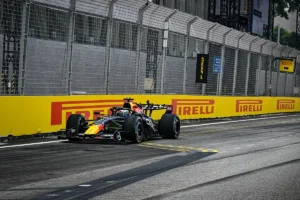

Red Bull spent the first half of this season insisting the FIA had got its own measurements wrong, that somehow the team with the sport’s most complained-about power unit actually had the best one. Funny how a few bad weekends can shut that argument right up. Now, with a second verdict on Formula 1’s ADUO development system due any day, Red Bull is quietly praying the governing body finally agrees with what everyone in the paddock already suspects: this engine is not as good as the rulebook says it is.
A system built to help the weak, currently helping nobody
The Additional Development and Upgrade Opportunities scheme, ADUO for short, was supposed to be F1’s safety valve for manufacturers who fell behind under the sport’s all-new 2026 power unit rules. Fall short of the benchmark engine by more than 2%, and you earn a token to go and fix it. Simple in theory. Chaotic in practice.
The first assessment period, covering the season up to Monaco, produced a result nobody in Milton Keynes wanted to hear: Red Bull-Ford Powertrains was ranked top of the internal combustion pile. Mercedes picked up one token. Ferrari, Audi and Honda got two apiece. Red Bull got nothing, because according to the FIA’s numbers, there was nothing to fix.
Red Bull did not take that well. CEO Oliver Mintzlaff reportedly got personally involved, and team principal Laurent Mekies went public with his scepticism, claiming there was “not a single data point” to support the idea that Red Bull-Ford has the best engine on the grid, as reported by Motorsport.com. The team requested a factual review. The review appears to have changed precisely nothing.
The FIA shrugs, politely
FIA single-seater director Nikolas Tombazis has not exactly grovelled in response. Asked directly whether the measurement system holds up, he said the FIA’s numbers “have proven to be very accurate,” while conceding, almost as an afterthought, that “obviously people are not happy” and that improvements might be needed down the line. That is about as close to an apology as Red Bull is going to get, and it is not much of one.
The awkward truth for Red Bull is that the system’s flaws, which Tombazis admits are real, such as only measuring the internal combustion engine and ignoring the electrical side entirely, were locked in last year at the request of the manufacturers themselves, who wanted things kept simple. Red Bull cannot now cry foul over a system it helped design. That is not persecution, that is just poor foresight.
There is also a whiff of gamesmanship elsewhere on the grid. The paddock consensus is that Mercedes and Ferrari played their opening races cannily, never quite showing their full hand, which conveniently kept their ICE numbers below the benchmark and their token counts ticking upward. Whether that is clever strategy or borderline sandbagging depends entirely on which garage you are standing in.
Monza is the next roll of the dice
The second ADUO period ran through to the Hungarian Grand Prix, and the FIA is expected to share those results with manufacturers this week or early next, with clarity promised before media day at Monza. For Red Bull, this is not a footnote, it is the whole ballgame. If its engine deficit to the benchmark is judged to exceed 2%, it finally earns a token and can start developing a power unit that, by its own admission, needs it. If Red Bull remains on top, or the gap is judged marginal, it gets nothing again, and its last realistic shot becomes the third assessment period, which does not close until after the United States Grand Prix in Austin.
Tombazis does not sound convinced the other manufacturers are cynically sandbagging just to keep Red Bull boxed in. “I don’t think it would be convenient for you to always be below your maximum power just to keep getting more opportunities, because what’s the point of opportunities if it isn’t ultimately for you to be on top?” A fair point, though one suspects Red Bull would happily take “convenient” over “correct” right about now.
Meanwhile, on track, the excuses have run dry
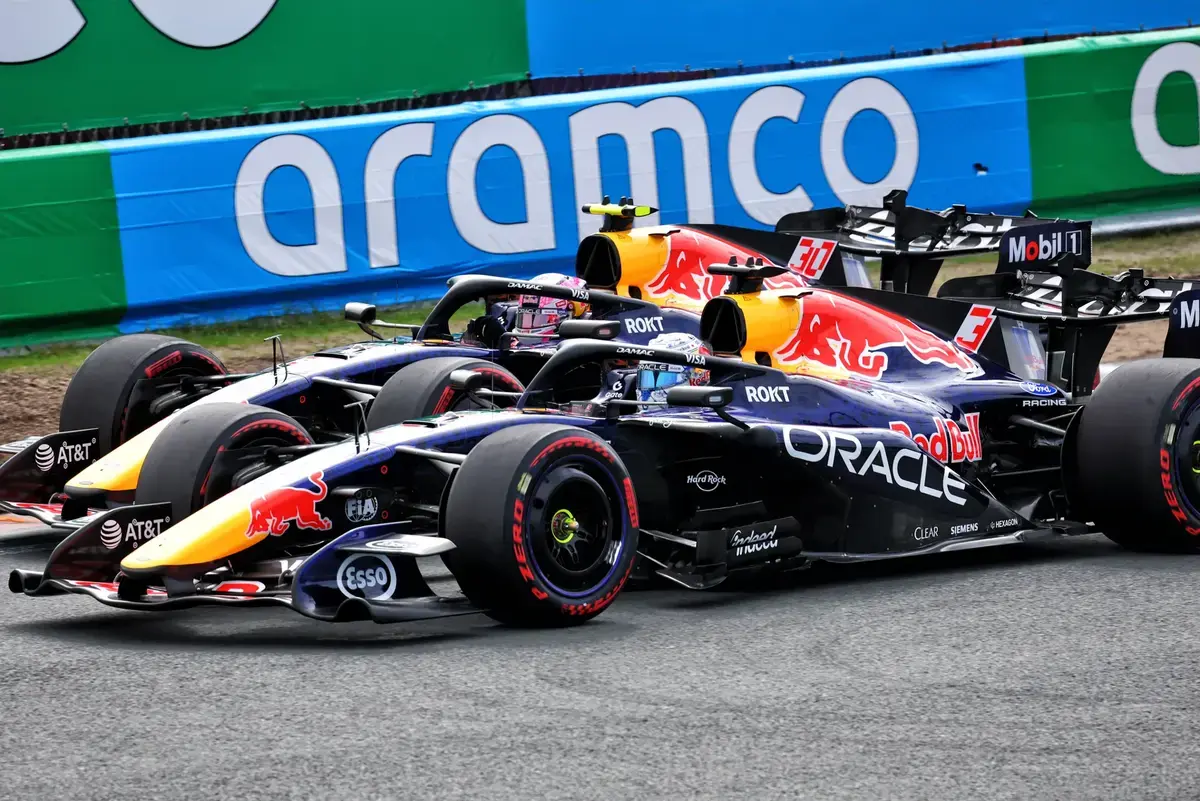
Whatever the FIA decides about tokens and turbos, it will not explain what actually happened at Zandvoort. Mekies himself admitted as much on Tuesday, saying bluntly that Red Bull “has nowhere left to hide” after a genuinely miserable Dutch Grand Prix weekend. Max Verstappen qualified seventh, could only manage sixth in the sprint, and then crashed out on the opening lap of the race itself, as covered in our report on Verstappen’s home farewell ending in the wall.
Mekies conceded the team has taken “a step backward” compared to its form before the summer break, and admitted he genuinely does not know whether that is down to rivals simply out-developing Red Bull, or a specific problem that bit harder than expected at Zandvoort. “It looked harder session after session than it did in Budapest, Spa or Austria,” he said. Liam Lawson, deputising for the injured Isack Hadjar, produced a respectable showing but offered no real benchmark given the lack of a fully-fit teammate in race trim.
The numbers tell their own brutal story. Verstappen has slid to sixth in the drivers’ championship, some 130 points adrift of runaway leader Kimi Antonelli. In the constructors’ standings, Red Bull’s 186 points sit a distant fourth, dwarfed by Mercedes’ 425. This is not a small wobble. This is a former dominant force being lapped, metaphorically, by its own recent history.
Mekies says the next fortnight, before the team “fights back together” at Monza, will be spent working out exactly what went wrong. Given that most teams need six to eight weeks to turn around meaningful aerodynamic fixes, that timeline feels optimistic at best. Whether the ADUO token materialises or not, Red Bull’s problems this year look bigger than one engine ranking. But a token would at least let them start trying to fix the bit they can actually control, rather than just complaining about the bit they cannot.
The bottom line
Red Bull wants sympathy for a measurement system it helped build, and answers for a car that is falling apart on merit. It cannot have both narratives running at once. Either the FIA’s numbers are wrong and Red Bull deserves a token on principle, or the car simply is not good enough anymore and no amount of regulatory pleading will fix that. Monza will tell us which story Red Bull is actually living in. Don’t expect it to be a happy one either way.