
Ferrari has built the engine. Ferrari has tested the engine. What Ferrari has not done, with less than a fortnight to go before its home race, is actually decide whether to race the engine. That is either admirably cautious or a damning indictment of how slowly Maranello moves when it matters most.
The Scuderia was handed two upgrade tokens through Formula 1’s Additional Upgrades and Opportunities scheme, the mechanism designed to let engine manufacturers who are lagging behind claw back ground on the all-conquering Red Bull-Ford unit. Ferrari has used those tokens to build a new power unit, numbered 067/6, for Lewis Hamilton and Charles Leclerc. The engines exist. Whether they will actually turn a wheel in anger at Monza is still, remarkably, an open question.
A decision that arrives far too late for comfort
According to Motorsport.com, Ferrari will only confirm at the end of this week whether the new units are cleared to travel to Monza at all. That is not a marketing tease, it is a genuine logistical bottleneck. The engines must pass an endurance test equivalent to six grands prix’ worth of running on the dyno before they are allowed anywhere near a race weekend, and Ferrari’s summer shutdown at Maranello ate directly into that testing window.
Ferrari’s engine department reportedly has 21 test cells at its disposal, which sounds like the sort of facility that should make this a formality. It isn’t. Cost cap restrictions mean only two or three dynamometers can actually be used at any one time, and F1’s own rules impose strict time limits on the whole approval chain. Hit a reliability snag, however minor, and the entire process resets. A single sensor fault or a stray bolt can send weeks of work back to square one. It’s less Formula 1 engineering and more bureaucratic Jenga, and Ferrari appears to be one shaky block away from missing its own home race deadline.
Why the timing could not be more awkward
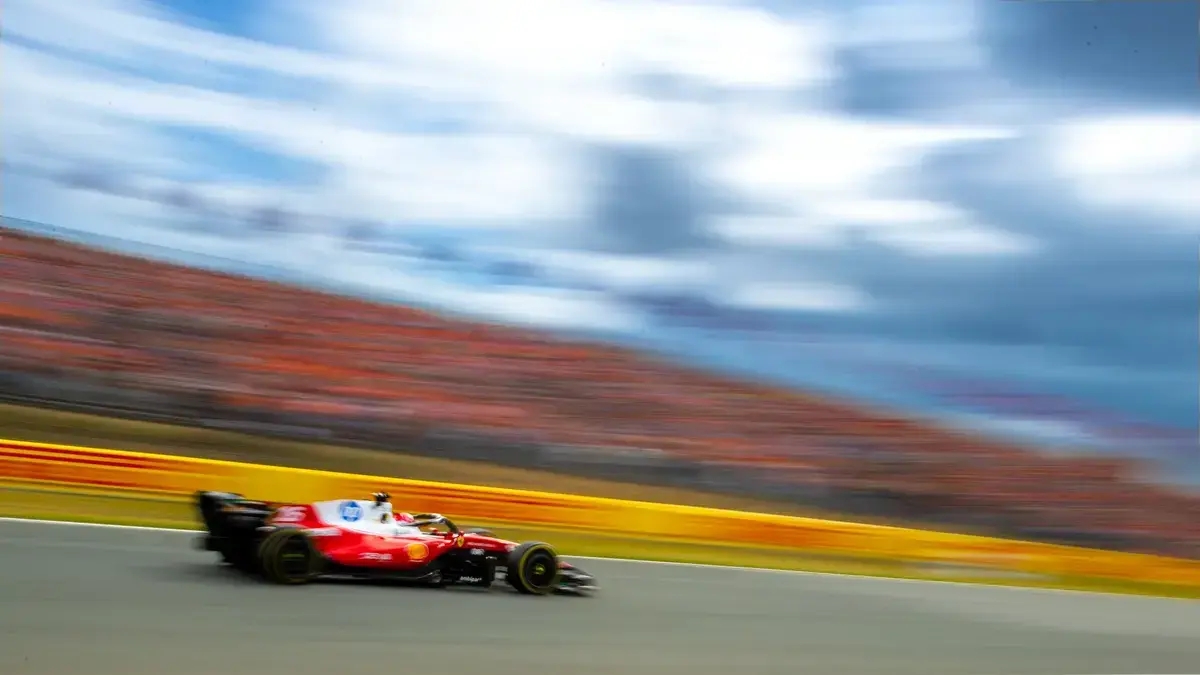
None of this would matter much if Monza were just another round. It isn’t. Ferrari is planning to run a specially designed livery at the Italian Grand Prix to mark twenty years since Michael Schumacher’s title-laden spell at the team came to an end, a nostalgia play that risks becoming the headline story if the actual car underperforms. Fans will get misty-eyed over the red and yellow throwback colours; the stopwatch, unfortunately, does not care about anniversaries.
And Ferrari knows it. The team itself admits the characteristics of the Temple of Speed, all long straights and minimal downforce, do not suit the SF-26’s fundamental package. Even with 067/6 fitted, nobody at Maranello is talking about victory. The realistic target is simply closing the gap to Mercedes in qualifying, a target that would have sounded embarrassingly modest a decade ago and now sounds like the height of Ferrari ambition.
What the new engine is actually supposed to do
The upgrade itself is a genuine piece of engineering rather than pure spin. Ferrari has reworked the Garrett turbo and modified the combustion chamber to better exploit a new higher-calorie fuel that Shell has approved specifically for Monza. The combined effect, on paper, is around 15 extra horsepower and a reshaped power curve that should also help the hybrid system recharge more effectively, a genuine weakness on a low-drag circuit where electrical deployment opportunities are scarce.
This follows a separate, cheaper update Ferrari introduced at Zandvoort, a floor revision that Formula1.com reported was built in just two sets, one per car, and deliberately held back from FP1 to avoid any risk of damage before it had a spares back-up. It’s a small but telling detail: this is a team playing every update with the caution of an outfit that cannot afford a single mistake under the cost cap, not one throwing parts at the car and hoping something sticks.
Antonelli’s penalty hands Ferrari a strange consolation prize
There is an odd silver lining buried in all this. Home hero Kimi Antonelli, who leads the championship for Mercedes on 242 points, will take a grid penalty at his own home race and start no better than 20th. For a Mercedes power unit that the FIA still rates behind Red Bull-Ford as the outright benchmark, as confirmed in the FIA’s latest ranking, that is a gift Ferrari cannot possibly manufacture on track. Losing your title contender to a grid drop at Monza is the kind of chaos money can’t buy, and Ferrari, sitting 87 points adrift of Mercedes in the constructors’ standings, needs every scrap of good fortune going.
The bigger picture nobody at Maranello wants to say out loud
Strip away the anniversary livery and the technical jargon and what’s left is a team still fighting to establish where it actually ranks in the ADUO pecking order, on a circuit that flatters nobody’s weaknesses. Red Bull-Ford remains the yardstick. Mercedes, Ferrari, Honda and Audi are all scrabbling for tokens and testing hours to close a gap that regulation tweaks alone may not fully close. Monza was supposed to be a celebration of Ferrari’s past. Instead it might end up as uncomfortable evidence of how far the present still has to travel.
Ferrari fans will wave the Schumacher flags regardless, because they always do. But a five-minute engine approval meeting at the end of this week will tell you more about Ferrari’s actual competitive trajectory than any tribute livery ever could.