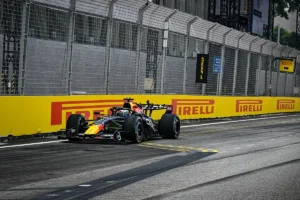

Netflix has confirmed Drive to Survive will return for a ninth season, and for once the producers might struggle to make things up. The 2026 season has handed them a title fight nobody predicted, a farewell crash nobody wanted, and a Ferrari strategy department that keeps generating its own drama without any help from the editing suite.
Season 9 will cover this ongoing campaign, the streaming giant announced, continuing a run that started back in 2019 and turned a niche European motorsport into appointment viewing for millions who couldn’t previously have told you the difference between a chicane and a Chicago deep dish.
The show that needs no help this year
Usually Drive to Survive earns its reputation for creative storytelling by inventing tension where none exists, splicing radio messages out of context and turning a mildly tetchy pit stop into a full-blown feud. This year the producers can just point a camera at what actually happened and let it run.
Kimi Antonelli leading the championship as the youngest points leader in the sport’s history is the kind of plot the writers’ room usually has to manufacture from scraps. Instead it fell into their lap, along with a Mercedes team that has spent the season quietly dominating while everyone was still watching Red Bull and McLaren.
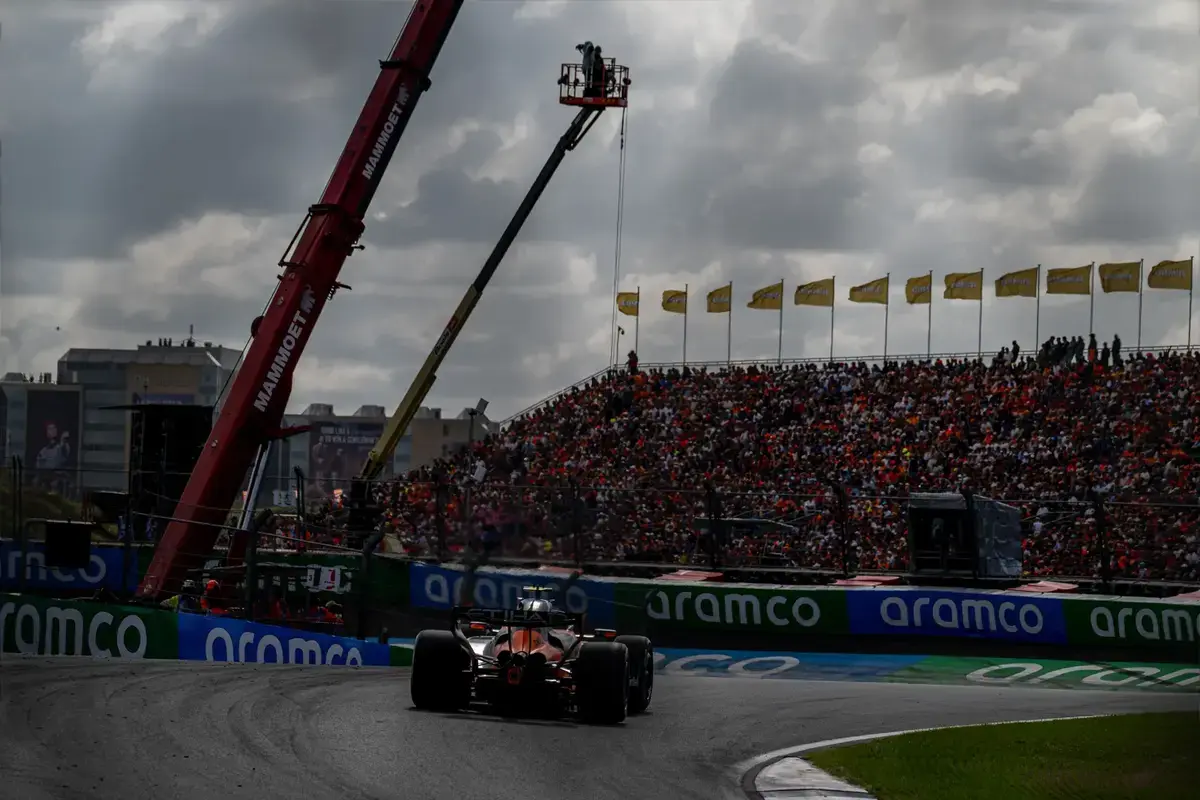
Then there’s Zandvoort. Max Verstappen’s home farewell ending in the wall is precisely the sort of gut-punch narrative beat that DTS editors dream about, except this time they didn’t need to dream it up. The footage exists, the emotion is real, and the timing, on the weekend his Red Bull future was finally settled after Domenicali’s public pleading, could not have been scripted better if Box to Box had written it themselves.
Executive producers promise to go ‘deeper’
James Gay-Rees and Paul Martin, the executive producers behind the series at production company Box to Box, are predictably upbeat about the renewal. Whether “deeper” means more paddock access or simply more slow-motion shots of drivers looking moody in team kit remains to be seen, but they are not short on material this time round.
“We’re so excited to be making Season 9 of this iconic show. This year we’re going to go deeper than ever before into the hidden spaces of this fantastic sport.” – James Gay-Rees and Paul Martin
It is worth remembering that Gay-Rees has previously been candid about what the show is actually for. Speaking to F1’s own website back in 2023, he was refreshingly blunt about the commercial motivation behind it all, framing DTS less as a documentary and more as a demographic-expansion tool that happened to work spectacularly well.
“We’ve all had the statistics about the changing, younger demographic, and it’s tough out there for anybody, for any big organisation, to hold its ground given the amount of choices that are out there for the consumer. Bringing such a big new audience to a sport, which obviously was deserved, it just needed somebody to open it up, is massively satisfying.” – James Gay-Rees
The criticism nobody’s dropped
None of this changes the fact that DTS has a well-earned reputation for bending timelines and dramatising radio chatter to manufacture rivalries that barely exist off camera. Drivers have complained for years about being made to look far angrier, sadder or more chaotic than they actually were on any given Sunday. That criticism is not going anywhere, and Season 9 will almost certainly attract more of it.
But the numbers don’t lie, whatever the editing does. The show has been directly credited with growing F1’s American fanbase and pulling in a younger, more female audience than the sport had ever managed on its own merits. Say what you like about the format, it worked, and it kept working long enough that Liberty Media would be mad to kill the golden goose now.
Plenty of material still to film
Season 9 covers a 2026 campaign that is far from finished, and there’s no shortage of storylines still writing themselves in real time. Ferrari’s strategy department continues to torch its own drivers’ championship hopes, with both Hamilton and Leclerc now openly criticising the pit wall in public, which is precisely the sort of internal friction DTS producers usually have to beg for.
Meanwhile Kimi Antonelli sits atop the standings on 242 points, comfortably clear of teammate George Russell and Ferrari’s Lewis Hamilton, both tied on 183. Mercedes have turned the constructors’ fight into a formality, sitting on 425 points to Ferrari’s 338 and McLaren’s 263, even as Toto Wolff insists the team simply doesn’t have the budget cap headroom to keep upgrading at the rate its rivals expect.
Fans reacting to the Netflix announcement on Instagram were already circling likely highlights, with one predicting the “Aston Martin episode will be Absolute Television” given the team’s winless campaign, and another simply admitting they “can’t wait” despite years of grumbling about the show’s accuracy. That contradiction, loving something while distrusting every frame of it, is basically the entire DTS business model in one comments section.
The verdict
Drive to Survive doesn’t need to invent a storyline this year, it just needs to avoid ruining the ones already sitting in front of it. Whether Box to Box can resist the urge to sprinkle in some fabricated tension anyway is another matter entirely, and if history is any guide, don’t bet against them finding a way.