
Fred Vasseur wants everyone to calm down. Ferrari’s Dutch Grand Prix strategy left both his drivers fuming on team radio, cost Lewis Hamilton a probable podium, and once again showcased a pit wall that cannot decide whether it is running a championship campaign or improvising by the seat of its pants. Vasseur’s response? A shrug, a few vague admissions, and a promise that everyone will feel better after the debriefing.
Forgive us if that doesn’t quite cut it.
The Leclerc Roadblock
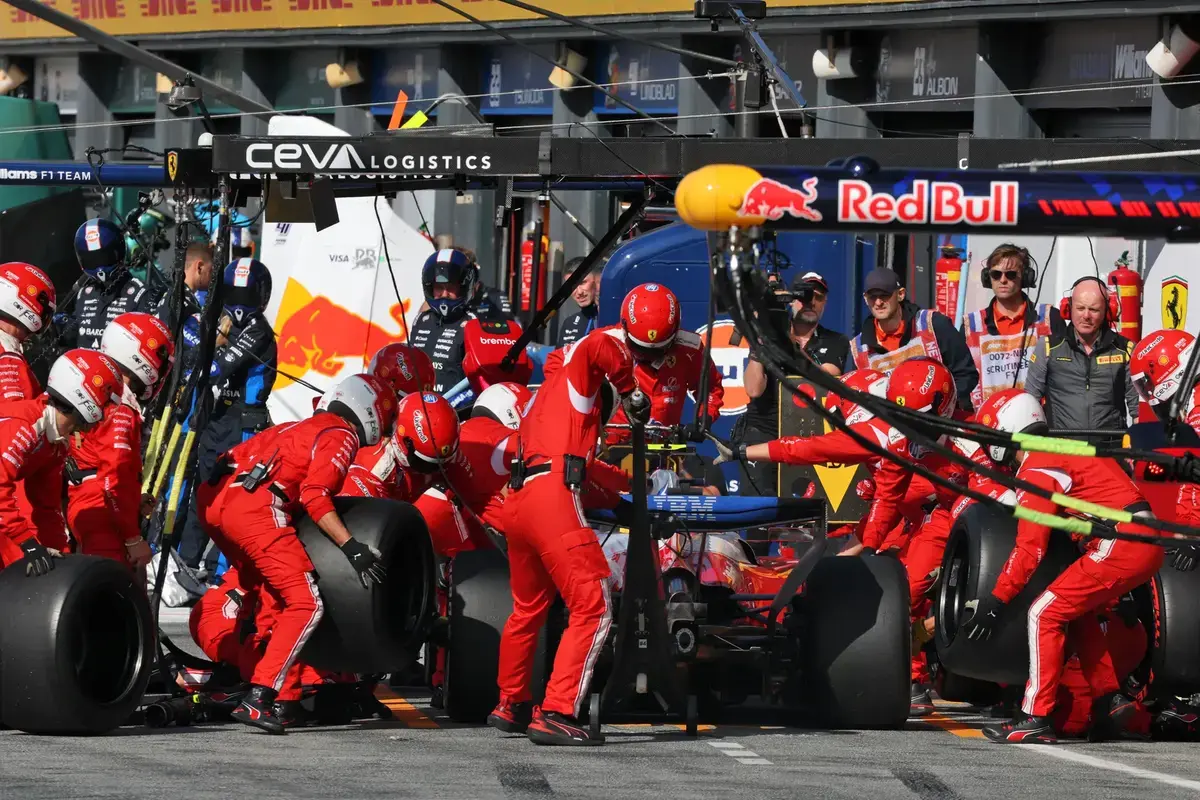
The flashpoint came around half-distance at Zandvoort. Hamilton had run long in his opening stint, built a serious tyre advantage, and came steaming up behind team-mate Charles Leclerc at around a second a lap quicker. Rather than pull Leclerc aside and let Hamilton hunt down the Mercedes ahead, Ferrari dithered. The team initially planned to box Leclerc, then left him out an extra lap while Hamilton sat helplessly in his dirty air, before finally calling him in.
That one lap mattered. Hamilton eventually crossed the line in fourth, less than a second behind George Russell in third, a margin comfortably smaller than the time he lost stuck behind his own team-mate. Do the maths and Ferrari’s indecision, not raw pace, is what kept Hamilton off the podium.
Vasseur’s Defence: We Didn’t Want to Tip Off the Rivals
Asked to explain the confusion, Ferrari boss Vasseur offered a justification that sounds better in theory than it played out in practice.
“We didn’t want to tell him the strategy at this stage, because we didn’t want to disclose to the competitors that we wanted to keep him on track until the end. If he was able to keep Antonelli behind him, and I think that would have been the right call. And Charles was supposed to pit, and we extended one lap, and that was a kind of confusion.” – Fred Vasseur
A kind of confusion. That’s one way of putting it. Another way would be to say Ferrari asked Leclerc to hold station in traffic, on the racing line, mid-battle with Hamilton bearing down, then changed its mind moments later. As Crash.net reported, Vasseur even admitted that swapping positions mid-straight simply wasn’t feasible once the situation had developed, which rather begs the question of why the call wasn’t made earlier.
Hamilton Isn’t Buying the Spin
Lewis Hamilton wasn’t in a diplomatic mood after the race, and he made clear this wasn’t just a passing gripe. Speaking to media including RacingNews365, he called the delay behind Leclerc the definitive moment that cost him a shot at the podium.
“I think that ultimately meant I had a bigger distance to cover to try and catch up to George. I’m looking ahead and seeing Mercedes, and they execute like they got the car that’s fighting for a championship in the lead, and they did it straight away, and here I’m sitting back losing seconds; it is something that we need to discuss offline.” – Lewis Hamilton
That’s a seven-time world champion politely telling his team, in public, that Mercedes are running a tighter operation. It’s hard to argue. Kimi Antonelli and Russell moved through the field with ruthless efficiency in Zandvoort, while Ferrari fumbled over tyre compounds that Vasseur himself admitted nobody in the paddock had fully figured out. Hamilton didn’t stop there either, pointing out on team radio mid-race that the delay was a “great way of wasting time,” a line that will follow Ferrari around for weeks.
Leclerc’s Side: I Was Never Told to Move Over
Leclerc, for his part, insists he was simply following instructions and was never told to let Hamilton by. He was locked in his own tactical fight with Russell, trying to build tyre offset for a late charge, and the team’s messages were, in his words, unclear rather than absent.
“I didn’t have any message on letting Hamilton past. At the end of the day, I was focusing on my pace and trying to do the best I could for my race. Sometimes I’ll be frustrated. Sometimes Lewis will be frustrated, but it’s the way it is.” – Charles Leclerc
Leclerc’s version, relayed to RacingNews365, actually makes the situation look worse for the pit wall, not better. If neither driver received a clear instruction to swap or hold, then Ferrari’s “kind of confusion” wasn’t a one-off miscommunication, it was a strategic vacuum at the exact moment the race demanded clarity. This is the same team that has already faced scrutiny this weekend over strategy criticism from both drivers and continues to look like it’s improvising while Mercedes execute with cold precision.
The Bigger Picture Ferrari Would Rather You Ignore
Zoom out and the numbers tell their own story. Hamilton and Russell are now tied on 183 points apiece, with Russell ahead on countback thanks to his extra win, while Ferrari’s championship position slid further behind Antonelli’s runaway Mercedes campaign. Antonelli leads by 59 points over both title rivals after extending his advantage yet again at Zandvoort, a race where Lando Norris ultimately took victory amid the chaos.
Vasseur’s closing admission was, at least, honest. “If I have a look at the race now, they can do it differently,” he conceded. That’s Ferrari-speak for “we got it wrong,” dressed up in enough hedging to avoid sounding like an actual apology.
Ferrari’s Real Problem Isn’t Strategy Software, It’s Nerve
Ferrari doesn’t lack data. Hamilton said as much himself, demanding the team “find the answer” because they “have all the data.” What Ferrari lacks is the conviction to act decisively on that data when two title-calibre drivers are racing each other in real time. Vasseur can promise clarity after the debriefing all he likes, but debriefings don’t win championships. Split-second calls under pressure do, and on that measure, Zandvoort was another data point Ferrari would rather forget.