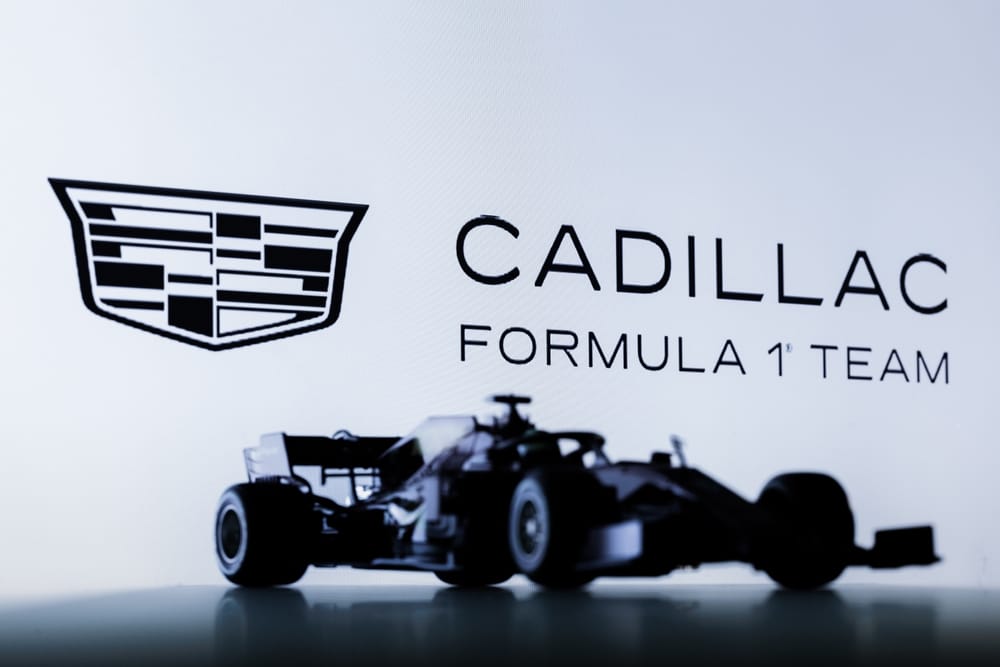

Cadillac’s confirmed their race engineers. Carlo Pasetti will work with Sergio Pérez, whilst John Howard gets Valtteri Bottas. Both drivers spent 2025 watching from home. Now they’ve got experienced engineers joining them as the American outfit builds an F1 team from absolute scratch.
The American outfit announced these appointments as they prepare for F1’s biggest regulatory revolution in history. Pasetti arrives from Aston Martin. Howard left Alpine in April after nearly fifteen years at Enstone. That’s proper pedigree for a team building everything from scratch whilst established operations iterate on decades of institutional knowledge. Whether experience at other teams translates into success at Cadillac remains the genuine question nobody can answer until racing begins.
Carlo Pasetti: From Aston Martin’s Chaos to Cadillac’s Adventure
Pasetti will serve as Pérez’s race engineer after leaving Aston Martin. He worked as a performance engineer at Silverstone, which means he’s already experienced the joys of managing expectations whilst reality delivers something considerably less impressive. That’s excellent preparation for joining a startup F1 team attempting to compete against established operations with decades of experience.
PlanetF1 reported these appointments as confirmed. RacingNews365 received a more cautious response from Cadillac, with the team noting that whilst the plan is for Pasetti and Howard to work with Pérez and Bottas respectively, nothing’s finalised until they’ve actually driven together. Which is sensible hedging from a team that doesn’t need premature announcements backfiring.
Pérez completed 281 grands prix across 14 years with Sauber, McLaren, Force India, Racing Point, and Red Bull. Eleven wins. Multiple podiums. Then Red Bull dropped him mid-2025 after his form collapsed spectacularly. He reportedly completed testing at Imola in November, lapping a 2023 Ferrari in the 1:16s. Now Pasetti gets the responsibility of working with a driver returning after a year away, in a car nobody’s tested, with regulations nobody fully understands.
John Howard: Fifteen Years at Alpine Prepared Him for This Somehow
Howard gets Bottas after nearly fifteen years at Alpine, most recently as Pierre Gasly’s voice on the radio. He worked his way through performance engineering roles at Enstone before becoming a race engineer. That’s the traditional career path: prove yourself in data analysis, move into performance roles, eventually earn the right to manage driver communications during races.
Leaving Alpine in April meant Howard departed before the team’s 2025 season properly collapsed. Whether that timing was coincidental or strategic doesn’t particularly matter. He’s now joined F1’s most ambitious new entry in years, responsible for working with a driver who spent five years at Mercedes collecting ten wins alongside Lewis Hamilton before three seasons at Sauber delivered considerably less spectacular results.
Bottas completed a seat fit with Cadillac immediately after Abu Dhabi, officially leaving his Mercedes reserve role to join America’s F1 gamble. He gets his first running in January during Barcelona testing alongside everyone else discovering what 2026’s regulations actually mean. Howard will manage that process whilst Cadillac assembles 85,000 components and hopes everything works together at 200mph.
When Your Drivers Spent 2025 Watching From Home
Both Pérez and Bottas sat out 2025 entirely. The Mexican watched his former Red Bull team continue without him. The Finn remained technically available as Mercedes reserve driver but wasn’t required beyond Abu Dhabi. Now they’re reuniting with F1 through a team that’s building everything from scratch whilst established outfits benefit from decades of data, experience, and institutional memory.
That creates an interesting dynamic for Pasetti and Howard. They’re not joining drivers who’ve spent recent seasons developing relationships with engineers at existing teams. They’re starting fresh with racers returning after a year away, in cars nobody’s driven, under regulations nobody’s mastered. It’s either the perfect opportunity for clean-slate partnerships or a recipe for confusion when communication matters most.
The appointments suggest Cadillac’s taking the professional route rather than gambling on unproven personnel. Both engineers bring proper pedigree from established operations. Whether experience at Aston Martin and Alpine translates into success at a startup team remains entirely theoretical until January’s Barcelona shakedown provides actual data.
Crash Tests Passed, Engineers Confirmed, 85,000 Components Remaining
Cadillac successfully completed homologation tests for both chassis and rear crash structure in early December. Team principal Graeme Lowdon properly praised the design department for clearing this milestone ahead of January’s Barcelona testing. That’s one major hurdle cleared for F1’s newest team. Now they just need to assemble the remaining 85,000 components and hope everything works when Pasetti and Howard start working with their drivers.
“If we look at the design challenges of the new regulations, where the weight of the car is significantly reduced, these tests become proportionally more stringent. You’re aiming for a lower total mass of the car. I think it’s a milestone for any team when they pass these tests. For us it’s even more so, because as a team we don’t have years of experience designing these components.” – Graeme Lowdon
That’s diplomatic language for “we’re building everything from nothing whilst established teams iterate on decades of knowledge.” The 2026 regulations demand lighter cars with stronger crash structures. That’s physics working against engineering ambitions. Every team faces this challenge. Cadillac’s doing it without historical data, previous designs, or institutional memory. And now they’ve got race engineers who must help translate all that complexity into actual racing performance.
Barcelona Testing: When Theory Meets Catastrophic Reality
Lowdon emphasised that Cadillac remains on schedule despite the complexity of assembling an F1 car from 85,000 individual components. That’s not hyperbole. Modern F1 machinery comprises tens of thousands of parts, each requiring design, manufacture, testing, and integration. All whilst meeting homologation requirements and preparing for Barcelona’s late January shakedown.
“The focus is completely on 2026, so it’s very valuable to be able to test. It’s ultimately not a mandatory test. If teams decide it makes little sense, they won’t go. We know we face a different challenge. The fact that we can test is fantastic. It was very difficult for us to test with an old car. For other teams that’s not the case, because they have old cars. We don’t. Because of things like that, it’s very useful for us to be able to test in January.” – Graeme Lowdon
Barcelona testing represents Cadillac’s first opportunity to validate everything they’ve designed, simulated, and manufactured. It’s also when Pasetti and Howard discover whether their drivers remember how to race after a year watching from home, whether radio communications work properly, and whether 85,000 components assembled in several months function as effectively as systems developed over decades by established teams.
Other teams might treat January’s running as optional mileage. For Cadillac, it’s absolutely critical. For Pasetti and Howard, it’s their first chance to establish working relationships with drivers who’ll depend on their expertise when racing begins.
When Your Livery Reveal Costs More Than Most Teams’ Budgets
Cadillac announced their 2026 livery will debut during a Super Bowl advert on February 8th. Because nothing says “we’re serious about F1” quite like spending millions on advertising during America’s most watched sporting event. That’s proper commitment to brand visibility. Whether it translates into competitive machinery remains the genuine question nobody can answer until Pasetti and Howard start working with Pérez and Bottas during actual races.
The team enters F1 with Ferrari customer engines for their debut season before transitioning to their own General Motors power units in future years. That creates a transitional period where Cadillac must compete with borrowed engines whilst developing their own technology for later homologation. Not ideal, but better than the alternative of delaying entry entirely.
They’ve cleared crash tests. Confirmed race engineers. Signed experienced drivers. Scheduled their Super Bowl reveal. Everything’s progressing according to plan. Now comes the genuinely difficult part: making all 85,000 components work together at 200mph whilst Pasetti and Howard help guide drivers competing against teams that have been doing this for decades.