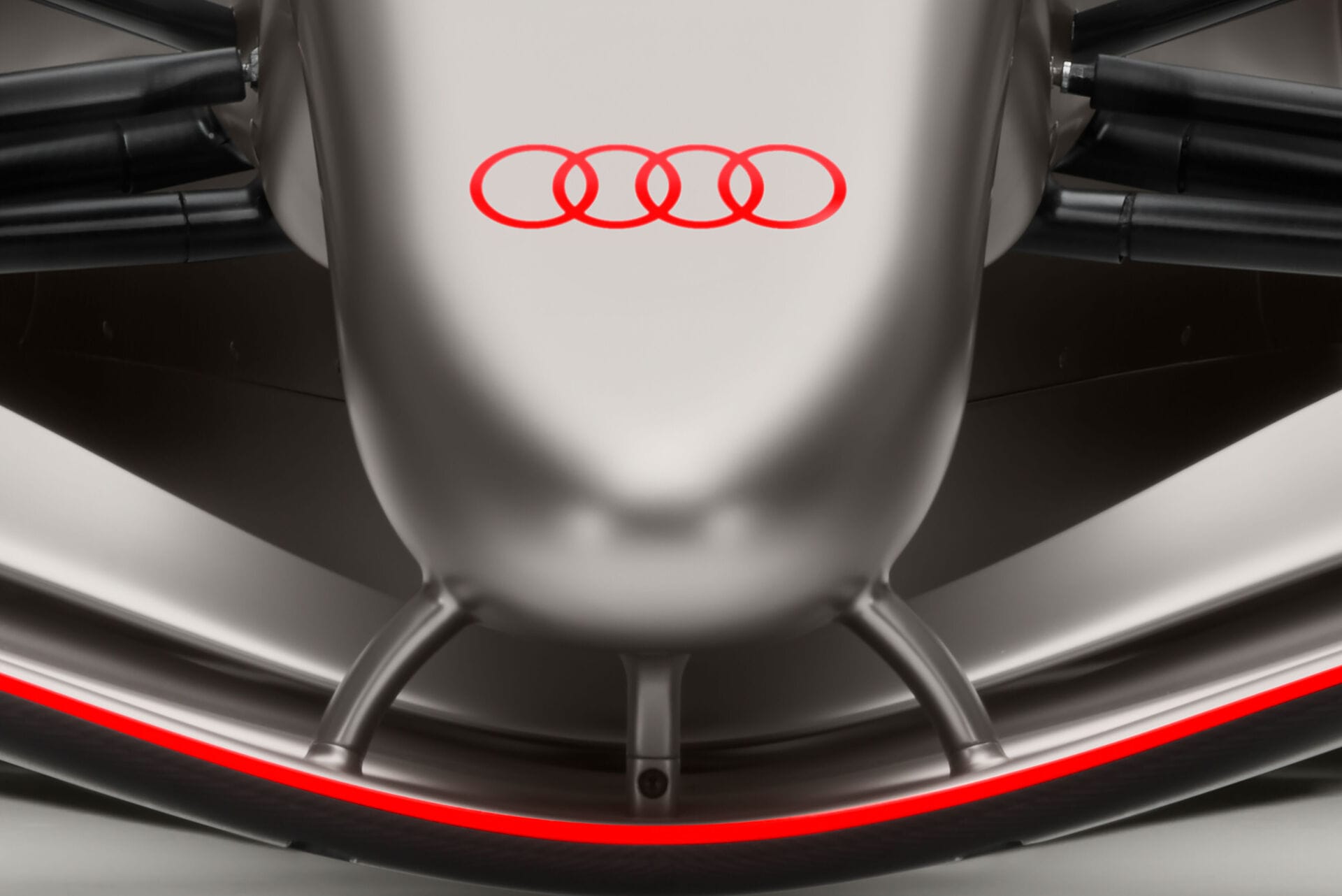

Audi claimed bragging rights on Friday by becoming the first team to run a 2026 Formula 1 car. The German manufacturer’s R26 completed its shakedown at Barcelona’s Circuit de Catalunya, delivering 42 laps of filming day running whilst rivals sat in their factories still assembling components. That’s proper momentum ahead of official pre-season testing starting January 26th.
But being first doesn’t guarantee being fastest. Nico Hulkenberg and Gabriel Bortoleto split driving duties during the 200-kilometre filming day, providing the team its first proper assessment of how chassis and power unit work together. The footage shows promise: push-rod suspension, inwashing sidepods, and a narrower profile under F1’s new regulations. Whether that translates into competitive performance remains entirely theoretical until proper testing begins.
The Push-Rod Decision That Abandons Recent Thinking
Audi’s opted for push-rod front suspension on the R26. That’s a complete reversal from Sauber’s 2024 pull-rod setup, which followed McLaren and Red Bull’s lead under the previous ground-effect regulations. The German manufacturer’s calculation suggests softer spring rates under 2026 rules make pull-rod arrangements unnecessary.
The technical reasoning is sound. Previous regulations demanded cars run millimetres from the ground to maximise floor performance, creating brutal ride characteristics that required pull-rod kinematics for anti-dive properties. The 2026 floors are less sensitive to ride height changes, allowing teams to explore suspension configurations that prioritise mechanical grip over aerodynamic stability.
La prima monoposto 2026 e’ Audi che sta girando al Montmelo’. #F1 #AudiF1 #ShakeDown pic.twitter.com/5sNcSE2Bx9
— RobertoF1 (@robertofunoat) January 9, 2026
Both front and rear suspension appear to use push-rod layouts based on grainy footage from Barcelona. That’s interesting given F1 teams largely adopted push-rod rear arrangements across 2022-25 despite traditionally favouring pull-rod to keep the centre of gravity low. Audi’s clearly confident this direction suits the 2026 regulations better than alternatives.
The Sideways Sidepods That Buck Red Bull’s Trend
The R26’s sidepods show inwashing characteristics rather than the downwash solution that dominated 2022-25. That’s a deliberate choice when most teams converged towards Red Bull’s philosophy across recent seasons. Audi’s betting that routing airflow around sidepods rather than over them will maximise the Coke bottle effectiveness at the rear.
The physics are straightforward. Inwashing solutions pull air through the central section if the flow stays attached, minimising wake exposure to rear tyres. That requires precise execution. If airflow separates, the entire concept collapses. Red Bull proved downwash worked reliably across different conditions, which explains why competitors copied their approach.
Audi’s divergence suggests their aerodynamic department believes the 2026 regulations favour different solutions than 2022-25. Perhaps the active aerodynamics change fundamental assumptions about airflow management? Or maybe they’ve identified specific advantages that inwashing delivers with the narrower, lighter 2026 chassis specifications? We’ll discover the answers when proper testing begins.
Hulkenberg and Bortoleto: The Experience Gap That Matters
Hulkenberg brings 251 grand prix starts to Audi’s debut season. The 38-year-old German finally secured his first F1 podium at Silverstone last year, demonstrating he can extract performance from difficult machinery. That experience matters enormously when developing cars under regulations nobody fully understands yet.
Bortoleto offers youth and potential after 24 grands prix racing for Sauber in 2025. The Brazilian scored 19 points during his rookie campaign whilst the team struggled with fundamental correlation issues. His ability to describe car behaviour will help engineers, but he lacks the reference database Hulkenberg’s accumulated across 13 seasons.
That experience disparity creates interesting dynamics. Hulkenberg can provide immediate feedback about whether concepts work or fail. Bortoleto requires more time to build confidence and understanding. Audi’s development trajectory depends partly on how quickly the Brazilian adapts to 2026’s dramatically different regulations whilst Hulkenberg establishes baseline performance.
The Berlin Launch That Precedes Proper Assessment
Audi will officially unveil the R26 livery during a Berlin event on January 20th. That’s six days before Barcelona testing begins behind closed doors. The German manufacturer clearly values the marketing opportunity of launching on home soil rather than at the circuit where work actually happens.
The concept livery revealed last year featured titanium, carbon black, and Audi red as predominant colours. Whether the race specification maintains that scheme remains speculation until the Berlin presentation. Friday’s shakedown ran an all-black livery designed to hide details from competitors, following standard practice for filming days.
Three pre-season tests await. Barcelona’s five-day test from January 26-30 happens behind closed doors, restricting teams to three days of running. Two Bahrain tests follow on February 11-13 and 18-20 before Australia opens the season on March 8th. That’s substantial track time for everyone gambling on regulations nobody’s validated properly yet.
The Fire-Up Three Weeks Late Strategy
Audi’s Barcelona shakedown followed their December 19th fire-up announcement by three weeks. The team successfully ignited its maiden F1 power unit at their Hinwil base before Christmas, then waited until January to share the news publicly. That timing created anticipation ahead of Friday’s track debut, delivering consecutive milestones that maintained media attention.
The power unit’s been running on testbenches in Neuburg since May 2024, accumulating data about the 2026 hybrid systems that triple electrical output whilst reducing combustion power. Audi’s prioritising reliability over peak performance initially, which makes sense when racing sustainable fuels under regulations that permit just four engines across 24 races.
When Momentum Doesn’t Equal Performance
Audi executed its pre-season plan efficiently. Fire-up before Christmas. Shakedown in early January. Berlin launch mid-month. Official testing begins end of January. That’s proper momentum heading into their debut campaign. Whether efficiency translates into competitiveness against Mercedes, Ferrari, Honda, and Red Bull-Ford remains the fundamental question.
The R26’s technical choices suggest Audi’s taken distinct directions from competitors. Push-rod suspension when others might stick with pull-rod. Inwashing sidepods against prevailing downwash trends. That’s either confidence in their aerodynamic understanding or willingness to gamble on untested concepts. Barcelona’s official testing will reveal which interpretation proves accurate.
Being first to test matters for morale and preparation. But Red Bull didn’t dominate 2022-25 because they tested first. They won because Adrian Newey’s team understood the regulations better than rivals. Audi’s hired talent, built infrastructure, and committed resources. The shakedown confirms their hardware functions. Whether it functions better than ten competitors remains unanswered.