
When Your Big Reveal Happened Three Weeks Ago
Audi’s announced something rather important on Wednesday. The German manufacturer successfully fired up its maiden Formula 1 power unit. Revolutionary stuff. Except the actual fire-up happened on December 19th at their Hinwil base in Switzerland. That’s three weeks of sitting on the news before deciding the world needed to know.
Welcome to corporate theatre in F1, where timing matters more than actual engineering milestones. The R26’s engine roared to life whilst installed in the chassis before Christmas, but Audi waited until January to share the moment. Perhaps they were hoping Santa would deliver some actual performance data alongside the corporate enthusiasm?
Mattia Binotto, head of the Audi F1 project, delivered the expected statements about “new beginnings” and “incredible energy.” Team principal Jonathan Wheatley called it a “critical milestone” that brings Melbourne “into sharp focus.” Which sounds impressive until you remember every other manufacturer completed similar milestones months ago without the delayed announcement fanfare.
“A fire-up is always a special moment, but this one marks a new beginning. It is the tangible result of our collective ambition and the dedicated work of our teams in Neuburg and Hinwil.” – Mattia Binotto
Friday’s Barcelona Shakedown: Actually Interesting
Here’s where things get properly entertaining. Audi’s reportedly conducting a filming day at Barcelona’s Circuit de Catalunya on Friday, January 9th. That’s tomorrow. Suddenly the delayed fire-up announcement makes sense. Build anticipation, drop the news, then immediately follow up with actual on-track running.
This marks the first time any 2026-spec car will appear on circuit. Nico Hulkenberg and Gabriel Bortoleto will presumably split the 200 kilometres (42 laps) allowed under filming day regulations. That’s not enough distance to gather meaningful performance data, but sufficient to confirm everything actually works when you’re not in a factory with controlled conditions.
The timing gives Audi bragging rights as first manufacturer onto track for the 2026 season. Whether that translates into competitive advantage remains wildly optimistic speculation until Barcelona testing begins on January 26th. But fair play for moving quickly from fire-up to shakedown.
The Special Forces Success Story Everyone’s Ignoring
What’s genuinely impressive? The technical progress Sauber made throughout 2025. Technical director James Key assembled a “special forces” aerodynamic team of roughly 10 young engineers who transformed the catastrophically terrible C45 into a genuine midfield contender.
That triptych of floor upgrades across Spain, Austria, and Britain delivered the aerodynamic robustness the car desperately needed. Hulkenberg’s Silverstone podium wasn’t luck. It was evidence that years of underfunding and correlation problems were finally getting addressed. The car became stable, predictable, and actually driveable.
That matters far more than fire-up dates or shakedown schedules. Audi’s inherited a team that’s demonstrably improving its development tools and aerodynamic understanding. The gains made mid-season prove the organisation can solve complex problems under pressure. Whether that translates to 2026 regulations nobody fully understands yet? Different question entirely.
The Power Unit Nobody’s Discussing Properly
Audi’s developing its power unit at the Neuburg facility in Germany. Modern building. Impressive resources. Running on testbenches since May 2024. All lovely corporate infrastructure that means precisely nothing until racing begins.
The 2026 regulations introduce 50-50 hybrid systems running sustainable fuels with triple the electrical output. Active aerodynamics replace DRS. Everything changes simultaneously. Audi’s betting its own engine will compete against Mercedes, Ferrari, Honda, and Red Bull-Ford from day one. That’s either supreme confidence or spectacular optimism.
Fair assessment suggests Audi’s prioritising reliability over peak performance initially. Sensible approach when you’ve got Gabriel Bortoleto making his F1 debut alongside Hulkenberg. Better to finish races consistently than chase horsepower gains that destroy engines.
The Berlin Launch and Barcelona Reality Check
Audi will officially unveil the R26 livery on January 20th in Berlin. That’s 10 days before Barcelona testing begins behind closed doors. Then come two Bahrain tests on February 11-13 and 18-20 before the Australian Grand Prix opens the season on March 8th.
Three separate pre-season tests. That’s substantial track time for everyone gambling on regulations nobody’s properly validated yet. Audi’s starting from the back in terms of F1 experience but competing against manufacturers with decades of institutional knowledge.
The question isn’t whether Audi will be competitive immediately. It’s whether they’ve built sufficient foundations to improve rapidly once racing exposes their weaknesses. That 2025 aerodynamic turnaround suggests they can. The delayed fire-up announcement suggests they’re still learning F1’s corporate theatre requirements.
When Ambition Meets F1’s Brutal Reality
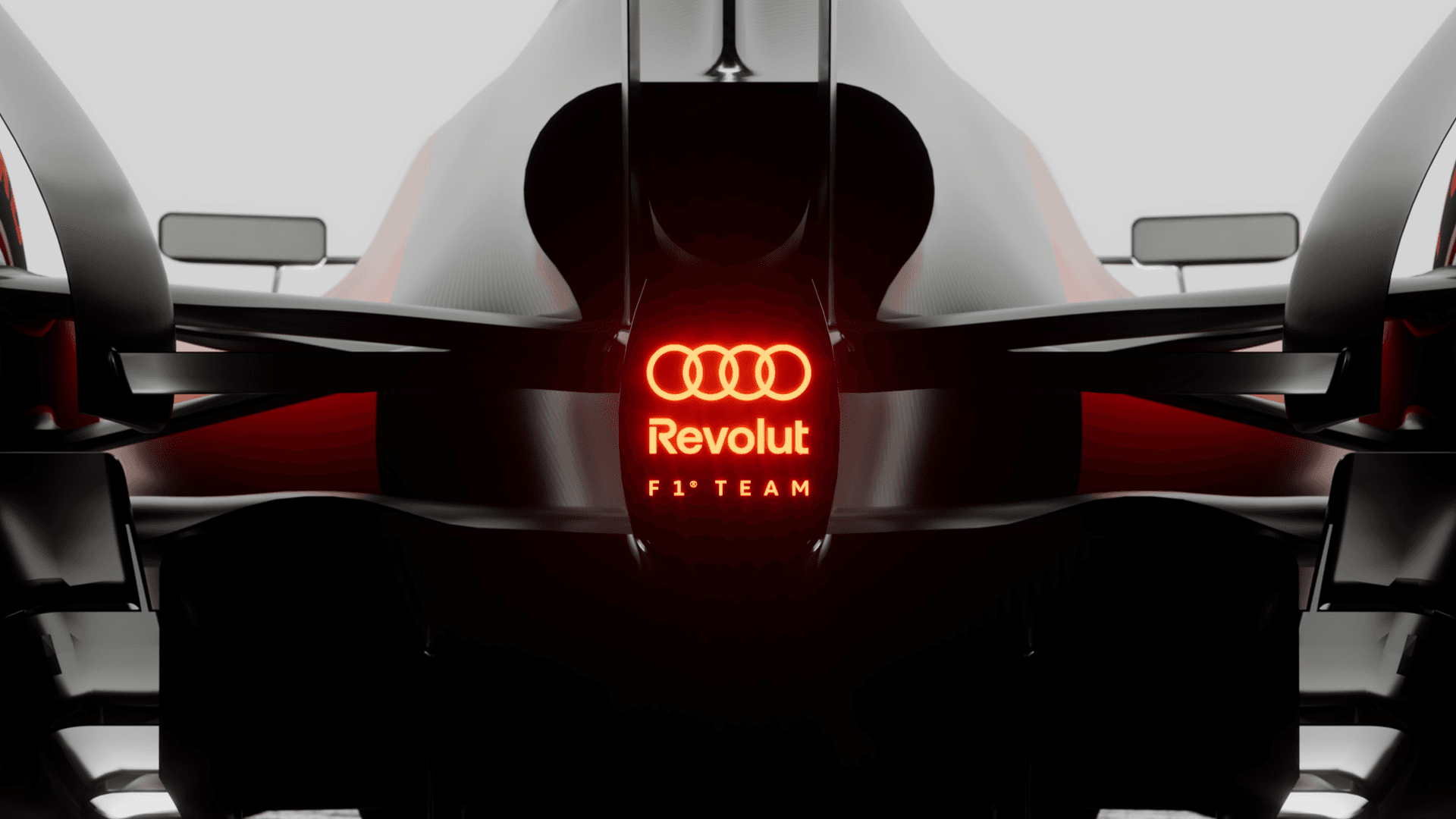
Audi’s stated goal? Fight for championships by 2030. That’s five years to close gaps that typically take decades. The investment’s substantial. Qatar Investment Authority backing. Revolut title sponsorship. Three operational bases across Germany, Switzerland, and Britain. Proper manufacturer commitment.
But as Alpine’s discovering with their Mercedes engines, throwing money and infrastructure at F1 doesn’t guarantee results. Correlation between development tools and track performance matters more than factory size. Driver feedback loops and operational sharpness beat corporate enthusiasm every time.
Friday’s shakedown will provide the first glimpse of whether Audi’s R26 actually works outside controlled environments. Then Barcelona testing begins three weeks later with all competitors visible. That’s when the corporate statements meet track reality. When “incredible energy” either translates into lap times or becomes another manufacturer learning F1’s brutal lessons the hard way.