
Two points. That’s what Andrea Kimi Antonelli wanted to know the moment he crossed the line in Abu Dhabi. Not his finishing position. Not Mercedes securing second in the constructors’. How many points did Max Verstappen lose the championship by?
The 19-year-old rookie asked his race engineer Peter Bonnington three times before getting the answer. Two points. The exact margin gained when Antonelli made that mistake in Qatar, letting Lando Norris through on the penultimate lap. The incident that sparked death threats, vile abuse, and accusations from Helmut Marko that he’d deliberately helped McLaren.
Brilliant introduction to Formula 1, that. Make one error under pressure, watch the internet lose its collective mind, then spend the season finale wondering whether you’ve accidentally destroyed someone’s championship dreams.
When Your Mistake Becomes Someone Else’s Nightmare
The radio exchange was properly awkward. Antonelli finished 15th in Abu Dhabi after struggling with balance all race. His eight-round points streak ended exactly where nobody wanted it to. Then came the questions.
“So Norris won the championship?” – Andrea Kimi Antonelli
Bonnington confirmed yes. Then Antonelli asked how much. The engineer initially misunderstood, giving the gap between Norris and fourth-placed Charles Leclerc. Sixteen and a half seconds. Not what the Italian wanted to know.
“No, but by how many points?” – Andrea Kimi Antonelli
Bonnington delivered the answer that’s haunted Antonelli since Qatar. Two points. Just two. The rookie offered no response. What exactly do you say when you’ve just confirmed your mistake directly influenced a world championship?
Verstappen’s Class Act Nobody Expected
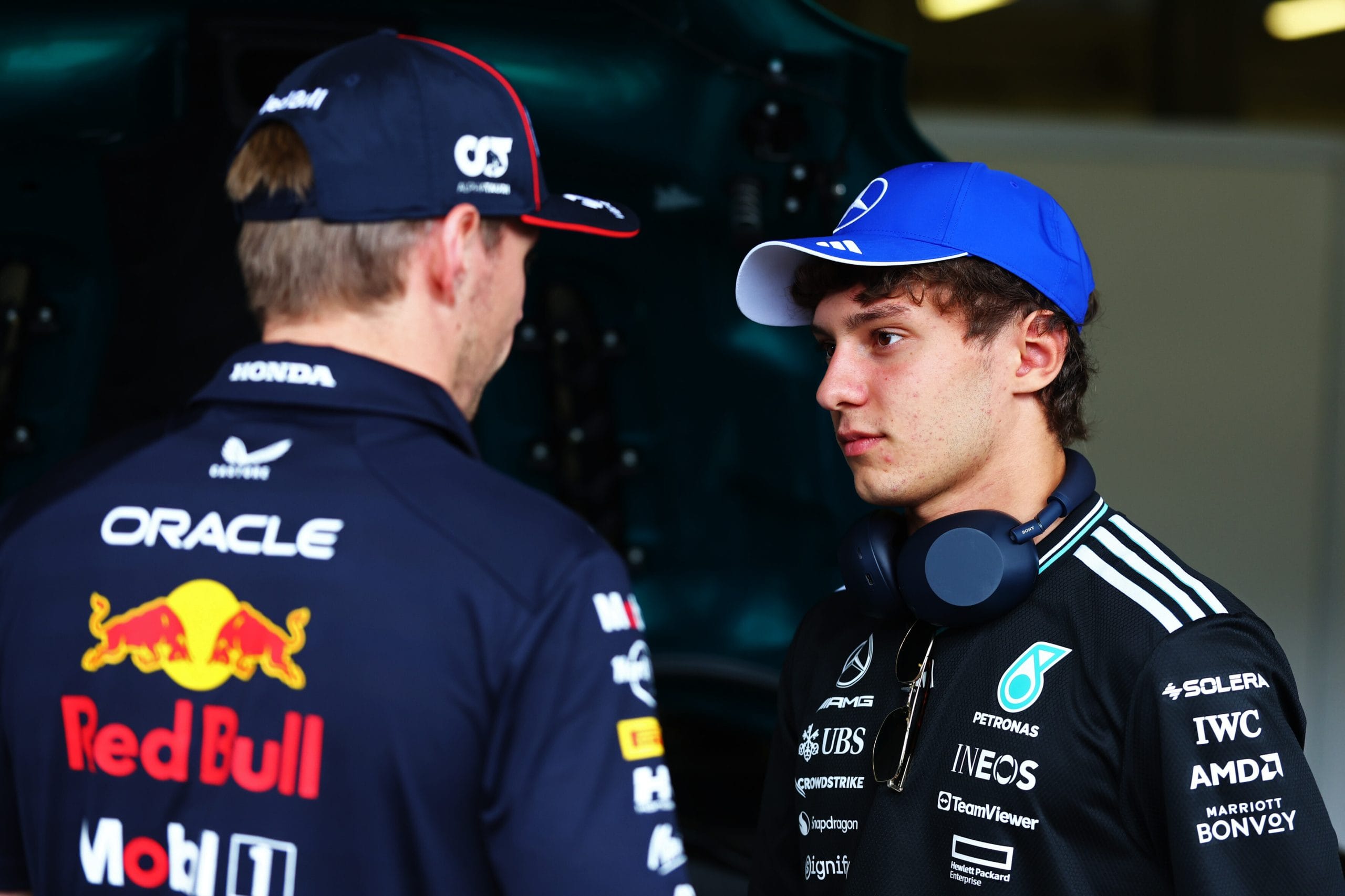
Credit where it’s massively due. Verstappen handled this situation with remarkable maturity. When Antonelli approached him in the Abu Dhabi media pen to apologise, the Dutchman immediately shut it down.
“Mate, don’t worry. It’s all good.” – Max Verstappen
Warm embrace. Genuine smile. None of the bitterness you’d expect from someone who’d just lost his fifth consecutive title by a margin so narrow it hurts. Verstappen even sent messages of support when the abuse started flooding Antonelli’s social media after Qatar.
Apparently those messages contained “some bad words” according to Antonelli, who revealed Verstappen told him: “Don’t worry about these kind of people, because they’re brainless. Just focus on the job.”
That’s proper mentorship. Verstappen’s acted as a friend to Antonelli throughout the season, particularly after the Austrian Grand Prix where the Mercedes rookie torpedoed him into retirement on lap one. No blame. No public criticism. Just acceptance that racing incidents happen.
The Qatar Nightmare That Sparked Everything
Here’s what actually happened in Qatar. Antonelli made a mistake on the second-to-last lap whilst running fifth. Norris capitalised brilliantly, sweeping past into fourth place. Two extra points collected. Two points that would decide the championship in Abu Dhabi.
Red Bull’s Helmut Marko immediately accused Antonelli of deliberately letting Norris through to help his title chances. The claim was spectacularly inflammatory and utterly baseless. A 19-year-old rookie sacrificing his own race result to influence a championship battle he had no stake in? Ridiculous.
But the damage was done. Death threats flooded in. Abuse poured across social media. Antonelli turned off his comments on Instagram. The teenager who’d just completed his first F1 season was subjected to the kind of vile harassment that makes you question whether motorsport fans deserve nice things.
Marko eventually apologised and retracted his comments. Too late, obviously. The internet mob had already been unleashed. Red Bull issued a statement confirming Antonelli did nothing wrong and condemning the abuse. Which would’ve been more effective if their advisor hadn’t sparked the controversy in the first place.
When One Mistake Defines Your Entire Season
The cruel irony? Antonelli actually had a properly solid run from Baku onwards. Eight consecutive points finishes before Abu Dhabi. Genuine development as a driver. Progress that any rookie would celebrate in their debut season.
But nobody’s discussing that, are they? Instead, we’re dissecting whether his Qatar mistake cost Verstappen the championship. Whether he should feel guilty. Whether that two-point margin means something deeper.
“Today was a bad race, but I think before this weekend we had a really strong run from Baku onwards.” – Andrea Kimi Antonelli
Fair assessment from someone who spent Sunday struggling with balance issues. He admitted feeling “really weird” in the car, unable to find pace or confidence. Got eliminated in Q2. Finished 15th. Not exactly the finale anyone hoped for.
But that eight-race scoring streak represents genuine achievement. Mercedes secured second in the constructors’ championship partly because Antonelli delivered points when they needed them. That’s the story his rookie season should be remembered for, not one mistake in Qatar.
The Austria Incident Nobody’s Blaming Him For
Here’s the other uncomfortable element of Antonelli’s guilt. He also took Verstappen out at the Austrian Grand Prix. Lap one chaos. Lost control. Hit the Red Bull. Race over for the championship leader.
More points lost. More opportunities squandered. And yet Verstappen never blamed him then either. Just accepted it as a racing incident, moved on, continued fighting for the title.
So Antonelli’s season includes two separate moments where he directly cost Verstappen championship points. One accidental collision. One driving mistake. Both utterly unintentional. Both now weighted with significance because the final margin was so impossibly narrow.
That’s the burden young drivers carry when championships get decided by fractions. Every mistake gets magnified. Every error potentially costs someone their dreams. The pressure’s immense even when you’re not fighting for titles yourself.
When Two Points Feel Like Everything
Verstappen won eight races this season. More than both Norris and Oscar Piastri. He mounted one of the great championship comebacks, clawing back 104 points to finish just two short. He dominated in Abu Dhabi, taking pole and victory when pressure peaked.
And he lost by two points. The exact margin Antonelli’s Qatar mistake provided Norris. The mathematics are brutal in their simplicity.
But blaming Antonelli ignores the broader context. Verstappen’s season included plenty of moments where Red Bull dropped points through their own mistakes. Strategy disasters. Mechanical issues. That horrific mid-season slump where the RB21 drove like a shopping trolley with three wonky wheels.
Championships aren’t decided by single incidents. They’re cumulative. Every point matters. Every race contributes. Singling out one rookie’s mistake whilst ignoring dozens of other variables is intellectually dishonest.
Yet here we are. Antonelli immediately asking about the points margin. Apologising to Verstappen in the media pen. Carrying guilt for something that was never his responsibility to manage.
The Maturity Verstappen Showed
That embrace in the media pen revealed something important about Verstappen’s character. He could’ve been bitter. Could’ve blamed Antonelli publicly. Could’ve fed into the narrative that the rookie cost him his fifth title.
Instead? Compassion. Understanding. Immediate dismissal of any need to apologise. That’s leadership from someone who’s won four world championships and understands the bigger picture.
Verstappen’s reaction hopefully draws a line under this nonsense. Antonelli made a mistake. Racing happens. Championships get decided by accumulation, not individual incidents. Moving on.
The teenager’s got enough to worry about heading into his second F1 season without carrying guilt for circumstances beyond his control. Perhaps the fans sending death threats could learn something from Verstappen’s maturity? Probably not. But we can hope.