
When Crying Becomes Winning
Lando Norris is a Formula 1 world champion. Let that sink in for a moment. The kid who’s spent years openly discussing his anxiety, panic attacks, and mental health struggles just beat Max Verstappen by two points to claim McLaren’s first drivers’ title since 2008.
“I’ve not cried in a while. I didn’t think I would cry, but I did,” Norris said immediately after climbing from his McLaren in Abu Dhabi. His voice cracked. The emotions poured out. And for once, absolutely nobody questioned whether he was mentally strong enough.
Because here’s the uncomfortable truth F1 rarely acknowledges: the driver who admitted he wasn’t okay, who spoke publicly about therapy and mental health support, just proved he’s tougher than everyone who called him weak.
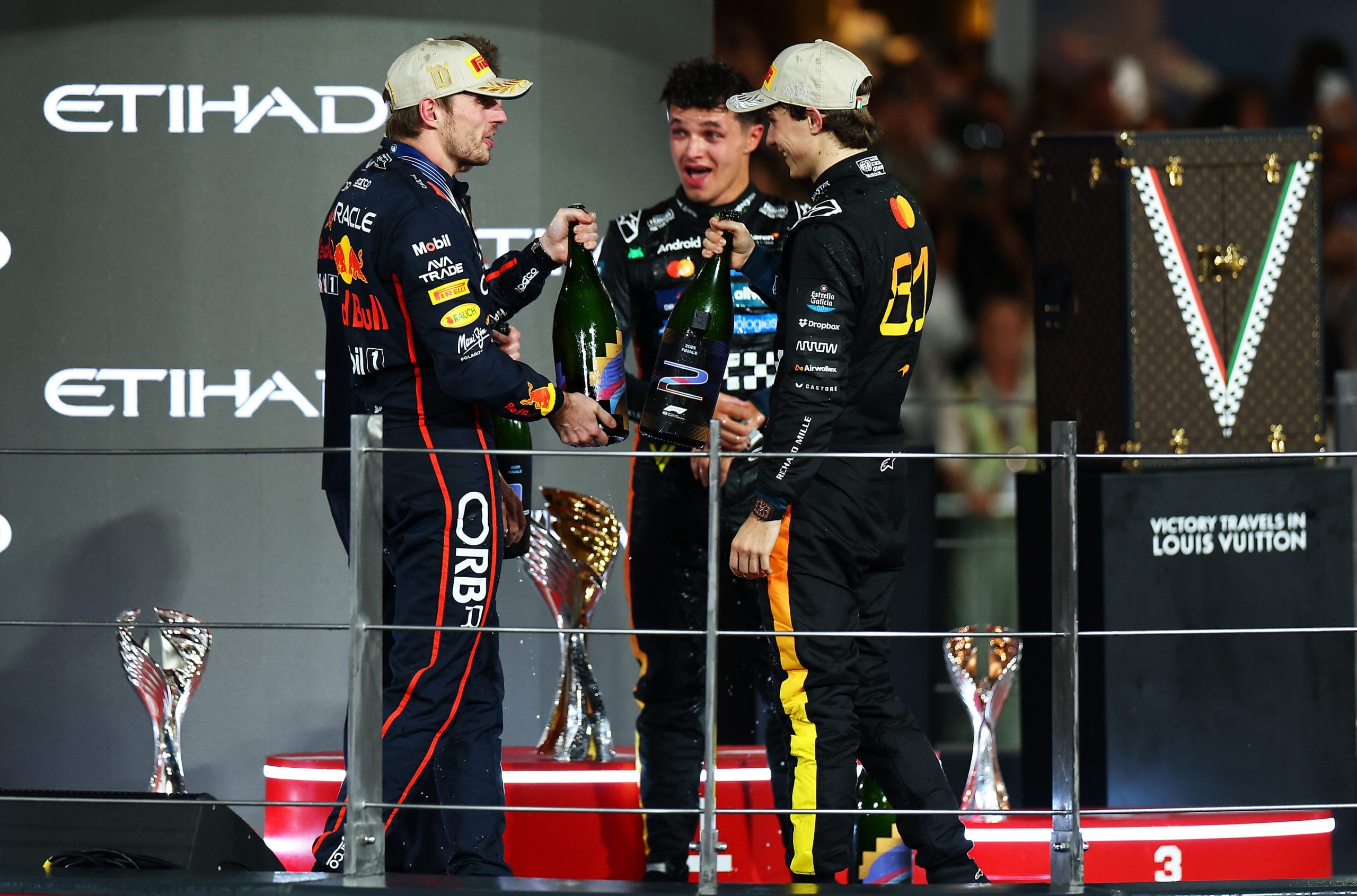
Third place in Abu Dhabi was enough. Verstappen won the race, dominating from pole position with his trademark clinical efficiency. Oscar Piastri finished second after a breathtaking opening lap overtake on his teammate. But Norris held his nerve, navigated traffic after his pit stop, survived a sketchy moment with Yuki Tsunoda weaving dangerously ahead of him, and crossed the line exactly where he needed to be.
Two points ahead of Verstappen. Thirteen clear of Piastri. Job done. Championship sealed. Mental health advocacy vindicated.
The Journey Nobody Expected
Remember when Norris couldn’t win from pole position? When he’d qualify brilliantly then somehow lose races through strategic disasters or driver errors? When everyone questioned whether he had the mentality to actually deliver championships despite having championship-winning machinery?
That narrative died somewhere between Mexico and Brazil, when Norris rattled off consecutive victories whilst Verstappen and Red Bull clawed back what seemed like an impossible deficit. The Brit who’d trailed by 34 points after his Zandvoort retirement suddenly found another gear precisely when his season threatened to collapse.
“It’s a long journey. First of all, I want to say a big thanks to my guys, everyone in McLaren, my parents – they’re the ones who have supported me since the beginning,” Norris said through tears in his post-race interview.
Nine years with McLaren. Seven seasons racing. Countless moments where quicker machinery sat in someone else’s garage whilst he toured around in eighth. Then suddenly the car arrived, the opportunity presented itself, and everyone wondered whether he’d actually seize it.
He did. Eventually. After mistakes. After self-doubt. After that brutal first half of the season where Piastri looked like McLaren’s real championship contender.
When Your Teammate Nearly Ruins Everything
Let’s address the Piastri situation properly. The Australian lost Norris a place on lap one with that aggressive Turn 9 overtake. Brilliant racing? Absolutely. Helpful for his teammate’s title chances? Not remotely.
McLaren spent the entire season refusing to implement team orders, committed to their “papaya rules” philosophy even when championships hung in the balance. Remember Norris saying he wouldn’t ask Piastri for help because it wouldn’t be “fair”? That principled stance nearly cost him everything.
But credit where it’s due: Piastri’s overtake actually helped. It put him between Norris and any potential Verstappen gamesmanship. The Australian’s decision to start on hard tyres created strategic flexibility that spaced out the front three. When the race settled, Norris had the breathing room he desperately needed.
“They certainly didn’t make my life easy this year,” Norris admitted afterwards, referencing both Verstappen and Piastri. Understatement of the century, that.
The Mental Health Champion F1 Didn’t Know It Needed
Here’s what makes Norris’s title genuinely significant beyond the racing. He’s repeatedly discussed his battles with anxiety and mental health, particularly during the pandemic when isolation amplified his struggles. He’s talked openly about panic attacks. About therapy. About the difficulty of maintaining mental wellness whilst competing at the absolute pinnacle of motorsport.
That honesty cost him. Critics questioned his mental strength. Rivals suggested he lacked the psychological toughness required for championships. Even supportive observers wondered whether someone so open about vulnerability could withstand the pressure when it truly mattered.
Turns out? Yes. Emphatically yes.
Norris didn’t win this championship by pretending to be invincible. He won it by acknowledging his struggles, seeking help, building support systems, and then delivering when the stakes reached their absolute peak.
“I now know what Max feels like a little bit,” Norris said with a smile, finally allowing himself to enjoy the moment. “It feels amazing.”
When Crying Makes You Stronger
The immediate post-race scenes were properly emotional. Norris climbed from his car, removed his helmet, and promptly burst into tears whilst embracing his parents. No manufactured stoicism. No forced composure. Just raw, genuine emotion from someone who’d finally achieved his childhood dream.
“For me to feel like I can bring something back to them as their first drivers’ champion in many, many years… I’m very proud of myself for that, but I’m even more proud for everyone that I’ve hopefully made cry,” Norris explained.
That vulnerability? That’s not weakness. That’s someone secure enough in themselves to express genuine emotion without fear of judgement. And in a sport that’s historically demanded robotic mental fortitude from its champions, Norris’s tears represent something genuinely revolutionary.
The Race That Wasn’t Actually Dramatic
Right, let’s talk about the actual racing. Because whilst the championship battle had everyone’s nerves shredded, the race itself was surprisingly straightforward once Piastri completed that opening lap overtake.
Verstappen controlled proceedings from the front, never implementing the predicted tactics to back Norris into traffic. The Dutchman simply drove his race, took his eighth victory of the season, and accepted that sometimes being faster than everyone else still isn’t enough when your rival has better machinery.
Norris faced his biggest challenge after pitting on lap 17, emerging into a train of yet-to-stop cars that threatened to destroy his championship. But he was decisive. Clinical, even. Double overtake on Kimi Antonelli and Alex Albon. Scything through Liam Lawson and Lance Stroll in one move.
Then came Tsunoda, clearly instructed by Red Bull to make Norris’s life difficult. The Japanese driver weaved across the circuit like a drunk snake, forcing Norris off-track as the McLaren completed its pass. The stewards investigated. Tsunoda got a five-second penalty for excessive weaving. Norris was cleared.
“Classic Red Bull nonsense,” was race engineer Will Joseph’s verdict on the radio. Hard to argue with that assessment when your departing driver is using his final race to play moving chicane for his teammate’s title rival.
When History Meets Statistics
Norris becomes Britain’s 11th F1 world champion and McLaren’s eighth different title winner. At 26 years and 23 days old, he’s the 12th youngest champion in history. His 18 podiums from 24 races this season demonstrates the consistency required for titles, even when your teammate’s matching your pace.
The final championship standings make for fascinating reading. Verstappen on 421 points. Norris on 423. Two points. That’s the margin between glory and heartbreak. That’s how much McLaren’s Monza team orders decision ultimately mattered when they swapped Piastri and Norris positions.
Without that intervention? Verstappen wins the title by one point. With it? Norris claims his first championship. That’s how fine the margins are when you refuse to implement team orders until absolutely forced.
The Verstappen Redemption That Wasn’t Quite Enough
Let’s acknowledge what Verstappen achieved this season. The man was 104 points behind after Zandvoort. His car was distinctly average for the first half of the year. Red Bull’s internal chaos threatened to derail everything.
Yet he mounted one of the great championship comebacks, winning from pole position when it mattered most in Abu Dhabi, and finished just two points short despite having clearly inferior machinery for most of the season.
That’s genuinely remarkable. Verstappen drove the season of his life and still lost. Which tells you everything about how dominant McLaren’s car actually was, and how impressive Norris’s title victory truly is when you consider he had to beat both Verstappen’s brilliance and his own teammate’s speed.
What This Means Going Forward
Norris winning changes F1’s landscape completely. The Verstappen era isn’t over, but it’s been interrupted. The narrative that Red Bull’s dominance was inevitable has been shattered. And most importantly, a driver who’s been refreshingly honest about mental health struggles has proved that vulnerability and championship success aren’t mutually exclusive.
Will this open the floodgates for other drivers to discuss their mental health more openly? Perhaps. Will it change how F1 views the psychological requirements for champions? Doubtful. But it’s created a precedent that didn’t exist before.
You can struggle with anxiety and win world championships. You can admit you’re not always okay and still deliver when the pressure peaks. You can cry after victories without anyone questioning your mental fortitude.
That matters. Probably more than the championship itself.
“It’s been a pleasure to race against both of them. It’s been an honour. I’ve learned a lot from both of them as well. I’ve enjoyed it. It’s been a long year, but we did it and I’m so proud of everyone.” – Lando Norris
So congratulations, Lando Norris. First-time world champion. Mental health advocate. The driver who proved that being honest about your struggles doesn’t make you weak.
It makes you human. And sometimes, that’s exactly what champions look like.