
Honda rolled out its long-awaited engine upgrade at Zandvoort and immediately got the review nobody in Sakura wanted to hear: from its own drivers. Fernando Alonso and Lance Stroll both said the new power unit is worse to drive than the old one, and now Honda has confirmed it, right before a Monza weekend that will expose every flaw the Japanese manufacturer would rather keep hidden.
A Step Forward That Feels Like a Step Back
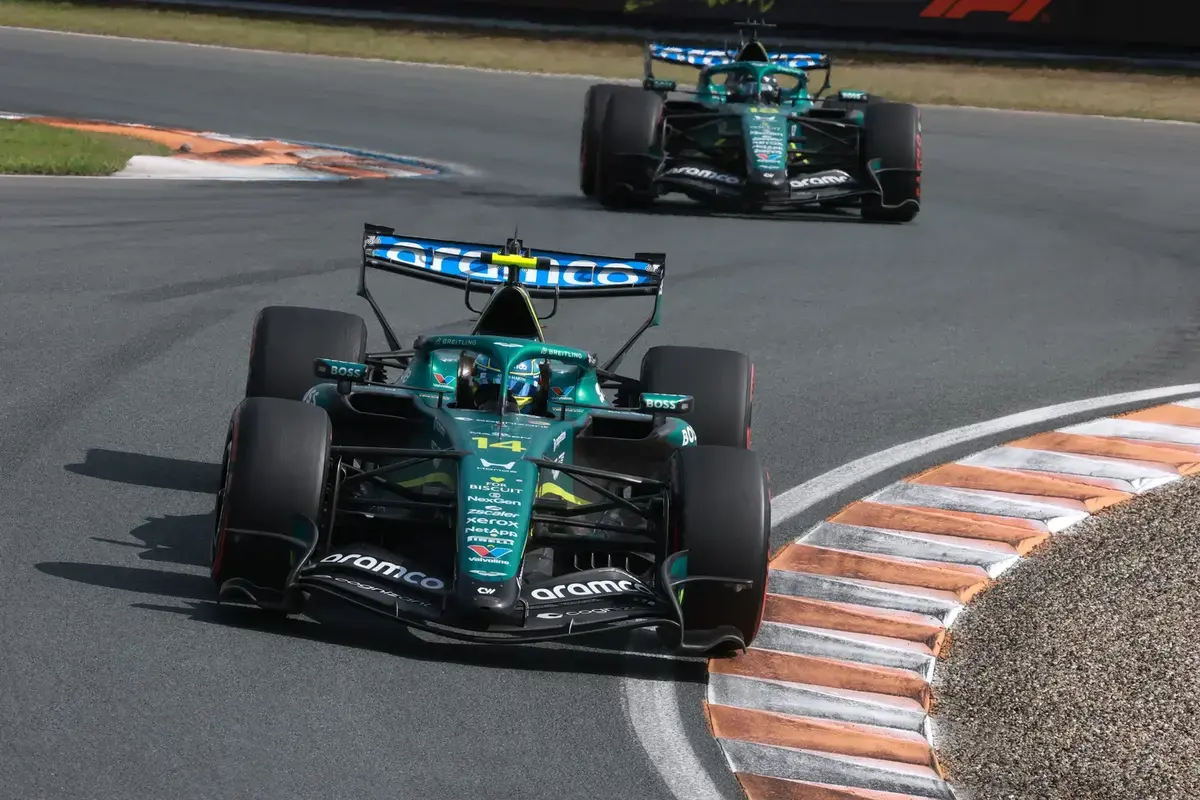
The upgraded Honda unit made its debut at last month’s Dutch Grand Prix, where Fernando Alonso brought Aston Martin home in ninth, the team’s second points finish of the season. On paper, that sounds like progress. In the cockpit, apparently, it felt like anything but.
Alonso didn’t hold back, complaining about downshifts and engine braking that simply weren’t behaving. Stroll, never one to sugarcoat things, went further, calling Honda’s supposed step forward “not nearly enough.” When both drivers in a garage independently trash the same component, that’s not a coincidence, that’s a pattern.
Honda’s Own Admission
Speaking to PlanetF1.com and other outlets ahead of this weekend’s Italian Grand Prix, Honda trackside general manager and chief engineer Shintaro Orihara didn’t dispute any of it. He confirmed the new engine delivered a genuine gain in raw performance, verified on the dyno beforehand, but admitted driveability was the item left unresolved.
“We introduced the new-spec engine in the Netherlands. We have observed a step forward in terms of performance on our metrics, as expected. We have confirmed on the dyno, so that was the positive thing we found in Netherlands. But on the other hand, we found something which can improve on driveability.” – Shintaro Orihara
Honda says it had already updated the combustion characteristics and prepared new tools to smooth things out before Zandvoort, but Orihara conceded it simply wasn’t enough to sign off on driveability. That’s a polite engineering way of saying the fix didn’t fix it.
“It was not enough to certify driveability even though that is our improvement point. That is we found in the Netherlands. We will bring back all data to dyno and bring back all driver feedback to the dyno.” – Shintaro Orihara
Orihara added that HRC Sakura has already been running fresh tests to sharpen control and improve driveability, with Monza now billed as the checkpoint where that work gets judged. Which is a nice way of putting the pressure squarely back on Honda’s own shoulders, at the one circuit least forgiving of a wobbly power unit.
Why Monza Makes Things Worse, Not Better
If Honda was hoping for a gentler track to bed in its fix, it picked the wrong calendar slot. Monza’s long straights and minimal braking zones put huge demands on power delivery and energy management, precisely the areas where driveability problems bite hardest. Orihara knows it too, admitting Honda is still chasing marginal gains through calibration rather than any meaningful step.
“We think we have some room to improve performance by optimising the data. We have brought some calibration change for this track to maximise our performance, but it’s not going to be a big change, just to optimise.” – Shintaro Orihara
Translated from the careful language of a manufacturer trying not to alarm its partner team: don’t expect a miracle this weekend. This is fine-tuning, not a fix.
Alonso’s Patience Is Not Infinite
Alonso, never shy about calling out a car that isn’t working, made clear at Zandvoort that whatever Honda improved with its first engine got partially undone by the second. He said the team lacked the handling and shift feel it had built up earlier in the season, and that Aston Martin now needs another two or three races to get the new unit properly optimised. That’s a generous runway from a driver who has plenty of reason to be impatient, sitting on just 3 points for the season and 239 adrift of championship leader Kimi Antonelli.
Stroll, for his part, has scored nothing at all this season and has even less reason to be diplomatic about a power unit that isn’t delivering. When a driver with zero points calls your upgrade insufficient, there’s no PR gloss that changes the underlying story: Honda promised a step forward and delivered a car that’s harder to drive than before it.
The Bigger Picture for Aston Martin
None of this happens in isolation. Aston Martin sits stuck on 3 constructors’ points, rooted near the bottom of the standings, and every race where the power unit undermines the drivers rather than helping them is a race further away from anything resembling recovery. Honda’s insistence that Monza will be the “main focus point” for driveability fixes reads less like confidence and more like an admission that Zandvoort’s upgrade was only half the job.
Given how bluntly both Aston Martin drivers reacted to the new engine, it’s hard to take Honda’s talk of a performance “step forward” entirely at face value. A power unit that’s quicker on paper but harder to control on track isn’t progress, it’s a trade nobody in the cockpit asked for. Monza will show whether Sakura’s dyno work actually translates to the tarmac, or whether Aston Martin is stuck nursing an engine that looks better in the data than it feels in the car.