
Nobody should be sending death threats to a steward over a drive-through penalty. That much is obvious, and the FIA is entirely within its rights to say so. But burying a legitimate complaint about inconsistent penalty application under a statement about online abuse is a neat bit of misdirection, and it’s worth asking who actually benefits from that framing.
The governing body has now issued a formal rebuttal after a wave of vitriol aimed at Zandvoort’s stewards, sparked by the penalties dished out to Franco Colapinto during a chaotic opening lap at the Dutch Grand Prix. The abuse is indefensible. The penalty that triggered it remains, at best, debatable.
What actually happened at Zandvoort
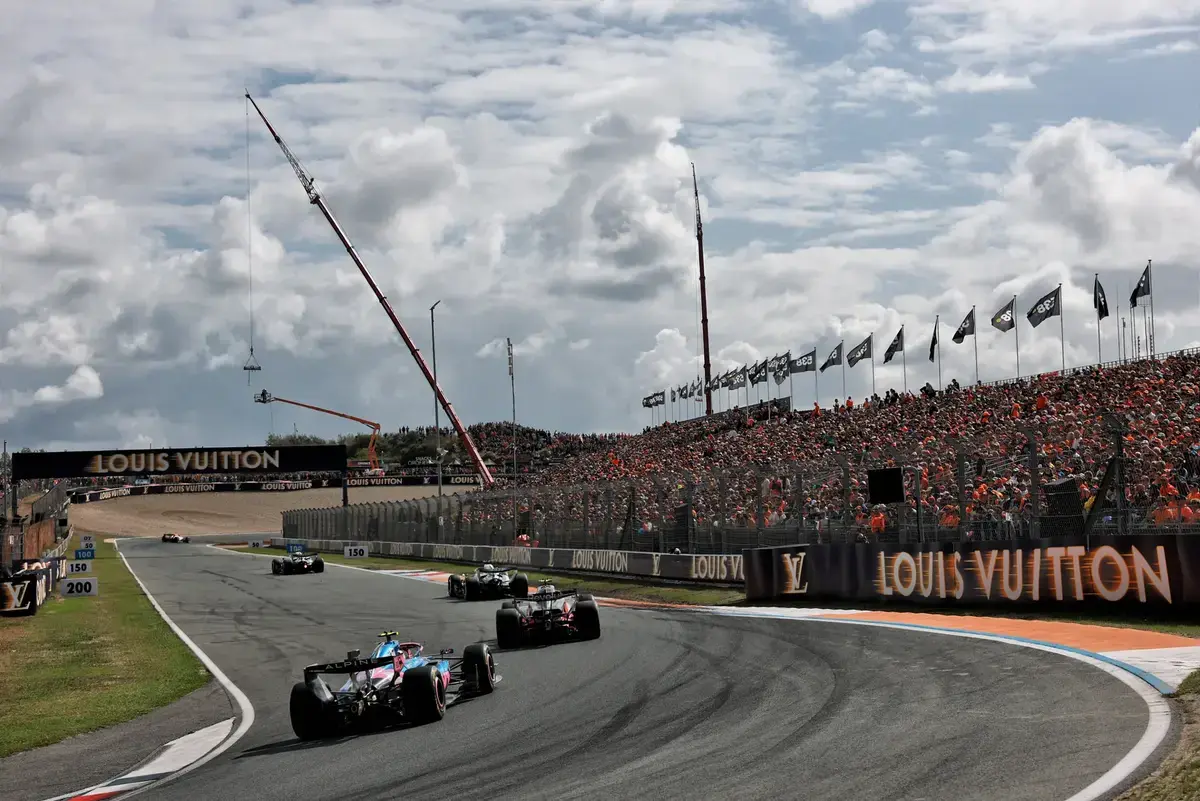
Lap one, final corner, and Max Verstappen is already in the wall, with Gabriel Bortoleto spinning in the same breath. Yellow flags go up. Somewhere in the middle of that mess, Colapinto completes a pass on Yuki Tsunoda that the stewards later ruled took place under double waved yellows. Drive-through penalty, two penalty points on his superlicence. Arvid Lindblad got an almost identical punishment for overtaking Pierre Gasly in the same passage of chaos, and Colapinto and Liam Lawson both picked up penalty points later in the race for failing to slow under single waved yellows.
Colapinto’s defence, delivered without much diplomacy afterwards, was that the flag appeared “very, very late” as he finished his move, and that stamping on the brakes mid-overtake on a wet, banked circuit with debris flying around would have been the more dangerous option. He wasn’t wrong to raise it. Whether the stewards agreed is a different matter entirely, and this is where the FIA’s actual argument gets murky rather than where the abuse debate lives.
The sponsor who said the quiet part loudly
Enter Sean Summers, chief marketing officer of Mercado Libre and Colapinto’s most significant financial backer, who took to social media with all the subtlety of a bulldozer. “The stewards are killing the integrity of F1,” he wrote. “This season they are proving to be horrible and impacting race results. Incompetence? Dishonesty? Both? Something is seriously broken in that organisation’s culture.”
Strong words from a man who also sits on the board of World Rugby, a detail that PlanetF1.com found interesting enough to ask World Rugby about directly. That organisation declined to comment, pointing out Summers sits on its board independently. Fair enough, but it does not change the fact that a man with genuine commercial skin in the game just accused F1’s governing body of dishonesty on a public platform, and that carries very different weight to an anonymous account calling a steward names.
The FIA’s rebuttal, and what it conveniently skips
The governing body’s response leaned entirely on its United Against Online Abuse coalition, first launched back in 2023 after a steward was targeted following the United States Grand Prix. “Following the Dutch Grand Prix, FIA stewards were targeted with online abuse after applying sporting penalties in line with FIA regulations,” the statement read. “Disagreement with decisions is part of sport, but it must never justify threats or personal attacks. We urge everyone engaging with our sport to do so with respect and responsibility, online and offline.”
“The stewards are killing the integrity of F1. This season they are proving to be horrible and impacting race results. Incompetence? Dishonesty? Both? Something is seriously broken in that organisation’s culture.” – Sean Summers
Notice what’s missing. There is no engagement whatsoever with the substance of Summers’ or Colapinto’s complaint, that the penalty itself was disproportionate to the circumstances. The FIA has effectively used a genuine, ugly abuse problem as cover to avoid answering a much more uncomfortable question about consistency.
Alpine plays it diplomatically, for once
Credit where it’s due, Alpine handled this with more grace than its driver’s sponsor managed. The team told PlanetF1.com it “fully trusts the FIA and the stewards” and accepts the penalties were applied consistently across the field, even while conceding they felt harsh. “We believe the penalties applied for Yellow Flag Infringements during the opening laps of the Dutch Grand Prix were indeed harsh, but acknowledge they fit the punishment based on the letter of the law,” a team spokesperson said.
That is about as measured a response as you’ll get from a team that has previously fired off open letters defending Colapinto, including after the frightening Suzuka incident involving Oliver Bearman earlier this year. Alpine clearly knows the difference between disagreeing with a decision and torching the credibility of the people who made it. Its driver’s own sponsor apparently does not.
A pattern, not an isolated incident
This is not the first time the FIA’s steward decisions have generated more heat than light this season. McLaren has already dragged the FIA into a Paris courtroom over a Monaco penalty involving Gasly, and the debate over yellow-flag protocol raises the same underlying issue every time: rigid, letter-of-the-law enforcement applied uniformly regardless of context, versus a more nuanced judgement call that accounts for what a driver could realistically have done in half a second at 300km/h.
Reasonable people can land on either side of that debate. What’s not reasonable is sending abuse to officials doing a genuinely difficult job in appalling wet conditions. But the FIA doing a victory lap on condemning abuse, while offering zero acknowledgement that its own consistency problem is fuelling the anger in the first place, is its own kind of dodge.
The conclusion nobody at the FIA wants to hear
Abuse is never justified, full stop. But an organisation that keeps issuing statements about tone while ignoring substance shouldn’t be surprised when the frustration keeps boiling over. Alpine sits sixth in the constructors’ standings, a long way off the pace set by Mercedes and Ferrari this year, and every harsh penalty that costs Colapinto points feels ten times more painful from that position. Until the FIA actually addresses the inconsistency complaint rather than just policing the comments section, expect this exact scenario to repeat itself at the next controversial call. And in this sport, there’s always a next controversial call.