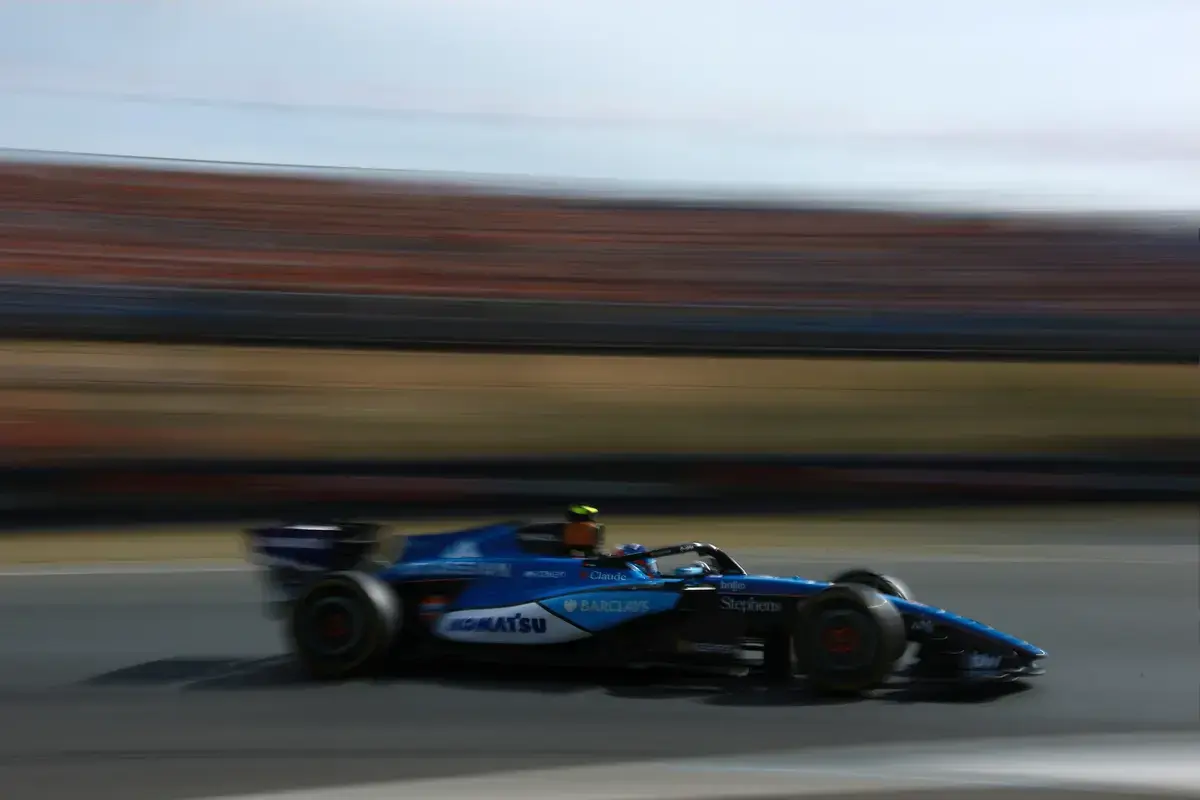

Carlos Sainz had a shocker of a Friday at Zandvoort, and the FIA decided the appropriate punishment for capping it off with a farcical slow lap was, essentially, a stern look and a wagging finger.
The stewards investigated the Williams driver for breaching Article 12.2.1.i of the FIA’s International Sporting Code, the rule against driving unnecessarily slowly. Sainz was found to be roughly five seconds outside the required maximum delta time on his way back to the pits. He got a warning. No grid penalty, no fine, nothing that actually bites.
What the stewards actually found
The verdict makes for entertaining reading if you enjoy watching a driver explain his way out of trouble in real time. Sainz had to let Car 16 through before Turn 13, which wrecked his lap delta from that point on. Fair enough, that is a legitimate defence. What came next is where it gets interesting.
According to the stewards’ statement, Sainz then tried to accelerate and claw back the time deficit before pitting, but still crossed the Safety Car Line roughly five seconds over the limit. His explanation was that the car’s battery was empty and he could not accelerate the way he wanted. Then, almost in the same breath, he admitted he could have done more to manage the delta before diving into the pit lane.
“The Stewards acknowledge the difficulties arising from energy management, but also agree with the driver that he could have done more to manage his delta time and therefore determine that a Warning to the driver is appropriate.” – FIA Stewards’ verdict
Translation: he broke the rule, he knew he was breaking the rule, but he sounded sufficiently apologetic about it. That is not exactly a ringing endorsement of consistent stewarding, but a warning for a first-of-its-kind hybrid excuse (part technical failure, part driver admission) is at least defensible. It would be a different story if this becomes a pattern.
A Friday that was already falling apart
The slow-driving warning was almost the least embarrassing part of Sainz’s day, as reported by PlanetF1.com. He went off the circuit three times in FP1 alone, gravel traps at Zandvoort being about as forgiving as a parking bollard, and did enough damage to the FW48 that Williams had to fit compromised parts for the rest of the session. Sainz himself admitted the components going back on the car were not the best in terms of downforce or performance.
He eventually qualified 18th for the Sprint, missing the cut into SQ2 by just 0.120 seconds, a margin so small it makes the whole slow-lap saga feel almost beside the point. Whether he crossed the line five seconds late or not, Sainz was heading home regardless.
“So we’ll try and learn as much as possible in the Sprint and we’ll take the rest of the weekend.” – Carlos Sainz
Williams are, by his own admission, “a bit tight on everything” until an upgrade lands in Baku, which is not the kind of sentence a team wants attached to a car that keeps finding the gravel at one of the more punishing circuits on the calendar.
Context nobody needed reminding of
All this arrives just as Williams have handed both Sainz and Alex Albon new contract extensions, a decision that on the surface reads as a vote of confidence but, as covered in our earlier report on the Williams driver situation, was as much about panic over losing both men as it was genuine faith in the current machinery. A Friday like this one does not exactly settle the nerves.
Does a warning even mean anything?
Here is the uncomfortable question nobody at the FIA seems keen to answer: what actually happens the next time a driver is five seconds over the limit and does not have a broken battery to point to? A warning with no sporting consequence is a fine tool for genuine grey areas, but it also sets a precedent that “I know I broke the rule but I tried, honestly” is an acceptable defence. Sainz will not lose sleep over it. Williams will not lose sleep over it. But somewhere down the line, a driver with a much thinner excuse is going to point at this ruling and ask why they deserved harsher treatment.
For now, Sainz walks away with nothing more than a note on his file and a weekend still very much worth forgetting. The real story at Zandvoort was never the five seconds lost on the way back to the pits, it was the three trips into the gravel that got him there in the first place.