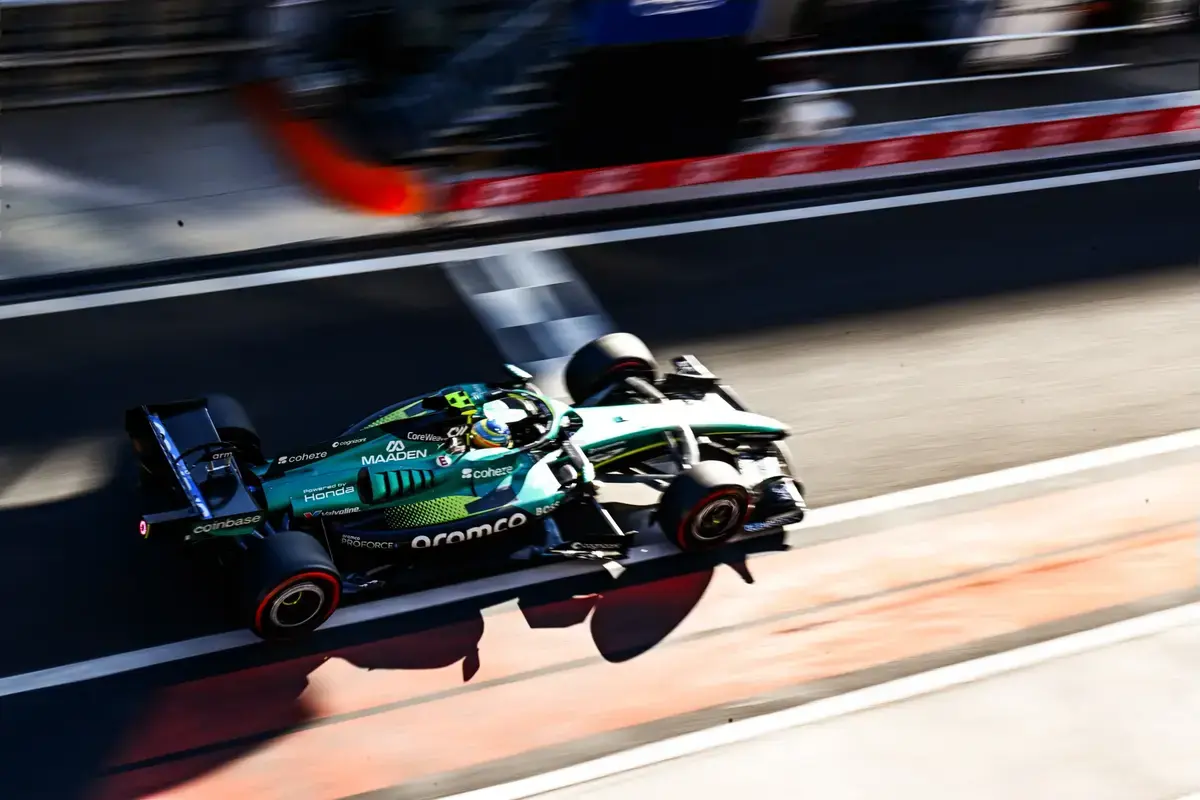

Honda has pulled back the curtain on its Spec 2 power unit, revealing genuine technical changes to the combustion chamber, piston design, and lubrication system. The upgraded engine arrives at Zandvoort for the Dutch Grand Prix, where Aston Martin will desperately hope it delivers the performance jump they have been waiting for all season.
What Honda Actually Changed
Chief F1 engineer Shintaro Orihara has been unusually candid about the modifications, which is either a sign of genuine confidence or a very polished PR exercise. Probably a bit of both.
“We focused to improve engine performance, to make combustion faster. It’s kind of a secret, but I can disclose a little bit. We changed the pre-chamber to make combustion faster, and we also changed the piston shape to get good combustion. We modified some lubrication system to reduce friction. We had quite a big list to improve engine performance.” – Shintaro Orihara
The pre-chamber tweak is the headline move. Faster combustion within the pre-chamber means more efficient energy release at the extreme rev ranges of a 2026 F1 power unit. Combined with revised piston geometry and reduced friction from the lubrication system, Honda is attacking the performance deficit from multiple angles simultaneously. That is the right approach. Whether it is enough is another question entirely.
The Numbers Nobody Will Share
When pressed on the horsepower gain, Orihara was predictably evasive, though at least he was honest about it. Reports had suggested a gain of around 50bhp. Orihara batted that figure away without ceremony, suggesting the real number is considerably more modest.
“I can’t disclose the detailed number, but we have achieved our internal target. I’m confident in what the HRC Sakura factory guys achieved for the spec two engine.” – Shintaro Orihara
Internal targets are a wonderful thing. They can be set at whatever level makes success look achievable. Still, the engineer’s visible enthusiasm suggests this is more than just corporate face-saving.
The Stakes for Aston Martin
Aston Martin arrive at Zandvoort having already introduced their own B-spec chassis upgrade in Budapest. As that chassis step showed some genuine promise, the Honda engine upgrade represents Part Two of a full-package reset. For Fernando Alonso and Jak Crawford, sitting at the very bottom of the constructors’ standings with a solitary point, the timing is critical. Ten races remain. The margin for further disappointment is essentially zero.
As Honda themselves admitted earlier this year, the scale of Aston Martin’s early-season problems only became fully clear in January. They have been playing catch-up ever since. Zandvoort is where the recovery either becomes real or remains a very expensive promise.
Reasons for Cautious Optimism
Honda’s track record of grinding their way back to competitiveness is well established. It took years of pain before their partnership with Red Bull clicked, and that story eventually ended with a world title. The Aston Martin chapter is still being written. Whether Zandvoort marks a turning point or another false dawn, the sport will be watching closely.