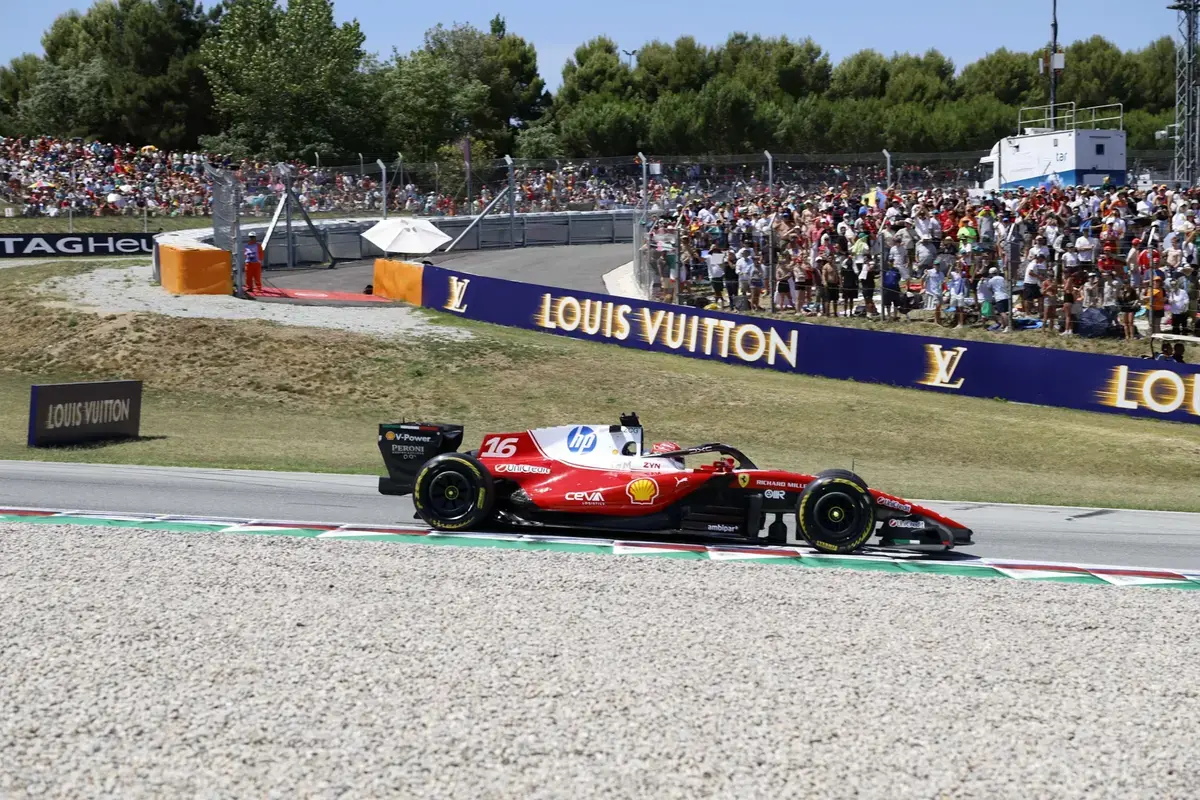

Ferrari has confirmed its first ADUO power unit upgrade for the Austrian Grand Prix, and in the same breath, its own engineers have told you not to expect miracles. That is either admirably honest or slightly worrying, depending on how many red caps you own.
What Is Actually Changing Under the Hood
The centrepiece of the Austria upgrade is a steel-alloy cylinder head replacing the standard aluminium unit, allowing combustion temperatures to climb from 100°C to 110°C. Paired with a higher-calorific Shell fuel, more particles burn, fewer residual emissions escape, and the engine produces more power. A useful side-effect: the hotter coolant delta means smaller radiators become viable, which the aerodynamicists will quietly celebrate.
Power unit technical director Enrico Gualtieri confirmed the upgrade, and the expectations in one sentence:
“The update we are bringing to Spielberg is a relatively minor one and it’s the result of the work completed in recent weeks to transfer improvements from our development programme to the track.” – Enrico Gualtieri
Minor. Their word, not ours.
The Gap That Made This Necessary
After the post-Montreal ADUO checkpoint, FIA inspectors measured Ferrari’s internal combustion engine at more than 4% below the Red Bull-Ford benchmark, entitling the Scuderia to two development credits this season. Ferrari’s original small turbocharger was a deliberate choice, designed to reduce turbo lag after the MGU-H was abolished. Then the FIA introduced a mandatory five-second pre-start procedure, giving every manufacturer enough time to spool turbos safely. Ferrari’s anticipated race-start advantage disappeared before a lights-out was ever triggered.
The Real Upgrade Is the One Coming Later
Austria is the foundation. The substance arrives at Zandvoort or Monza, where Ferrari will deploy its second ADUO credit on a newly designed turbocharger: revised blade count, new blade angles, and material improvements throughout. The logic mirrors Audi’s quiet engine upgrade in Barcelona: move early while rivals sit still. Mercedes and Honda are not deploying ADUO tokens this round, which at least gives Ferrari a clear runway to gain ground on paper.
Leclerc Sits Out FP1, Beganovic Steps In
Dino Beganovic takes Charles Leclerc‘s FP1 seat at the Red Bull Ring this weekend, fulfilling another mandatory rookie appearance. The 22-year-old Swede previously drove Lewis Hamilton‘s car in Barcelona, where Hamilton went on to win the race anyway. Leclerc, now tied to Ferrari on a contract reportedly running beyond 2030, arrives in Austria needing a tidy weekend after a Monaco retirement and a Barcelona qualifying crash both demanded uncomfortable explanations.
Progress, But Not the Turning Point
Ferrari sits 72 points behind Mercedes in the constructors’ standings. The upgrade that might genuinely close that gap is still weeks away. Gualtieri’s public honesty is refreshing in a paddock built on relentless optimism and carefully worded press releases. Austria is a signal. The question is whether anyone at the front is paying attention.