
Lawrence Stroll has never lacked for audacity. While Aston Martin sits tenth in the 2026 constructors’ championship with a single solitary point to their name, Stroll has somehow persuaded an American billionaire to hand over what could amount to roughly 525 million for a slice of the action. That billionaire is Woody Johnson, owner of the New York Jets, shareholder in Crystal Palace, and former US Ambassador to the United Kingdom under Donald Trump. Welcome to Formula 1, Woody.
The Deal: What We Know, and What We Don’t
As reported by RacingNews365, Johnson has purchased a significant minority stake in the Silverstone-based outfit and will join the board immediately as vice chairman. He will take on no day-to-day management responsibilities, which is presumably something of a relief to the engineers already dealing with quite enough problems of their own.
The exact percentage has not been disclosed, though sources have speculated around the 15 per cent mark. What we do know is that the team was valued at approximately 3.5 billion following the earlier sale of Aston Martin Lagonda’s five per cent stake, which puts Johnson’s outlay in the region of half a billion. For that kind of money, you’d want the car to at least occasionally finish in the points. At present, that is a significant ask.
The ownership picture at Aston Martin is already a crowded one. Lawrence Stroll’s Yew Tree Consortium holds the controlling stake at around 33 per cent, with Saudi Arabia’s Public Investment Fund on 20 per cent, Geely on 17 per cent, Ernesto Bertarelli on 14 per cent, Mercedes-Benz AG on nine per cent, and Lucid Group on 3.7 per cent. Exactly who has sold shares to accommodate Johnson is, naturally, being kept private.
Who Is Woody Johnson?
Robert Wood Johnson IV, to use his full name, is the heir to the Johnson and Johnson pharmaceutical and consumer goods fortune, a business estimated at around 20.5 billion dollars as of mid-2026. He purchased the New York Jets in 2000 for 635 million dollars and has remained the franchise’s chairman and owner ever since, navigating the particular suffering that comes with supporting a team that has not won a Super Bowl since 1969. In that sense, Aston Martin’s struggles may feel somewhat familiar.
Beyond the NFL, Johnson served as US Ambassador to the United Kingdom between 2017 and 2021, appointed by the Trump administration despite having no prior diplomatic career. He has since become a significant force in English football, acquiring 43 per cent of Crystal Palace last year. His sports portfolio now spans three continents and two codes, with Formula 1 the latest addition.
It is worth noting that Johnson is a prominent Republican donor with deep connections across American business and political circles. Whether that network translates into tangible commercial value for Aston Martin in the United States remains to be seen, but it is clearly the central premise of this entire arrangement.
The American Angle: Strategy or Spin?
The official narrative around this deal is essentially one long pitch to American advertisers. Formula 1 now hosts three races on US soil in Miami, Austin and Las Vegas. The American fanbase has ballooned to an estimated 52 million following years of sustained growth, accelerated further by Apple TV’s acquisition of broadcast rights this season. The sport is, commercially speaking, a very different animal in the United States than it was a decade ago.
Johnson’s network across the NFL and the Premier League is supposed to unlock cross-sport commercial partnerships and sponsorship deals that a traditional F1 team might struggle to access independently. The theory is coherent enough. A man who has spent years operating at the intersection of American sports, media and politics does open doors that a Canadian billionaire with a racing team in the English countryside might otherwise find closed.
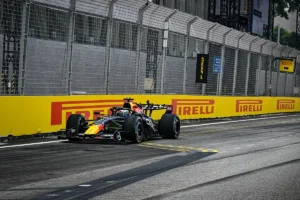
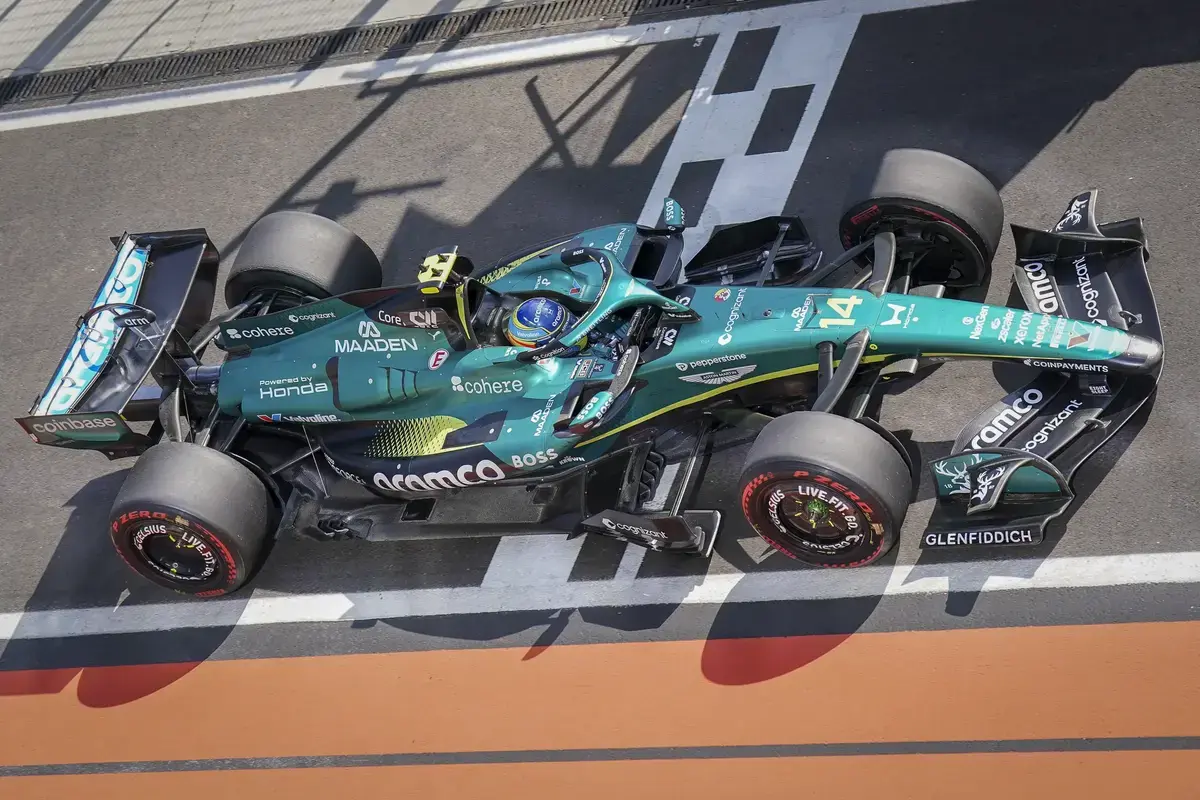
The question is whether any of that commercial upside actually filters down to the one place it matters: lap times. Aston Martin’s problem in 2026 is not primarily a revenue problem. It is a competitiveness problem. Fernando Alonso has a solitary championship point to show for eleven rounds of racing, and that is not a situation that a well-connected vice chairman fixes from the boardroom.
“I am extremely happy to welcome Woody to the Aston Martin family. His experience, passion and investment further strengthen our position as we enter the next phase of our competitive journey.” – Lawrence Stroll
“During my time as US Ambassador to the United Kingdom, I have developed a deep appreciation for Aston Martin’s rich history, as well as Lawrence Stroll’s strategic vision and entrepreneurial spirit.” – Woody Johnson
The On-Track Reality
Strip away the press release language and the broader context is stark. Aston Martin scored 280 points in 2023 and finished fifth in the constructors’ championship. In 2026, they have one point from eleven races and are anchored to the foot of the table. Alonso himself has been publicly noncommittal about his future, which is hardly a ringing endorsement of where the team is headed.
Teams like Mercedes and McLaren are investing north of 300 million dollars annually to remain competitive under the new technical regulations. Aston Martin needs capital, and Johnson’s money provides some of it. But investment in infrastructure, aerodynamic development and windtunnel time takes time to materialise on the stopwatch. There is no quick fix here, regardless of how many NFL contacts end up on the sponsor roster.
It is also worth keeping an eye on the broader ownership dynamic. American investment in Formula 1 teams is accelerating rapidly across the paddock, as franchise valuations climb and the US market becomes ever more central to the sport’s commercial model. Cadillac entered as the eleventh team this season. Liberty Media, itself American, has transformed F1’s commercial model since buying the sport in 2017. Johnson’s arrival at Aston Martin is part of a much larger wave, not an isolated act of faith.
Stroll’s Knack for Finding Money
Whatever else you want to say about Lawrence Stroll, the man knows how to raise capital. He assembled a consortium to buy the Racing Point team in 2018, rebranded it with one of the most iconic names in motorsport, attracted a roster of high-profile shareholders including a sovereign wealth fund, and has now added a former US Ambassador to the board. All while the car finishes outside the points on a routine basis.
It is a remarkable talent, and whether it is ultimately in service of building a genuine championship-contending team or simply managing a very expensive asset is a question that will take several more seasons to answer definitively. Johnson’s appointment at least suggests Stroll remains committed to the long game, and that there are still people willing to back him financially.
The cynic’s view is simple: buying into a bottom-of-the-table F1 team at a 3.5 billion dollar valuation, while American sports franchises are desperate for F1 credibility, is either a brilliant piece of commercial positioning or a very expensive way to get a paddock pass. Possibly both. Aston Martin’s car will have to do a rather better job of making the investment look justified.