
McLaren has decided Monza is the moment. After months of quietly testing, borrowing and refining an idea that started life on a rival’s car, the team will finally race its rotating rear wing this weekend, betting that a low-drag gimmick with a silly nickname can help keep its championship push on track.
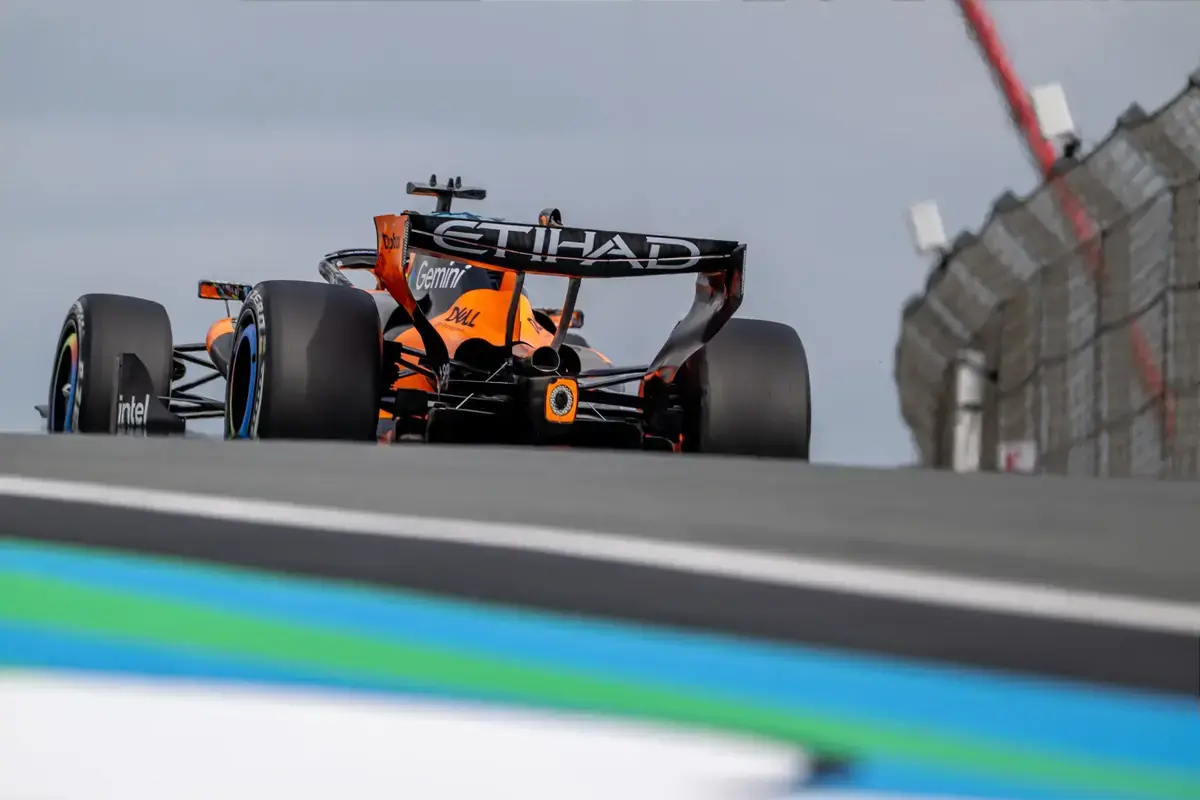
The Woking outfit calls it the H-Wing, a reference to the Etihad Airways branding stitched into the rear wing, and it will make its competitive debut on the MCL40 at the Italian Grand Prix this weekend, as confirmed by RacingNews365. It is a cute bit of branding trickery that McLaren insists mirrors the logic behind its famous F-duct system from 2010, when the Vodafone ‘F’ sat conveniently next to the MP4-25’s air inlet. Funny how these things always seem to line up with a sponsor’s logo.
A Wing That Has Been Everywhere But the Race Track
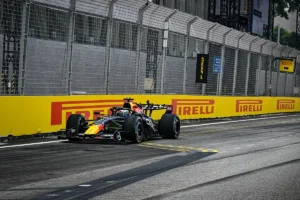
This is not a new idea. The rotating wing concept, nicknamed the Macarena by the paddock for the way it flexes and twists at speed, was first spotted on Ferrari’s car during pre-season testing. Red Bull picked it up too, only to shelve the design after it contributed to a series of high-speed spins for Max Verstappen. Make of that what you will about the wisdom of chasing every fashionable aero trend on the grid without fully understanding what it does at 300kph.
McLaren, to its credit, has taken its time. The concept first appeared in competitive conditions at the Hungarian Grand Prix, where reserve driver Leonardo Fornaroli ran it on Oscar Piastri‘s car during FP1. That outing was about controlled aero runs and braking checks rather than outright pace, and the wing came off again before qualifying. Team principal Andrea Stella called it a “positive sign-off” at the time and said the team was preparing to bring it to future rounds. That future has now arrived, and it has arrived at exactly the track where a low-drag rear wing matters most.
Why Monza, of All Places
Monza is the ultimate straight-line circuit, the place where teams strip out downforce and pray the car stays glued to the road through Parabolica. A wing that can rotate to reduce drag on the straights while still offering something usable in the few corners that exist is precisely the kind of tool you want at the Temple of Speed. It is not a coincidence that McLaren chose this weekend to unveil it rather than, say, Monaco.
Technical director Neil Houldey framed the introduction as part of a broader push rather than a standalone gadget.
“This weekend, we have brought what we believe is needed to be competitive, including a new low-drag rear wing specification, including the first use of our H-Wing, alongside some small aerodynamic and low-drag options that we will evaluate before deciding the final specification for Qualifying.” – Neil Houldey
He added that McLaren still sees room to extract more from the car.
“Overall, we know there is still more performance to unlock from the MCL40, both through maximising the package we already have and through further upgrades planned for the races ahead.” – Neil Houldey
The Timing Could Not Be More Pointed
McLaren arrives at Monza on the back of consecutive victories for Lando Norris, both from pole, at the Hungarian and Dutch Grands Prix. Those results followed a string of upgrades at both events, including a new floor, wakeboards and floor slots in Hungary, and a fresh rear wing, engine cover, diffuser tweaks and front wheel rims at Zandvoort. Houldey has previously stressed that none of those parts were designed as a single package, telling Formula1.com that “they all provide aero performance as individual components and don’t need each other to perform.” Whether that is genuine modular design philosophy or just a convenient way of saying “we’re throwing everything at the wall” is a matter of taste.
Either way, the timing of the H-Wing’s arrival looks less like coincidence and more like a team sensing momentum and refusing to let it slip. Norris sits on 159 points, still some way off Kimi Antonelli‘s championship lead, but the recent run of form, two wins from the last two races, suggests McLaren is not interested in quietly managing the rest of the season. Piastri, by contrast, has struggled to match his teammate’s recent scoring, and it will be worth watching whether the new wing narrows that gap within the same garage as much as it does against the opposition.
Not Everyone Gets to Enjoy the Party
There is a certain irony in McLaren rolling out a wing that started life on a Ferrari and briefly lived on a Red Bull, at the exact moment Red Bull has quietly binned its own version after Verstappen kept losing the back end of the car. Innovation in F1 has always worked this way: someone tries something bold, someone else refines it, and a third team ends up getting all the credit while insisting it was their idea all along. The H-Wing name, tidy as it is, does not change the fact that this is a shared concept dressed up in team-specific branding.
What matters more than the name is whether it actually works under real racing conditions rather than a Friday morning evaluation run. McLaren has been careful, methodical even, testing it once in Hungary before committing to a race weekend. That is a sensible approach given what happened to Verstappen’s car, but it also means Monza is the real test. If it delivers the low-drag gains McLaren is hoping for, expect to hear a lot more about the H-Wing in the weeks ahead. If it doesn’t, don’t be surprised if it quietly disappears back into the garage, much like its Red Bull cousin already has.