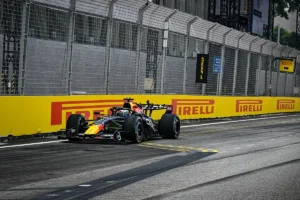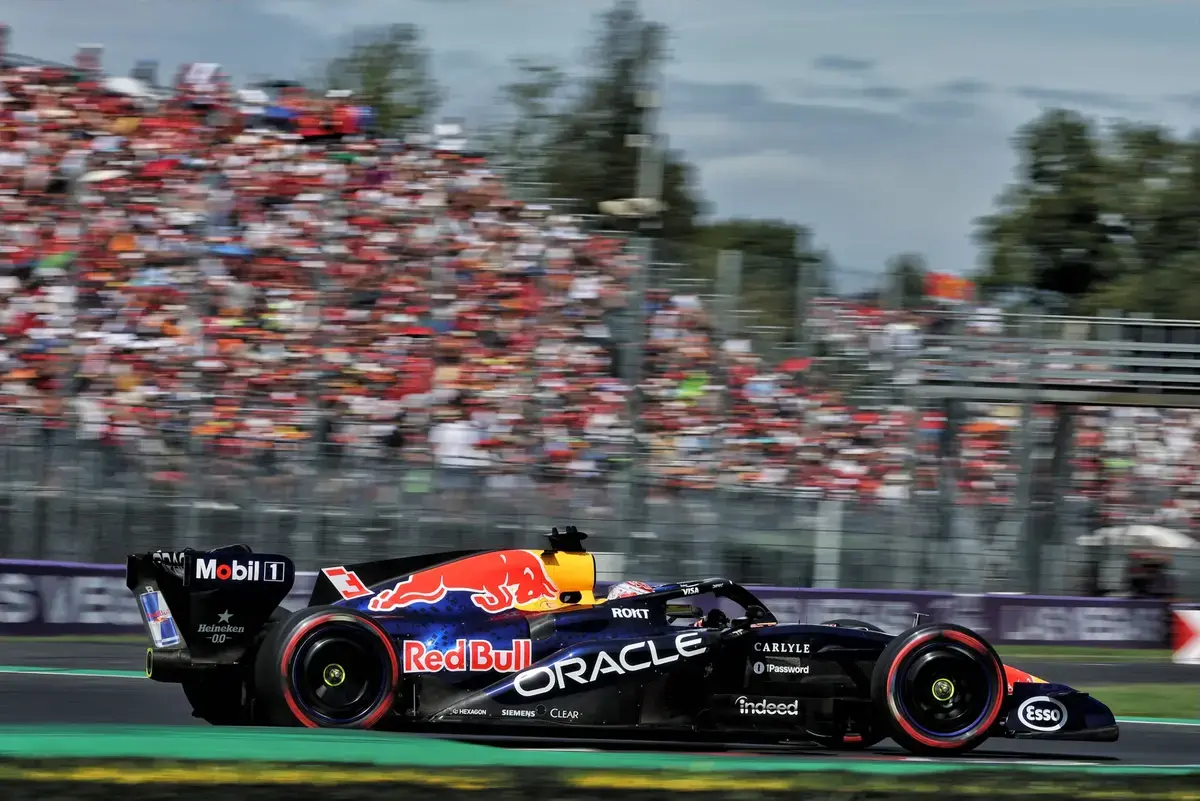

Max Verstappen found a genuinely good car in final practice at Monza, then watched it fall apart the moment it actually mattered. Now he wants Red Bull to work out why, because according to him, this is not the first time it has happened this weekend.
The Dutchman had looked sharp through FP3, running inside the top three and sounding, for once, almost content with his machinery. Q3 told a different story. Verstappen slipped to sixth in the session that decides pole, and the explanation he gave afterwards was not about traffic, tyres or a missed set-up window. It was mechanical, and it was something Red Bull apparently already knew about.
A car that suddenly stopped behaving
Verstappen was blunt about what changed between FP3 and qualifying. Nothing, really, on the setup sheet, and yet everything on track.
“In FP3, we actually had a very good improvement overnight. The car was in a much better window, but we didn’t really touch the car too much going into qualifying. I suddenly had a feeling that something failed on the rear axle again, not the wing, but something else mechanically, which we have to look into again. It’s not the first time this happened, but it happened at random times over the weekend. Unfortunately, now it happened at the most important part.” – Max Verstappen
Read that back and the damning bit is not the failure itself, it is the pattern. A problem that comes and goes at random points across a weekend is far harder to fix than a one-off gremlin, and Verstappen’s own phrasing, that this needs to be looked into “again”, suggests Red Bull has been chasing this rear-axle issue without pinning it down. For a team fighting to hold onto fourth in the constructors’ standings, that is not a reassuring admission to hear from a four-time champion mid-weekend.
Compliance, kerbs and lost lap time
Verstappen tried to explain in plain terms what the fault actually does to the car, and it is the sort of thing that turns a promising lap into a scrappy one without a single visible mistake from the driver.
“When you have these kind of problems, it becomes super difficult to drive. The car is not compliant anymore when it should be over bumps and kerbs, and that’s just costing lap time. I actually thought that with how the car was responding in FP3, I didn’t think I was fighting for pole, but it was quite a comfortable car to drive for once. That was actually really nice but unfortunately we picked up another problem.” – Max Verstappen
Monza punishes exactly this kind of instability. The kerbs at the chicanes are unforgiving, and a rear end that will not settle over them bleeds tenths in the very corners where lap time is won or lost. Verstappen’s practice running backs this up: his final laps in FP3 had shown real pace, close enough to Russell’s benchmark to suggest Red Bull had actually found something overnight, only for it to evaporate when the timing screens counted.
The tow that never mattered
Red Bull had reportedly discussed using Liam Lawson to tow Verstappen through Q3, a tactic several teams were experimenting with in practice given how much straight-line speed matters around Monza’s long straights. It never came to anything. Lawson failed to escape Q2 after being held up by Oscar Piastri, an incident now under stewards’ scrutiny that has also put Piastri’s own qualifying result in doubt, according to RacingNews.Today.
Verstappen, to his credit, did not pretend the missing tow was what cost him. He was adamant the mechanical issue would have hurt him regardless of who was in front of him on track. That is a fair admission, because a car that will not stay compliant over kerbs is not going to be fixed by a slipstream down the Rettifilo straight.
Context nobody at Red Bull will enjoy
The rear-axle complaint arrived on the back of a Saturday that had already given Red Bull plenty to explain. In FP3, Verstappen was heard grumbling to race engineer Gianpiero Lambiase that he had “less power than a Fiat Punto” and could not even hold a straight line with the pack ahead, repeatedly demanding a tow just to keep his speed respectable on the straights, as reported by RaceFans. He still ended that session third-fastest, which tells you plenty about how much noise Verstappen generates over the radio relative to how the results actually land.
That same session also produced a tense moment with Lewis Hamilton at the Rettifilo chicane, close enough that the stewards looked into it before clearing both drivers of any wrongdoing. None of that helped Verstappen’s mood heading into a qualifying hour where his car, by his own account, decided to break again at the one moment he could least afford it.
Where this leaves Red Bull
Sixth on the grid is a workable result on a track where straight-line speed dominates, but it is not what a driver sitting Verstappen in the championship, still fighting to close a gap to the front rather than the podium places, needed at Monza. Red Bull now has a recurring mechanical complaint on its hands that has apparently surfaced more than once across the weekend without a fix, and a driver openly calling for an investigation into his own car in the middle of a Grand Prix weekend is not a great look for a team that already handed itself a grid penalty for a separate engine change this weekend.
Verstappen was refreshingly specific about what he needs from his team: find the fault, understand why it comes and goes, and stop it turning promising practice pace into another afternoon of damage limitation. Whether Red Bull can do that before Sunday’s race at 13:00 UTC, check the calendar for your local time, is the only question that matters now, because a rear axle that fails at random is not the kind of problem you patch overnight with a setup tweak.