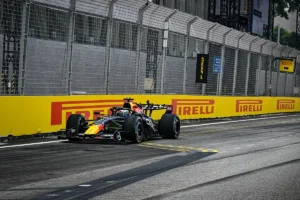

On the surface, Max Verstappen re-signing with Red Bull until 2030 looks like a straightforward loyalty story: driver loves team, team loves driver, everyone is happy. Scratch beneath the surface, though, and it is a far more interesting tale of negotiating leverage, contractual theatre, and a four-time world champion placing a very large bet on a team that is currently fourth in the constructors’ standings.
The Length Was the Surprise
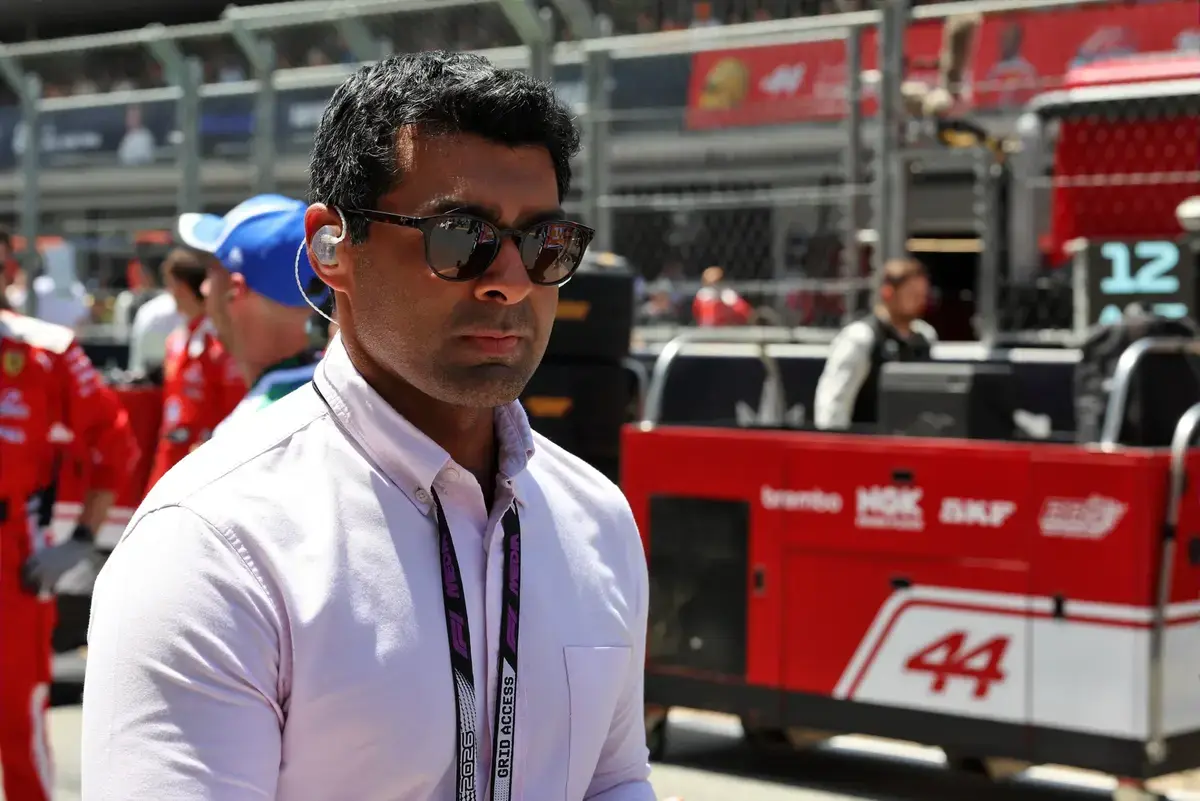
Former Formula 1 driver and Sky Sports analyst Karun Chandhok was among those paying close attention when Verstappen made the announcement at Zandvoort on Thursday, and his reaction was telling. As reported by Sky Sports, Chandhok was not shocked that Verstappen stayed, but he was genuinely surprised by just how long the deal runs.
“I am a little bit surprised at the length. I am not surprised he is committed to them. I thought it would be until the end of 2028. The fact he has gone for four shows he believes in the long-term feasibility of the project.” – Karun Chandhok
Four years is not a minor tweak to an existing arrangement. It is a statement of intent. Verstappen’s previous deal ran until the end of 2028, but the paddock gossip all summer was that performance clauses might allow him to exit far sooner. Now he has not only committed to seeing out that deal but effectively added two more seasons on top. That takes him to 15 continuous years with Red Bull, surpassing the current longest stint at a single team, held by Lewis Hamilton and Mercedes. You can read more about what that means for the history books in our piece on Verstappen’s contract breaking an F1 record that seemed untouchable.
The McLaren Rumours Were Always the Negotiating Tool
Let us be honest about what the McLaren speculation actually was. All summer, social media hummed with confident claims that Verstappen was on his way to Woking, that Oscar Piastri would be displaced, that a seismic grid shake-up was imminent. The people peddling those claims most loudly were, for the most part, those with the least to lose from being wrong.
The reality, as anyone paying proper attention will have noted, is that the realistic escape routes were already closed. George Russell and Lewis Hamilton had triggered the performance-related extensions in their existing contracts, locking them into Mercedes and Ferrari respectively through 2027. Charles Leclerc and Kimi Antonelli were similarly committed. With those doors shut, McLaren was the only plausible bluff available to Verstappen’s management, and a bluff is precisely what it was.
McLaren initially played along, which served their own purposes: it kept pressure on Oscar Piastri’s management and reminded everyone that the Australian’s seat was not permanently guaranteed. But as the rumours snowballed rather than faded, McLaren started to distance themselves. The story had taken on a life of its own, driven by people more interested in their own social media profiles than in what was actually happening in the paddock.
What Verstappen’s camp reportedly wanted, beyond improved car performance, was meaningful equity in the team itself. That is a significant demand, and it is exactly the kind of ambition that brought down Christian Horner’s own plans during his time at the helm. Whether that particular ask was granted, modified, or quietly dropped remains to be seen. The contract terms have not been made public, but it is reasonable to assume Verstappen has been handsomely rewarded financially, and that performance clauses exist as a safety net, albeit a less aggressive one than the previous arrangement.
What Red Bull Actually Had to Prove
Chandhok’s analysis of why Verstappen ultimately committed cuts through a lot of the noise. Red Bull have spent most of 2026 fielding arguably the fourth-fastest car on the grid. Verstappen sits sixth in the drivers’ championship. Those are not the circumstances under which any four-time champion signs a long extension unless he genuinely believes the trajectory is upward.
“This year, they have had probably the fourth-fastest car at a lot of races. He sits sixth in the drivers’ championship. That is not where Max wants to be, but clearly they have convinced him that the long-term potential is better than this year.” – Karun Chandhok
Red Bull’s in-house power unit programme is a key part of that belief. The fact that the team developed a competitive engine essentially from scratch, with no prior experience at that level, is genuinely impressive. Verstappen has seen it firsthand and appears to trust where it is heading. Add to that the broader improvement across the second half of the season, including back-to-back podiums at the most recent rounds, and there is at least a credible case for optimism.
Team principal Laurent Mekies has also played his hand well. He inherited a difficult situation when he replaced Christian Horner last summer: key personnel had departed, the narrative around Red Bull was one of gradual decline, and Verstappen’s long-term future was genuinely uncertain. Securing this extension is Mekies’ most significant achievement so far, and it matters beyond the obvious. Verstappen’s continued presence makes Red Bull a more attractive destination for engineers and staff who might otherwise have considered their options elsewhere.
The Bigger Picture: Silly Season Cancelled
Chandhok summed up the ripple effect with characteristic directness. The prospect of Verstappen moving had the potential to trigger one of the most dramatic driver markets in recent memory. Where he went, others would have followed, been displaced, or scrambled to react. Instead, with Verstappen settled, Williams having confirmed extensions for Carlos Sainz and Alex Albon, and most of the rest of the grid similarly locked in, the much-anticipated silly season has quietly expired.
“We always like a good story in F1, a bit of upset, and it looked at some point it was going to be a great ‘silly season’ and Max was going to be the instigator of that. Back to the drawing board.” – Karun Chandhok
There is, of course, one intriguing subplot that gets less attention than it deserves. Verstappen has made no secret of his love for endurance racing, and he has invested heavily in building his own GT programme. The new deal reportedly permits him to continue racing outside Formula 1, which is not something every team would tolerate. Whether that eventually leads to a proper attempt at Le Mans or Daytona alongside his F1 commitments remains to be seen, though the potential partnership between Red Bull and Ford in the World Endurance Championship is worth watching closely.
A Bet on the Future, Not a Celebration of the Present
It is worth being clear about what this extension is and what it is not. It is not a vote of confidence in Red Bull’s current form. It is a calculated wager on where the team will be in two, three, and four years’ time. Verstappen is not signing because he is satisfied; he is signing because he has been persuaded, through results, through conversations with Mekies and Oliver Mintzlaff, and presumably through the contract terms themselves, that satisfaction is achievable.
That distinction matters. If Red Bull fail to deliver a championship-contending car within the next couple of seasons, this extension will look very different from how it looks today. For now, Verstappen has committed to Red Bull until 2030, and the 2027 driver market is, for the most part, settled before the season is even over. The circus moves on. The actual racing, one hopes, will provide the drama that the silly season failed to deliver.