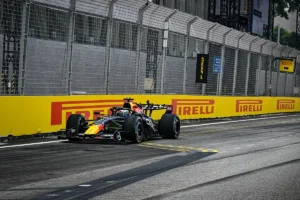

Six years. Three wins. Five consecutive podiums. And now, a farewell. The Dutch Grand Prix at Zandvoort has been one of the great stories of the modern Formula 1 era, and this weekend it ends. Max Verstappen arrives not as the favourite, but as the man with the most to prove, the most to feel, and arguably the most to lose.
The Last Dance in the Dunes
Verstappen has been crystal clear about what this weekend means to him. Speaking ahead of the race, he told RacingNews365 that the occasion is unlike anything else on the calendar.
“It will be a special race for myself and all the fans, since this is the last edition of the Dutch Grand Prix before the race disappears from the calendar again.” – Max Verstappen
That is not PR fluff. Verstappen was 23 years old when he first stood on the Zandvoort grid in 2021, in front of a crowd that had waited 36 years for a home Grand Prix to return. He won that race. He won the next two as well. When McLaren finally had a quick enough car to beat him in 2024 and 2025, he still dragged a Red Bull onto the podium in second both times. The record at this circuit is remarkable: six attempts, six podiums, never off that rostrum.
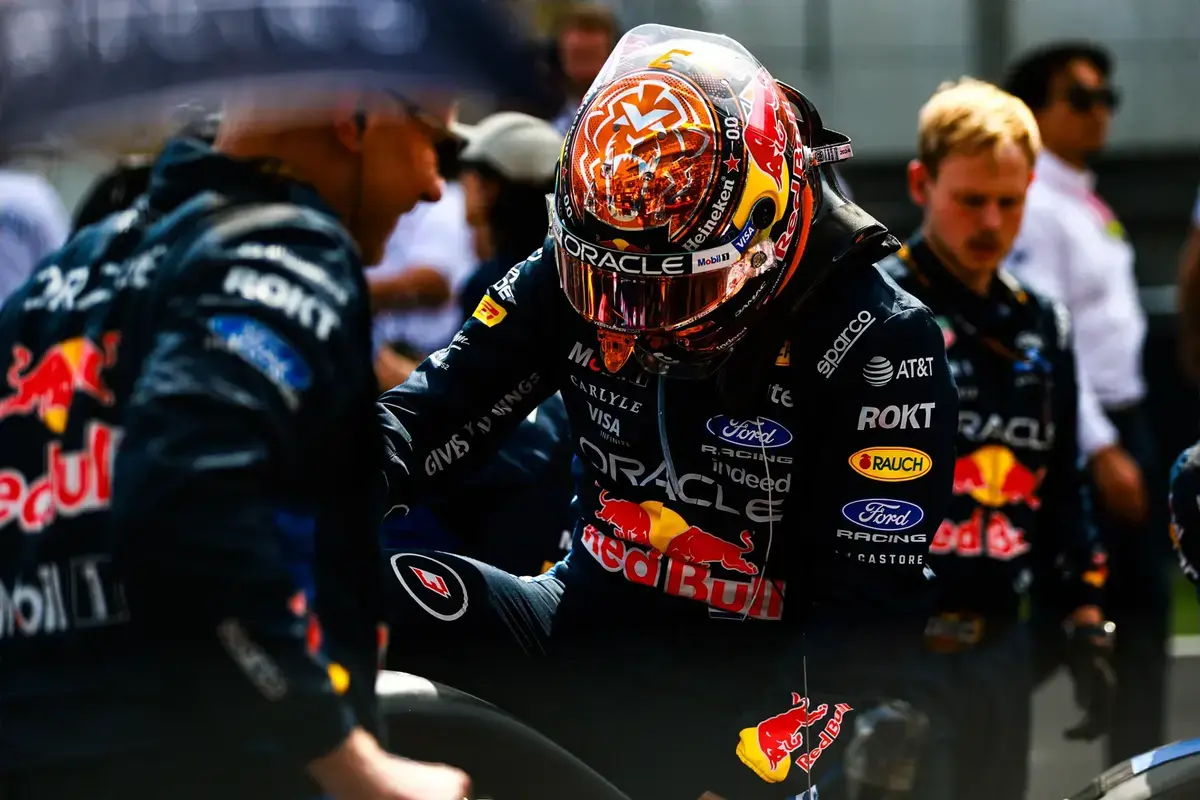
To mark the occasion, Verstappen will race this weekend in a bespoke helmet inspired by the famous Delftware blue ceramics, that distinctive cobalt-and-white Dutch pottery that has been around since the 17th century. It is a thoughtful gesture, the kind of thing that lands differently when the man doing it has actually won on the circuit he is honouring.
“The helmet is a tribute to the Dutch fans for their continued support over the years. We hope to make them proud this weekend.” – Max Verstappen
The Problem: Red Bull Are Still Not Quick Enough
Sentiment is all very well, but F1 does not reward nostalgia. It rewards downforce and tyre management. And Red Bull arrive at Zandvoort in a complicated position.
The headline numbers from the championship paint a picture that is hard to spin positively. Verstappen sits sixth in the drivers’ standings with 109 points, more than 110 points behind leader Kimi Antonelli. Red Bull are fourth in the constructors’ championship with 177 points, trailing Mercedes by over 200. That is not a deficit you close in a single weekend.
The more interesting story, however, is the trajectory. At the start of the season, Red Bull were losing roughly 1.3 seconds per lap to the frontrunners in Australia and China. By the time the summer break arrived, that gap had narrowed to somewhere between two and three tenths. Two major upgrade packages, introduced in Miami and Austria, drove most of that improvement. The Austrian floor and rear suspension revision in particular transformed the car’s behaviour, with Verstappen finishing just 1.6 seconds behind George Russell there.
Red Bull team principal Laurent Mekies has been honest about where the team stands. The gap has closed considerably, but those final tenths remain elusive.
“The team is still looking for ways to find the last two or three tenths towards the top.” – Laurent Mekies
The budget cap complicates matters further. Deploying large, circuit-specific upgrade packages requires spending that Red Bull needs to manage carefully across the remainder of the season. Monza, a fortnight after Zandvoort, is flagged as another logical moment for new parts. Whether anything meaningful arrives this weekend remains unconfirmed.
The Sprint Format Adds Pressure, Not Opportunity
Here is where the weekend structure becomes a genuine headache for Red Bull. Zandvoort is a sprint event in 2026, which means only one free practice session on Friday to get the car set up correctly. One session. On a circuit with a banked final corner, flowing high-speed sequences, and almost no room for a loose, unbalanced car.
In Hungary before the summer break, Red Bull never fully got the RB22 into its optimal operating window. Verstappen still finished second, which tells you something about his ability to extract performance from an unhappy car. But Zandvoort is less forgiving than Budapest. The track is quick, relentless, and punishing if the balance is even slightly off. They cannot afford to spend Saturday morning still searching for a baseline setup.
The silver lining is that a sprint weekend gives Verstappen two shots at impressing the home crowd. A strong Saturday sprint would lift the atmosphere and demonstrate progress. Sunday is what matters for the history books, but any points are welcome given where Red Bull sit in the constructors’ fight. McLaren have also brought rear upgrades to Zandvoort, so the midfield battle behind Mercedes is unlikely to be straightforward either.
McLaren Know This Circuit Better Than Anyone Right Now
If Red Bull want to temper expectations, a glance at recent Zandvoort results is not exactly comforting. Lando Norris won the 2024 race by nearly 23 seconds over Verstappen. In 2025, Oscar Piastri started from pole alongside Norris and converted it into a victory. McLaren have effectively owned this circuit for two years running.
Norris won in Hungary just before the summer break, and McLaren arrive with upgrades. The pace to beat Mercedes at Zandvoort may still be beyond them, but they are comfortably the second-fastest outfit over recent races, and they know exactly how to use this circuit.
Meanwhile, Verstappen will be without his usual teammate this weekend. Isack Hadjar, who actually took his first F1 podium here in 2025 while racing for Racing Bulls, has been ruled out with a wrist injury. Liam Lawson steps in as his replacement, which removes a potential strategic asset from Red Bull’s race-day toolkit.
A Legacy Worth Celebrating
Dutch television analyst Allard Kalff perhaps put it best when reflecting on what the 2021 race meant to a nation that had waited decades for this moment. He described Verstappen’s first home win as carrying the same weight as Dutch football clubs winning European trophies: a genuinely historic national achievement that many thought they would never see.
Tom Coronel, speaking with RacingNews365, made the wider point about what Zandvoort contributed to Formula 1 beyond the racing itself. The festival format, the pyrotechnics over the start-finish straight, the wall of orange in the grandstands: all of it has been copied and studied by other circuits around the world. Zandvoort did not just return to F1. It showed the sport what a modern Grand Prix atmosphere could look like.
That legacy matters. But it does not win races.
Can Verstappen Deliver One Final Miracle?
The honest assessment is this: Red Bull are unlikely to be fastest this weekend. Mercedes, with Antonelli flying and Russell consistent, remain the benchmark. McLaren will push them. Ferrari are capable of surprise. Red Bull are fighting for podium scraps rather than race wins on pure pace.
But Verstappen at Zandvoort is not a normal situation. He has turned this circuit into his personal fortress through a combination of skill, car management, and sheer will. If the setup comes together in that single Friday session, if Red Bull have found even a tenth or two more over the break, and if the strategy falls right, a win is not impossible.
Those final two or three tenths that Mekies is still chasing could, in the right conditions, be the difference between watching Verstappen lift a trophy in front of 100,000 orange-clad fans one last time, and watching him settle for another honourable second place while someone else celebrates in his house.
Either way, the lights go out for the last time at Zandvoort on Sunday. Whatever happens next, that is worth turning up for.