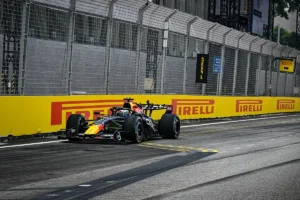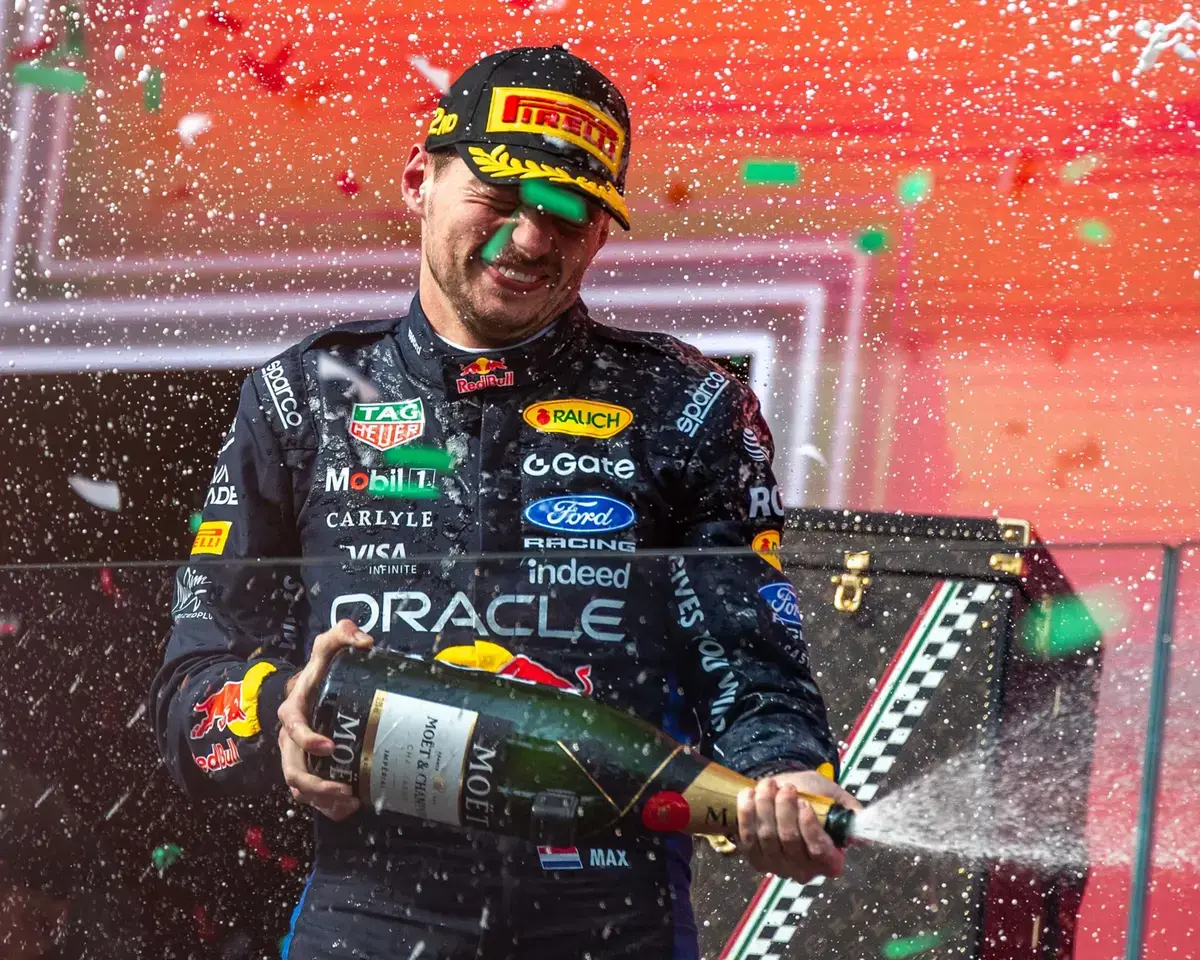

Max Verstappen crossed the line second in Hungary. He cannot explain how. Neither, frankly, can anyone else. The four-time world champion openly admitted the RB22 was nearly undriveable for the majority of the race, yet he still beat both Ferraris, both Mercedes drivers, and walked away with the Driver of the Day award. Make that make sense.
A Car He Could Barely Stand
This was not a case of a driver playing down a dominant performance for the cameras. Verstappen was genuinely at a loss. The same balance problems that caused his qualifying spin on Saturday were still there on Sunday, unchanged and unresolved. A damaged floor vane had been replaced with FIA approval under parc fermé, but it changed nothing of note.
“I think this was one of the hardest races of the year in terms of how I felt in the car. To be on the podium was an incredible result for us.” – Max Verstappen
He put it even more bluntly elsewhere: for 80 percent of the race, he was not enjoying himself. The car had extreme oversteer, difficult kerb behaviour, and, as he discovered climbing out post-race, actual bodywork damage he had not even known about. Red Bull made it as hard as possible for their own driver, and he still delivered P2.
The Move That Changed Everything
The pivotal moment came shortly after his first pit stop, when Ferrari undercut him to put Lewis Hamilton ahead. Verstappen spotted Hamilton momentarily distracted while lapping Liam Lawson, and dived down the inside at Turn 1 to take both drivers in one movement. Kimi Antonelli, watching the replay in the green room afterwards, could barely believe what he was seeing.
“I saw the opportunity as my only one and just went for it. We are good on the brakes, so that helped. It was all under control.” – Max Verstappen
That move defined his race. Hamilton was forced into an earlier second stop, Piastri retired with a gearbox failure, and when the Virtual Safety Car came out Verstappen stayed out on worn softs rather than pit. It was a gamble that worked perfectly, and Lando Norris won ahead of him by 15 seconds.
Red Bull’s Honest Assessment
Team principal Laurent Mekies identified three factors: better race pace than practice suggested, what he called the “Max factor” in overcoming Hamilton, and sharp strategic decisions, particularly staying out during the VSC. He also admitted, with admirable candour, that Red Bull have never given Verstappen or Hadjar a car they could actually push.
Verstappen was not about to let that slide. He warned immediately that the result flatters the real picture, that Isack Hadjar echoed identical frustrations all weekend, and that there is serious work to do before Zandvoort in August. A podium built on survival instincts rather than pace is not a solution. It is a very expensive sticking plaster.