
Fred Vasseur has never struck anyone as a man who needs a pat on the back, and his response to rival teams copying Ferrari’s cleverest 2026 designs proves it. Red Bull nicked the idea, McLaren scrambled to catch up, and Vasseur’s reaction was essentially: nice, now where’s my trophy.
Ferrari turned up to preseason testing in Bahrain with two pieces of aero trickery that had the rest of the paddock squinting at photographs. One was a winglet fitted behind the exhaust, an internal project known as Flick Tail Mode, designed to squeeze extra rear downforce out of the car at the cost of a bit of drag. The other, unveiled a day later, was a rotating wing that flips between corner and straight-line modes, quickly christened the Macarena wing by anyone who has ever been to a wedding. Both ideas have since been chased by rivals, with varying degrees of success.
Copying Is Not the Same as Understanding
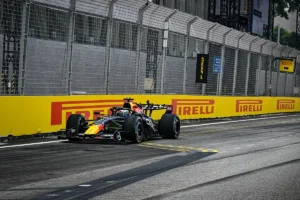
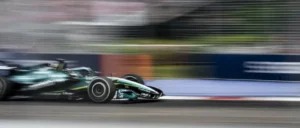
Here is the awkward bit for Ferrari’s rivals: copying a wing is easy, copying the car built around it is not. Ferrari’s rear-end concept was designed with the exhaust device baked in from the start, which is precisely why nobody has managed to fully reverse-engineer it despite months of trying. Red Bull adopted the upside-down rear wing concept and McLaren trialled a version of its own, but McLaren technical director Neil Houldey admitted his team was playing catch-up rather than leading the charge.
“We were disappointed not to pick that up as quickly as Ferrari did and then Red Bull. As soon as we saw it, we realised there was an opportunity there.” – Neil Houldey
That is about as close as an F1 technical director gets to admitting his rivals outsmarted him in public. Red Bull, for what it is worth, says it arrived at a similar concept independently rather than lifting it wholesale, though nobody in this sport is under any obligation to take that at face value.
Vasseur’s Version of Flattery
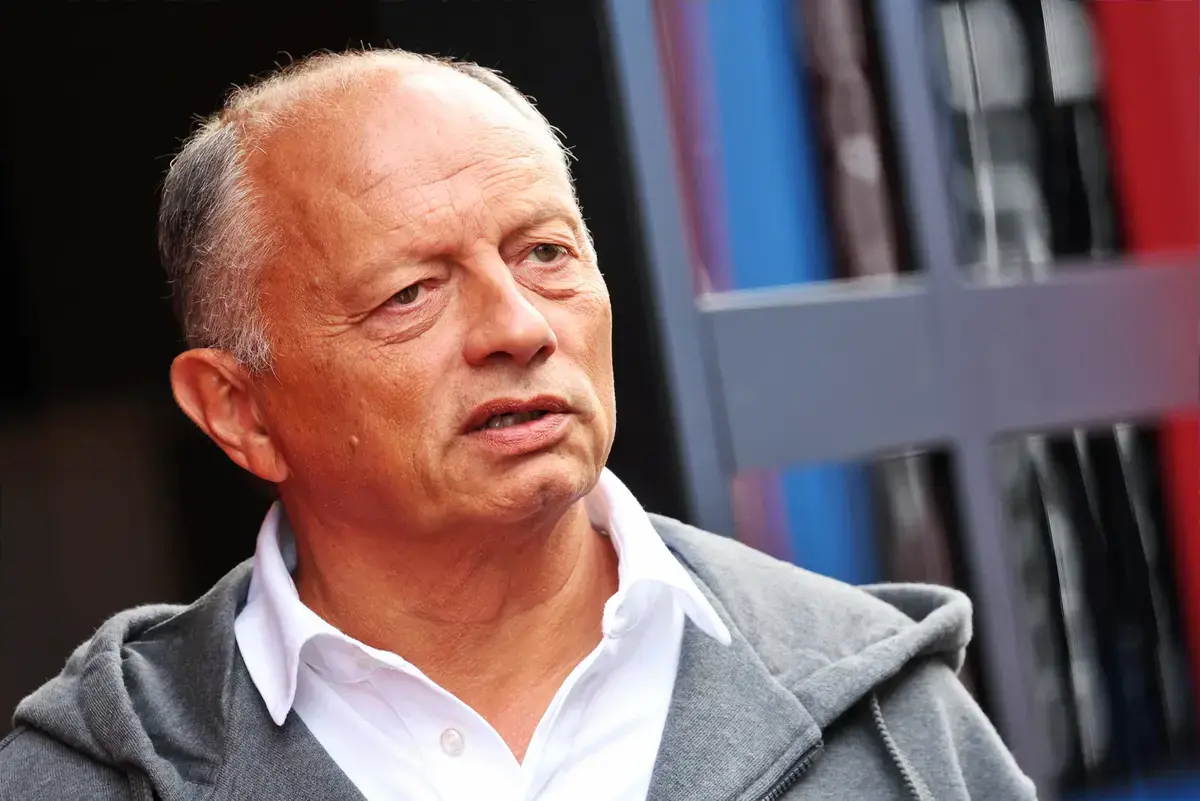
Speaking exclusively to Motorsport.com, Vasseur was asked directly whether having Red Bull and McLaren scramble to copy Ferrari’s exhaust wing and rotating rear wing amounted to a compliment for Maranello. His answer was pure Vasseur: pragmatic, faintly dismissive of the whole notion of compliments, and ultimately about results rather than ego.
“I’m not there to have compliments. I’m there because I want to win. The best compliment for me is to go on the podium.” – Fred Vasseur
It is the kind of answer that sounds almost rehearsed in its refusal to enjoy the moment, except Vasseur clearly does enjoy it, just not in the way a PR department would script. He went on to acknowledge that watching Red Bull and others follow Ferrari’s lead does mean something to the people who actually built the thing.
“Yes, it’s true that for the guys in the team, to see Red Bull coming with the wing, and I think probably Red Bull started before seeing our wings, but the others starting to copy it, or even the device on the exhaust, for the guys in the team who had the idea it’s a good reward.” – Fred Vasseur
Translated out of team-boss caution, that is Vasseur giving his engineers a nod without handing the credit to the wider industry. Fine distinction, but Vasseur has built a career on fine distinctions.
The FIA Didn’t Share the Enthusiasm
Whatever admiration rivals had for Ferrari’s exhaust wing, the FIA had rather less. The governing body has already moved to outlaw the device from 2027, closing the regulatory gap that allowed Ferrari to dream it up in the first place. It is the usual F1 pattern: someone finds a clever loophole, everyone else spends a year trying to copy it badly, and then the rulebook quietly closes the door once the idea has served its purpose. Ferrari at least got a season’s advantage out of it, which in this sport counts as a proper result.
A Chassis Doing the Heavy Lifting
None of this cleverness happens in a vacuum. Ferrari’s power unit remains its obvious weak point, which makes the argument that the SF-26 is the best chassis on the grid rather easy to make. Both Charles Leclerc and Lewis Hamilton have converted that chassis advantage into a win apiece, at Silverstone and Barcelona respectively, and Ferrari currently sits second in the constructors’ standings with 338 points, some way clear of a McLaren team on 263 but still miles off Mercedes’ 425.
Vasseur also used the opportunity to point out how long it actually takes to turn technical philosophy into results, name-checking the extended arrival of technical director Loic Serra, who agreed to join Ferrari from Mercedes in 2023 but only started work at the end of 2024 once his gardening leave ran its course.
“The frustration that you can have sometimes in F1 is that on the technical side the process is mega long, because you have a lot of inertia. We started to discuss with Loic mid-’23 and he joined the team at the end of 2024. Then he’s focused on the car of ’26, and he’s still recruiting people to help him.” – Fred Vasseur
It is a useful reminder that the SF-26, innovative wings and all, is really the first car built entirely under Serra’s watch, and that Ferrari’s current form is the product of a process that started years before anyone saw a wing flip 180 degrees in a Bahrain pit lane.
Where This Leaves the Copycats
Ferrari has already confirmed it will keep pushing upgrades through to the end of the season, cost cap concerns be damned, which means Red Bull and McLaren will have plenty more to copy before 2026 is done. The irony writing itself here is obvious: the more Ferrari innovates, the more rivals imitate, and the less exclusive Ferrari’s advantage becomes by the time it actually matters.
Vasseur can call it a reward all he likes, but rewards in this sport have a habit of being temporary. Ferrari got a wing nobody else had for a few races, extracted two race wins from the platform underneath it, and now watches the rest of the grid catch up while the FIA quietly shuts the door behind them. That is not a compliment, that is just how Formula 1 works, and Vasseur knows it better than most.