
Nothing sharpens a driver’s focus quite like six months of watching other people race while your career quietly circles the drain. Yuki Tsunoda got a one-off lifeline at Zandvoort, made the absolute most of it, and then stood in the media pen begging Formula 1’s team bosses to give him a phone call. Subtle, it was not. Effective, we shall see.
A holiday interrupted
Tsunoda was sunning himself in Greece with his manager when the call came through: get to the UK, you might be racing this weekend. Isack Hadjar had injured his wrist in training ahead of the Dutch Grand Prix, Liam Lawson was promoted back to Red Bull, and suddenly Racing Bulls needed a body who actually knew how to drive an F1 car. Tsunoda fit the bill, mostly because he was the only sensible option left.
The problem was he had barely touched a real 2026-spec car. As Red Bull’s reserve he had kept sharp on simulators and old machinery, but only ever in the virtual RB22. The VCARB 03 was essentially a stranger to him. He raced from Milton Keynes to Amsterdam for a crash-course simulator session and briefings, then turned up at Zandvoort to learn an entirely new rulebook on the fly, in a car he had never sat in, at a circuit that punishes hesitation.
Six months on the sidelines does strange things to a driver
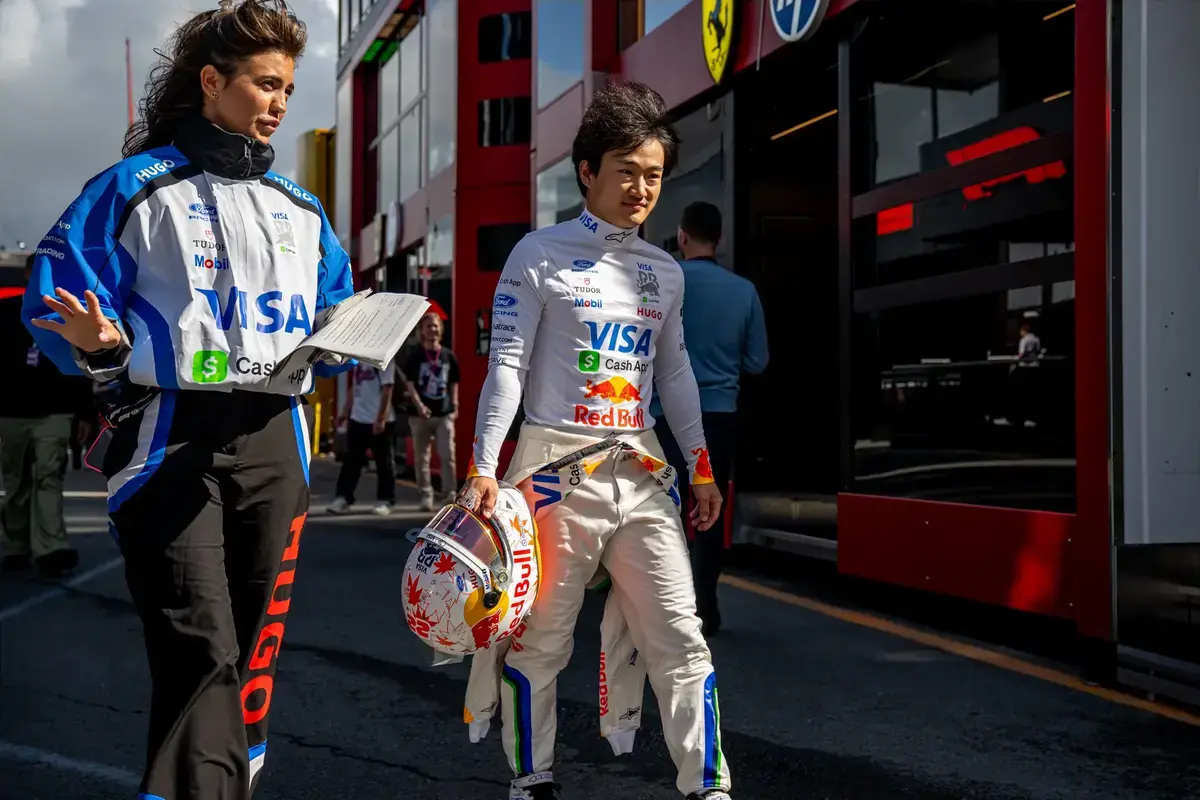
Anyone who watched Tsunoda’s media appearances across the weekend saw a man who had genuinely missed this. He described being pulled away from journalists by his own team so he wouldn’t be late for his debrief, the kind of enthusiasm usually reserved for rookies, not a 26-year-old who spent a full season alongside Max Verstappen in an unforgiving Red Bull.
“Racing Bulls, I’ve been here for years. As soon as I put that white shirt back on, I felt properly at home.” – Yuki Tsunoda
That’s a man who knows exactly how precarious his position is. Dropped by Red Bull at the end of 2025, parked as a reserve for most of 2026, and reportedly in advanced talks with Honda-linked IndyCar teams as a fallback. Zandvoort wasn’t just a race weekend for Tsunoda, it was a last roll of the dice dressed up as a favour to a mate.
The numbers actually stack up
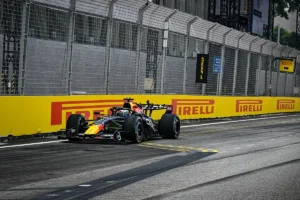
Results-wise, this wasn’t a fairy tale, but it was solid enough to matter. Tsunoda finished the sprint 13th, qualified 12th just a tenth off teammate Arvid Lindblad, and crossed the line 11th in the grand prix, one place clear of Lindblad after both had started the weekend fighting rust rather than rivals.
He also pulled off an audacious move on former teammate Pierre Gasly through Scheivlak, the flat-out right-hander at Turn 5 that separates the brave from the sensible, before ultimately losing out to the Alpine driver for the final points position by five seconds. Racing Bulls boss Alan Permane didn’t hide his admiration, as quoted by Motorsport.com.
“Unfortunately Yuki slid off the track, which set him back; that said, we were very close to the points and doing that during a one-off stand-in appearance is phenomenal.” – Alan Permane
Missing the points by five seconds after six months out of the car, in a completely reset regulatory era, in a chassis he had never physically driven before Friday, is not a disaster. It’s arguably the strongest possible argument he could have made without actually scoring anything.
The qualifying lap that told the real story
Tsunoda himself pointed to Saturday’s qualifying session as the moment it clicked, describing the hunt for the final tenths and hundredths as a feeling he’d genuinely missed. It’s easy to be cynical about drivers talking up their own performances when a contract is on the line, and normally we would be. But the timing data backs him up here. A tenth off Lindblad, a driver who has had the entire season to learn this car and these regulations, is a genuinely good lap from someone who was still working out where the brake pedal bites.
He was also candid about where things went wrong, admitting his sprint start error, a first-lap tangle with Lindblad, came from muscle memory dragging him back to 2025 habits. He turned into the corner as if the car still had last year’s grip levels. It didn’t. Small mistake, honestly explained, quickly corrected. That’s not nothing in a paddock full of drivers who treat every error like a state secret.
Now what?
Here’s the uncomfortable truth for Tsunoda: none of this guarantees anything. The 2027 grid isn’t finalised, and Red Bull, Racing Bulls, Alpine, Aston Martin, Haas and Cadillac could all theoretically have seats up for grabs. But “theoretically” is doing a lot of heavy lifting there. Teams don’t usually hand out race seats based on a single impressive weekend, however well-timed. If they did, half the grid would look completely different by now.
Tsunoda knows this better than anyone, which is presumably why his closing message to the paddock wasn’t subtle diplomacy but a direct plea. Asked whether the weekend had improved his chances of a return, he laughed, paused for effect, and delivered the line that will follow him around for weeks.
“I know what I can do, and I think I pretty much showed also what I can do to most of the paddock. It’s up to my manager, and other teams that have not decided yet on next year’s line-up, if they want to have me or not. But they should.” – Yuki Tsunoda
The cynical bit
Formula 1 has a long, mildly cruel history of drivers producing career-best weekends at exactly the wrong moment, only for the phone to stay silent anyway. Tsunoda delivered under pressure, in an unfamiliar car, under a completely new regulatory framework, and did it with the kind of visible joy that’s hard to fake. Whether that’s enough to shift a single team principal’s spreadsheet is another matter entirely. F1 doesn’t run on sentiment, whatever the highlight reels would have you believe. It runs on sponsorship money, manufacturer politics and whoever’s manager shouts loudest in the right boardroom. Tsunoda shouted plenty at Zandvoort. Now we wait to see if anyone was actually listening.