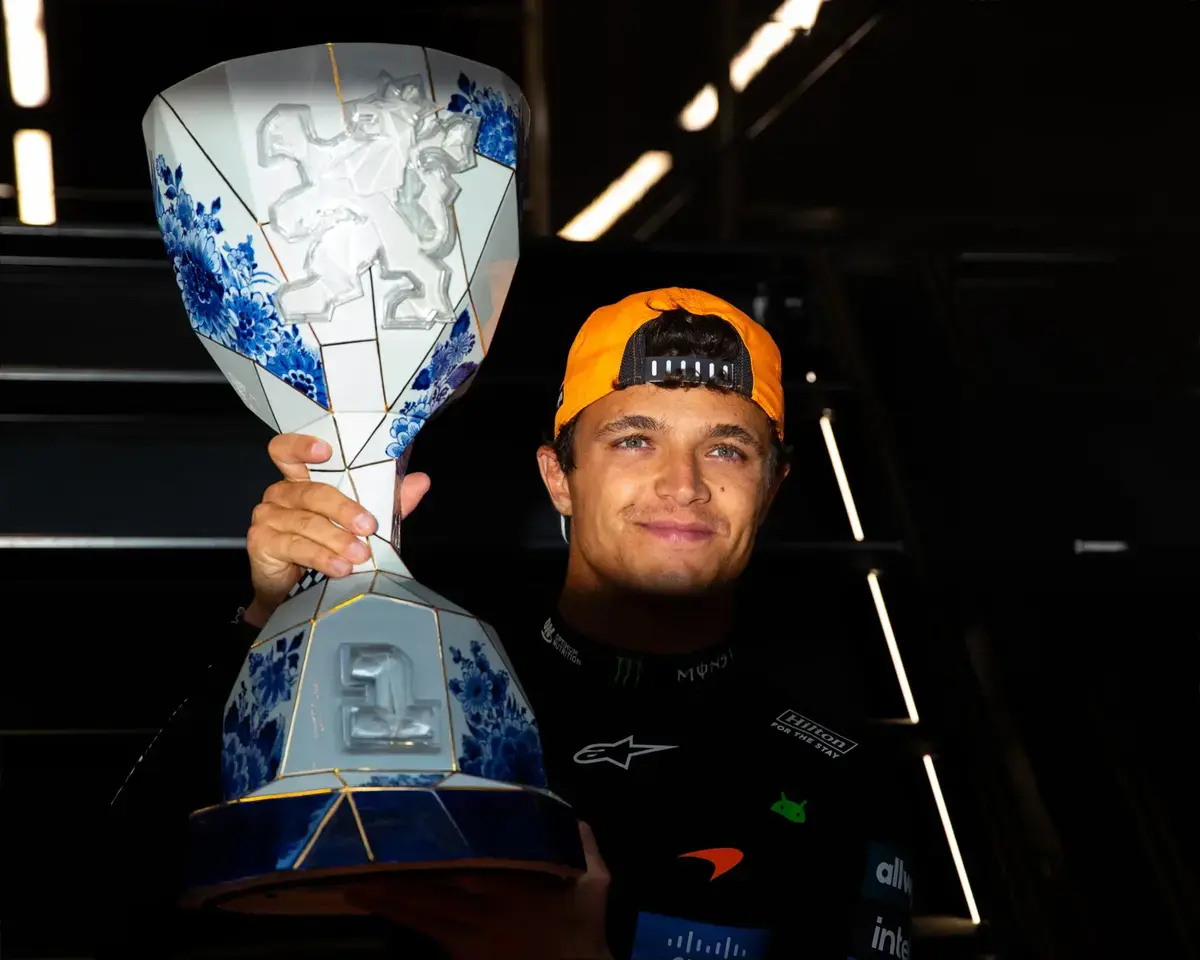

Andrea Stella has done something increasingly rare in modern F1 punditry: he has told his own team’s fans not to get carried away. After two straight wins and two straight poles for Lando Norris, McLaren’s team principal has decided this is the perfect moment to point out that Monza might undo all of it.
The Streak That Comes With an Asterisk
Norris arrives at the Temple of Speed having won the last two rounds and taken pole both times, a run that has dragged McLaren back into genuine race-winning contention just as the season enters its business end. He sits fourth in the standings on 159 points, 83 behind championship leader Kimi Antonelli, and nobody is pretending that gap closes overnight. But momentum is momentum, and after the Dutch Grand Prix even Antonelli admitted Mercedes were “clearly not the fastest car any more on the grid.” Norris, never one to undersell a good run, was blunter on team radio: “The fight’s still on, let’s keep going.”
Stella clearly heard that and decided someone needed to apply the brakes, verbally at least. Speaking to media including RacingNews365, the McLaren boss made the point that the MCL40’s dominance at the Hungaroring and Zandvoort was built on precisely the characteristics Monza does not reward.
Why Monza Is a Different Animal
Hungary and Zandvoort are high-downforce circuits where cornering stability and aero efficiency win races, which happens to be exactly where McLaren’s upgrade package has been making hay. Monza flips that script entirely. It is the lowest-drag configuration of the season, cars spend roughly 80 per cent of the lap flat out, and the chicanes punish anything that isn’t set up for stability under heavy braking rather than mechanical grip through fast corners. In other words, the exact toolkit that won McLaren the last two races is the wrong toolkit for this one.
“The real approach we have is just one race at a time. There’s not much more you can influence than just maximising what’s next available, and the next race will be Monza.” – Andrea Stella
Stella went further, spelling out just how different the demands are: “If we think about the demand of Zandvoort and Hungary, and then we think about the demand of Monza, we are in a completely different regime. So I think if we can confirm our improvements in Monza, then I would say that the answer to your question is, ‘Yes, we can look with some optimism at the remainder of the season.'”
That is about as close as an F1 team principal gets to saying “we genuinely don’t know if we’re any good here.” It is refreshing, and it is also probably correct. Sandbagging has become such a tedious ritual in this sport that a boss actually flagging a legitimate technical concern deserves some credit rather than automatic suspicion.
Enter the H-Wing
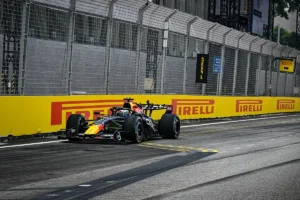
McLaren aren’t turning up empty-handed, though. The team have confirmed a rotating rear wing for the Monza weekend, officially named the H-Wing, following Ferrari’s debut of the so-called flip-flop concept earlier in the season and Red Bull’s own version that followed. McLaren had already trialled the idea during a practice session in Hungary before committing to race it this weekend, a more cautious rollout than either of their rivals bothered with.
The name itself is a nod to McLaren’s own history. According to formula1.com, the H-Wing borrows its naming convention from the team’s F-duct system, which debuted in 2010 and took its letter from the branding beside the system’s inlet. This time the H comes from Etihad Airways, McLaren’s airline partner, whose logo sits on the rear wing itself. Cute marketing, but the substance matters more than the branding exercise: a rotating rear wing is designed to cut drag for maximum straight-line speed without bleeding away too much downforce, which is precisely the compromise Monza demands.
Technical director Neil Houldey framed the challenge in blunt terms, describing Monza as a circuit where “long straights place a premium on drag reduction, while the heavy braking zones demand stability and the chicanes require good ride performance.” He added that energy management would be tight around the lap too, warning that different approaches to harvesting and deploying it could create what he called a yo-yo effect between cars trading advantages at different points of the circuit, which sounds like a polite way of saying overtaking here will be a lottery of energy deployment as much as raw pace.
Houldey also confirmed McLaren won’t simply bolt on the full low-drag package and hope for the best. The team plan to evaluate the H-Wing alongside other small aerodynamic tweaks across practice before settling on a final specification for qualifying, a sensible approach given how badly a wrong guess at Monza can wreck a weekend.
Optimism With Conditions Attached
There is a version of this story where Stella’s caution is just standard-issue team boss modesty, the sort of thing bosses say to keep egos in check and expectations low enough that anything better than a disaster reads as a triumph. But the technical argument here actually holds up. Winning at Zandvoort and Hungary tells you a car corners well and manages its aero platform under load. It tells you nothing about how that same car behaves with the wings stripped back and the engine screaming down a straight for the best part of a lap.
McLaren clearly believe there’s more performance to unlock from the MCL40 regardless of what happens this weekend, with further upgrades reportedly still planned for the remaining 11 races of the season. But if the H-Wing and the low-drag package don’t translate into pace at Monza, Stella’s caution will look less like humility and more like a man who saw this coming. Either way, the real answer arrives on Sunday, and no amount of careful phrasing from the pit wall changes that.