
Carlos Sainz wants you to know he is not a rat fleeing a sinking ship. He also wants you to know that other ships were, in fact, offering him a cabin. Make of that what you will.
The Carlos Sainz new-deal press conference in Zandvoort was billed as a simple loyalty statement, and on the surface that is exactly what it was: a driver committing to Williams until at least 2027 despite a season that has been an unmitigated disaster. But peel back the diplomatic language and what Sainz actually revealed is far more interesting than the headline suggests. He had offers. Real ones. And Audi’s name kept coming up as the destination that could have taken him away from Grove entirely.
The Offers Sainz Didn’t Bother Chasing
Sainz was refreshingly candid about the fact that rival teams came knocking while Williams was busy producing what he himself calls one of the worst cars in the field. Speaking to media in the paddock, as reported by PlanetF1, he admitted he never seriously dug into those approaches, not because they weren’t tempting on paper, but because jumping ship mid-crisis simply isn’t who he is.
“I don’t think it’s part of my character to jump ships when the situation is at its worst.” – Carlos Sainz
That is a nice sentiment, and probably a genuine one. But notice what he isn’t saying: he isn’t saying the offers weren’t good, and he isn’t saying he wasn’t at least curious. He is saying he chose loyalty over opportunity, which is a very different thing from having no opportunity at all. For a driver who left Ferrari when the writing was on the wall there, and who has spent much of this season watching Williams implode after a promising 2025, that restraint is notable.
Reading Between the Diplomatic Lines
Sainz didn’t shy away from cataloguing exactly how bad this Williams project has been. His description of the car reads less like a driver being loyal and more like a driver issuing a formal complaint with a bow on top.
“We got, let’s say, the principles wrong, and as a team, I want to make sure that it doesn’t happen again.” – Carlos Sainz
A car that is late, overweight, and short on downforce. In his own words, that is “everything that you want to achieve in a car” if your goal is failure. Sainz called it the perfect storm, and pointed out that last year’s surprise success probably raised expectations to a level the team simply couldn’t sustain. That is a polite way of saying Williams got ahead of itself and everyone paid the price, Sainz included, given he’s languishing on just 6 points this season alongside team-mate Alexander Albon on 5.
Why Stay When the Grass Looked Greener
The Audi speculation makes sense on paper. A factory-backed operation building something new from 2026 onwards is exactly the sort of project a driver in Sainz’s position might fancy, particularly with Williams stuck fixing a car that got, by his own admission, the fundamentals wrong. Yet Sainz frames his decision as being about the 1,000-odd people at Grove rather than the badge on the car, and insists his commitment to James Vowles‘ rebuild project hasn’t wavered despite this year’s results being nowhere close to what either side expected.
Whether that reads as admirable loyalty or slightly naive faith depends entirely on how quickly Williams can turn this around. Sainz has effectively bought himself, and the team, more time to prove the 2025 podiums weren’t a fluke and this season’s misery isn’t the new normal. If Williams produces another turkey next year, this contract will look less like commitment and more like a driver who talked himself out of a better option purely on principle.
The Bigger Picture
It’s worth remembering the context here. Williams sacrificed developing this year’s car to focus resources on the incoming regulation changes, a gamble that clearly hasn’t paid off in the way anyone at Grove hoped. Sainz’s frustration is entirely understandable given he arrived off the back of a genuinely strong 2025 campaign, only to find himself fighting near the back of a field now dominated by Mercedes and Ferrari.
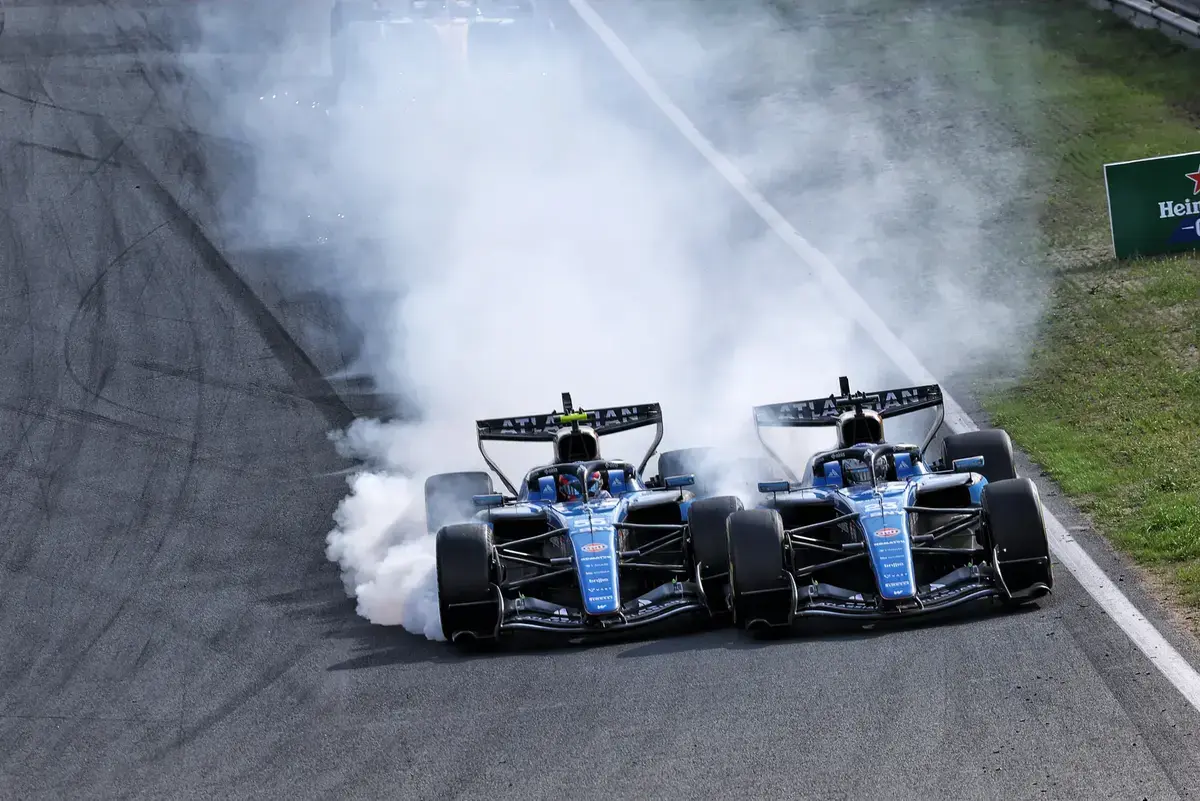
None of that stopped the awkward optics of two Williams cars finding each other at Zandvoort recently, a farcical footnote to a season that has tested every ounce of patience Sainz claims to have. But that’s a separate embarrassment for another day.
The Cynical Take
Sainz’s message is essentially: I could have left, I chose not to, now fix this car or I might not be so forgiving next time. That’s not disloyalty, it’s leverage dressed up as sentiment, and there’s nothing wrong with that. Drivers who stay purely out of blind faith rarely last long in this sport. Sainz has bet his reputation on Williams sorting itself out by 2027. Vowles had better deliver, because a driver who turned down other seats once won’t necessarily do it twice.