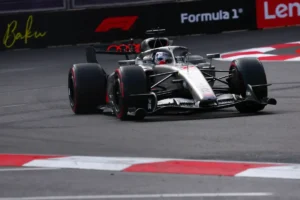
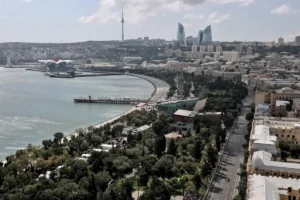
Everyone wants to talk about the chaos in Sepang: the stalled cars, the lightning delay, the tyre gamble that wrecked half the grid. Fine. But none of that explains why Max Verstappen was the man standing on top of the podium rather than scrabbling for points in the midfield. That story starts ten days earlier, in Baku, with a floor.
The Upgrade Nobody Made a Fuss About
Red Bull rolled out what they billed as their final major upgrade of the year at the Azerbaijan weekend. New floor body, new diffuser, new sidepods, new cooling louvres, new mirrors, new halo fairing. On paper that reads like a team emptying the parts bin before the shutdown. In practice it was Red Bull quietly admitting the RB22 had problems worth solving properly rather than patching.
The Baku introduction did not exactly announce itself with fireworks. Qualifying there was underwhelming, with Verstappen starting an unimpressive eighth after engine trouble and yellow flags got in the way of a clean lap. If you judged the upgrade purely on that Saturday, you would have filed it under “nice try” and moved on.
Sepang Told a Different Story
By the time the field reached Sepang, the picture had changed. Verstappen’s pole position suggested the new floor and diffuser were doing what they were designed to do, giving the car improved balance and downforce consistency. A pole lap is one data point, admittedly, but it was the first sign that Baku’s bodywork overhaul was not just a cosmetic refresh.
Then the race itself turned into the sort of fiasco that makes for brilliant television and terrible strategy calls. Rain swept over the circuit before the start, half the grid stalled on the formation lap because of a software bug (the FIA has since detailed the root cause), and the start was delayed by roughly half an hour while everyone stood around wondering what exactly had just happened. When the race finally got going, the drying track turned into a trap. Red Bull and Mercedes gambled on intermediates. Ferrari, with both Lewis Hamilton and Charles Leclerc, and McLaren went for slicks, banking on the sort of rapid Malaysian dry-out that has bailed teams out before. It did not arrive in time, and both teams effectively threw away their own races before the opening laps were done.
Red Bull’s tyre call was sharp. But a sharp tyre call only matters if the car underneath it can convert the advantage into a comfortable, unchallenged win, and that is where the RB22’s revised floor and diffuser did their quiet work. Verstappen was never seriously troubled once he got the lead, which demonstrated the upgraded car’s race pace.
Five Years From a Hole in the Ground
There is a bigger story sitting underneath the bodywork changes, and it has nothing to do with aero. This was the first victory for Red Bull’s own power unit, built in-house by Red Bull Powertrains rather than bought in from an established manufacturer. For a team that effectively bet on an energy drink company building a competitive Formula 1 engine from scratch, against Mercedes, Ferrari, Audi and Honda, that is no small thing.
Christian Horner, who ran the team for two decades and was one of the main architects of the Powertrains project, marked the result on Instagram with a line that captured the scale of it rather well.
“From a hole in the ground to winning a Grand Prix in 5 years, enormous congratulations to Red Bull Ford Powertrains, to Max and the whole team. An incredible achievement.” – Christian Horner
Horner’s framing is obviously sentimental, he built the factory, so of course he is proud of it. But the underlying point stands regardless of who is saying it: assembling an engine department from nothing and winning a race with it inside five years is a genuinely difficult thing to pull off, and most paddock cynics would have bet against it happening at all.
Why Eighth on the Grid in Baku Mattered
The temptation after any messy qualifying session is to write the upgrade off and wait for the next one. Red Bull didn’t get that luxury, and didn’t need it. The RB22’s Baku package was never going to prove itself in a single flying lap compromised by engine issues and yellow flags. It needed a race weekend where the car could show its hand across multiple conditions, wet and drying, high and low fuel, under pressure and in clear air. Sepang gave it exactly that, and the floor, diffuser and sidepod changes answered every question Baku had left hanging.
It is worth being honest about what this does and does not prove. One win, however convincing, does not erase a season in which Verstappen arrived at Sepang sitting on 188 points, some way back in the standings. Verstappen’s win in Malaysia was his first of the year, and a single result built on a favourable tyre call and a stroke of early rain is not the same as a car that has suddenly closed the gap to Mercedes on raw pace. The RB22 upgrade clearly fixed something real. Whether it fixed enough to matter over the remaining races is an entirely separate question.
What Red Bull Actually Needs Now
Red Bull called Baku’s package their final major upgrade of the year, which means whatever turned up in Sepang is roughly what the team will be racing for the rest of the season. That is either reassuring or alarming depending on how much faith you put in a single result delivered in genuinely bizarre conditions. A pole position and a dominant win are a strong data set. They are not proof that the car is quick everywhere, in the dry, under normal circumstances, against a Mercedes that has won far more consistently all year.
What Baku’s floor and diffuser clearly did was remove some of the inconsistency that had been dogging the RB22, the kind of weakness that turns a potential front-runner into a car that qualifies eighth through no fault of its driver. Converting that fix into a genuine, repeatable race-winning package over the remaining rounds is the part Red Bull still has to prove.