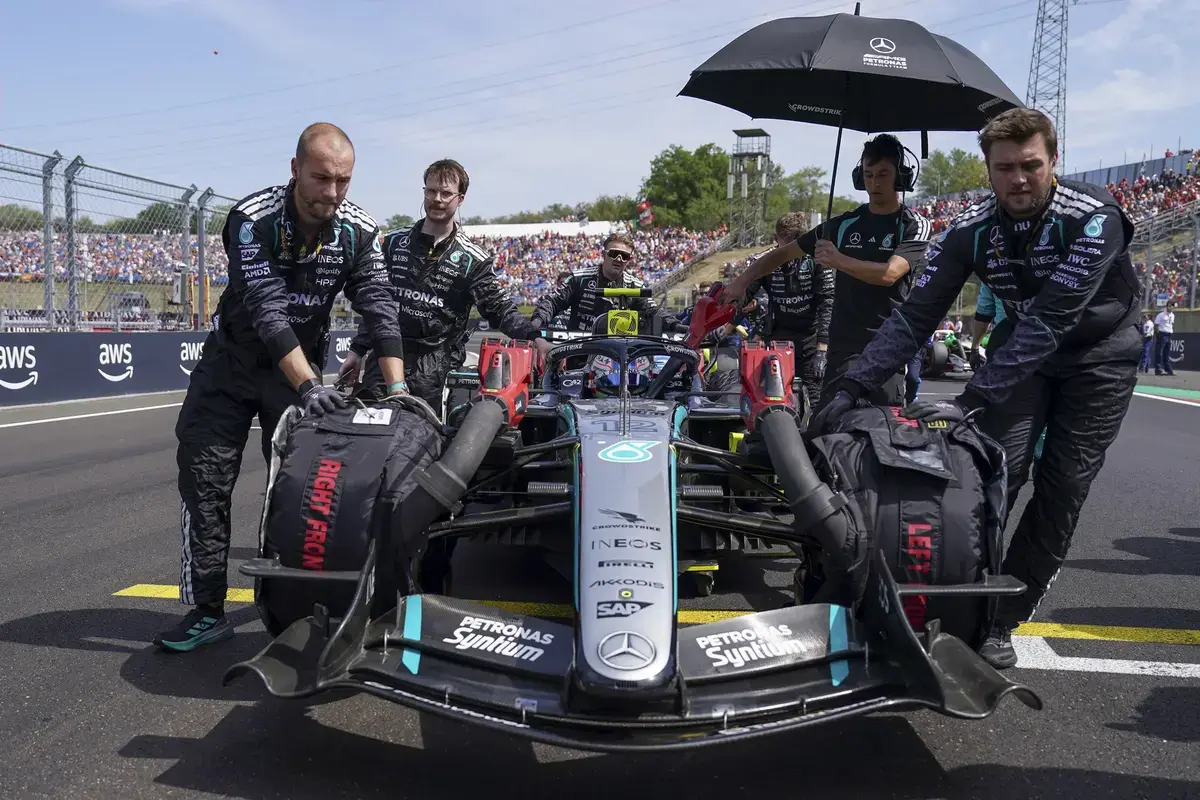

Mercedes leads both championships, has won eight of the first eleven races, and James Allison is still not happy. That tells you everything about the standard this team now sets for itself, and the uncomfortable truth hiding beneath the silver paint.
The Gamble That Defined the W17
Speaking on the team’s own Nu Silver Arrows Radio podcast, technical director Allison laid out the boldest part of Mercedes’ 2026 strategy. Rather than freezing the W17’s design at the usual point in the calendar, the team pushed that deadline back by several weeks, later than any previous Mercedes car in history.
The logic was simple, if nerve-shredding: under these sweeping 2026 regulations, aerodynamic gains are coming at roughly six to seven times the rate they were in 2025. That translates to roughly half a second every two months. Every extra week of development crammed into the launch car was therefore worth real, tangible performance.
“We took a decision that we were going to leave it later than we’ve ever left a car before, by several weeks. And that we were going to do a plan that had less than no contingency in it.” – James Allison
The Cost of Arriving Full and Spent
The problem is that squeezing every drop of performance into the launch car left the development pipeline bone dry. While Ferrari and McLaren froze their designs earlier and were already building update packages, Mercedes was still refining its launch specification. The result is a development programme running roughly one to two races behind its rivals.
That phase shift explains a lot. Ferrari’s substantial update package in Barcelona handed Lewis Hamilton the tools to beat his former employers. McLaren’s new floor in Hungary did the same for their first race win of the season. Neither felt like a surprise once you understand the rhythm Allison is describing.
“We arrived bristling with performance, but with all of it spent. We’ve been filling up our tanks to give more, and we’re a bit out of phase.” – James Allison
Scary, But Not Terminal
Allison is candid about how unsettling it feels to watch half a second of advantage evaporate in a single rival update cycle. He is equally clear that the tank is not empty for good, merely delayed. The strategy for the second half is straightforward: bring the next performance step, restore the advantage, repeat.
Meanwhile, acting team principal Bradley Lord pointed to lessons learned during the lean years behind Max Verstappen as the foundation for this season’s success, with closer collaboration between chassis and power unit departments paying dividends. That relationship at Red Bull looks considerably less harmonious right now.
Leading While Frustrated
Kimi Antonelli sits 50 points clear of Lewis Hamilton in the drivers’ standings. Mercedes holds a 72-point lead over Ferrari in the constructors’ table. And yet Allison openly admits the margin should be bigger, given the car’s raw pace and the points left scattered on the track through retirements and missed opportunities.
It is a peculiar kind of frustration, the sort only a team accustomed to dominance can truly feel. The second half of the season will test whether that frustration sharpens Mercedes’ edge or simply confirms that even the best-laid plans occasionally need a refill.