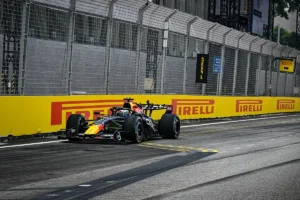
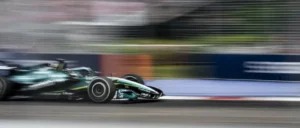
Mercedes has won eight of eleven Grands Prix in 2026. Its customer teams, McLaren, Alpine and Williams, combined for one. Bradley Lord would like you to know that is entirely above board, entirely in the contract, and entirely the customers’ fault for not building their own simulation tools. How reassuring.
The Toolset Problem Nobody Warned Them About
The core issue has been simmering since the Melbourne opener. Kimi Antonelli and Lewis Hamilton were exploiting the new 2026 power unit in ways their supposed partners simply could not replicate. McLaren boss Andrea Stella was blunt about it, telling reporters the flow of information from HPP had not been “as anticipated.”
Then came Silverstone, and the throttle-lift technique. Mercedes was doing something on the straights that McLaren had not discussed with HPP and was not even sure it had access to. Stella admitted it “probably requires some additional elements” to deploy. In other words, Mercedes has tricks in its locker that the paying customers have not been handed.
Lord’s Explanation, Translated
Mercedes deputy team principal Bradley Lord offered a tidy, corporate response, as reported by PlanetF1.com.
“Everything is in the rules and everything is in the contract.” – Bradley Lord
The real explanation sits just beneath the polish. Many of the critical simulation toolsets, the software that predicts how the power unit and chassis interact, were developed jointly by HPP in Brixworth and the Mercedes Grand Prix chassis team. That means they belong to the factory F1 team, not HPP. Customer teams cannot have them. Technical regulations on IP sharing are, as Lord notes, “very clear.”
So McLaren must invest its own budget cap resources to build equivalent tools from scratch, or simply accept being one step behind. Neither option is particularly appetising when you are chasing a Mercedes that has already built and mastered those exact tools over years of development.
A Steep Curve, or a Structural Ceiling?
Lord calls it a “steep learning curve” in a complex new ruleset, and that is not entirely wrong. The 2026 regulations are genuinely intricate, and even Mercedes is still debugging midway through the campaign. But framing the gap as a temporary teething issue feels optimistic. McLaren is third in the constructors’ standings on 220 points, a healthy 159 points behind Mercedes. That is not a debugging problem. That is a structural one.
Lord praises his customer teams as “great partners” who have “rightly demanding” standards. Perhaps. But demanding standards are easier to meet when you are not also asking partners to reverse-engineer tools you already had. The question is whether that gap ever closes, or whether 2026 has quietly established a two-tier customer model that nobody in Brackley is in any hurry to fix.