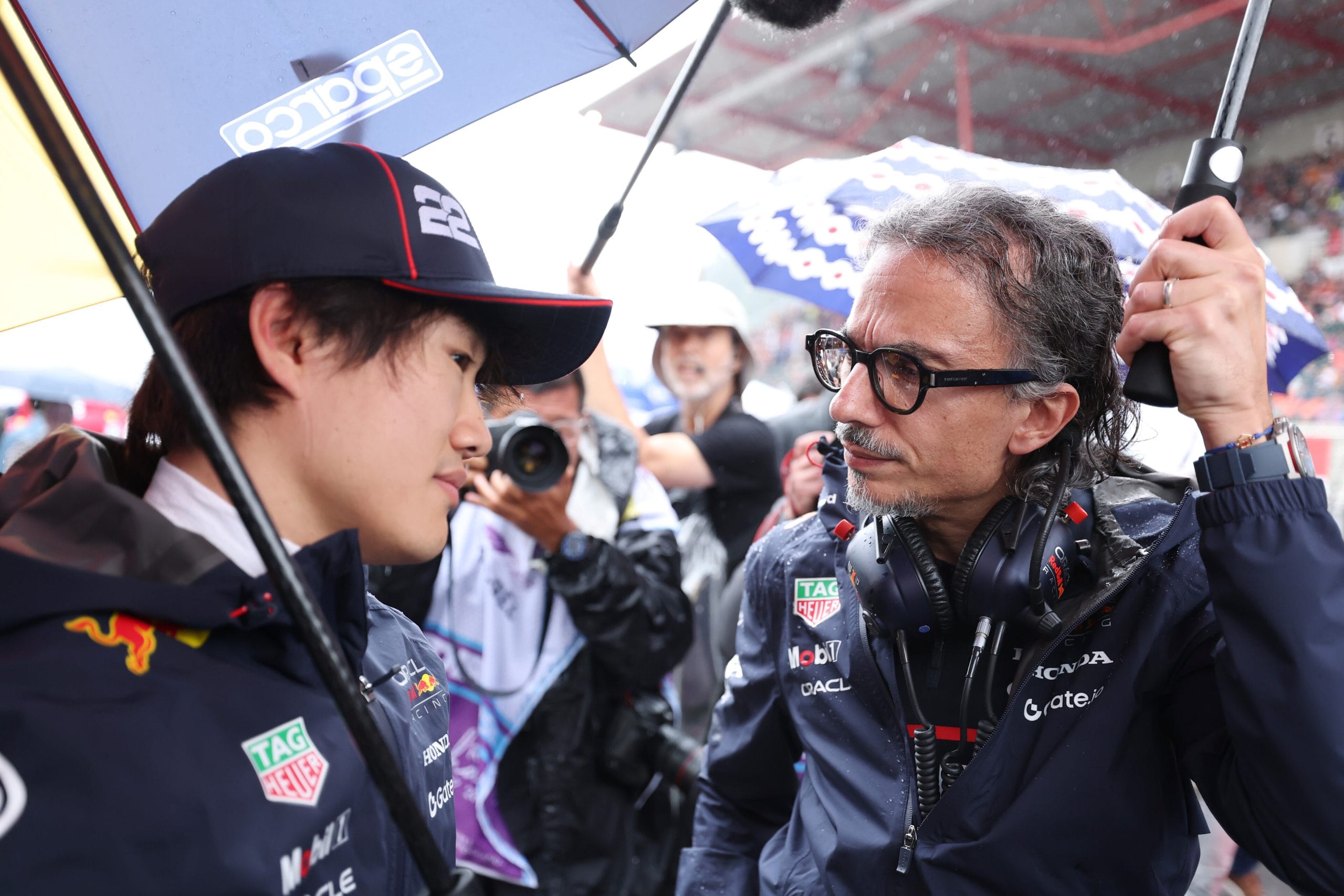

Laurent Mekies wants everyone to know that Yuki Tsunoda will get another chance in Formula 1. The Red Bull Racing team principal delivered this reassuring message whilst simultaneously demoting the Japanese driver to reserve status for 2026. Because nothing says “we believe in your future” quite like removing your race seat then issuing press releases about how opportunities await, does it?
Tsunoda spent five years in the Red Bull family. He got his big promotion to the main team after just two races this season when Liam Lawson wasn’t working out alongside Max Verstappen. The result? Finishing 17th in the championship with 33 points. Now he’s watching Isack Hadjar take his seat whilst Mekies explains how “very difficult” this decision was and how the door remains open. Lovely sentiment. Shame nobody’s actually walking through that door to offer him anything concrete.
The “You Never Know What Happens” Defence That Means Absolutely Nothing
Mekies delivered his corporate reassurance speech with all the conviction of someone reading prepared statements. Tsunoda will be reserve driver. He might get another chance. Red Bull’s famous for making “swift driver decisions” which could work in the Japanese driver’s favour. You never know what’s going to happen in Formula 1.
“I hope, and I think, that Yuki will get another chance. He will be reserve driver with us next year. You never know what’s going to happen.” – Laurent Mekies
Here’s the uncomfortable question nobody’s asking. If Tsunoda’s so talented and clearly deserves another F1 opportunity, why isn’t any other team offering him one? Why hasn’t Alpine come calling? Why is nobody actually providing the chance everyone insists he’ll receive? Because praise is free. Race seats cost money. And F1 teams would rather sign cheaper juniors with longer careers ahead than invest in a 25-year-old who just got dropped after struggling alongside Verstappen for an entire season.
Mekies pointed to the end of 2024 as evidence that fortunes can change quickly in Formula 1. Tsunoda was driving well at Racing Bulls. Then Lawson got promoted to Red Bull instead, which was “very difficult for him to digest” according to Mekies. Three races later, after Lawson got swapped back to Racing Bulls, Tsunoda was suddenly in the main team. See? Things change fast. Except when they don’t.
When Your Team Principal Admits the Second Seat Is Impossible
Mekies didn’t hold back on explaining why Tsunoda struggled. The second seat at Oracle Red Bull Racing isn’t an easy one. They have a tough car to drive. The team tried everything they could to support the Japanese driver. None of it was enough to keep him in the seat for 2026.
“It has been a very difficult decision to take. The second seat in Oracle Red Bull Racing is not an easy one. We have a tough car to drive. And of course, we have tried everything we could to support Yuki.” – Laurent Mekies
Translation? We’ve demoted you because you couldn’t match Verstappen in a difficult car, but we’ll keep you around just in case both our drivers crash simultaneously. What inspiring leadership from a team that’s made driver management an art form of controlled chaos. Let’s be honest about what “the second seat isn’t easy” actually means. It means racing alongside a four-time world champion who makes most teammates look ordinary. It means extracting performance from machinery that only one person seems capable of maximising. It means your benchmark is someone with 71 career wins who’s redefining what’s possible in Formula 1.
Was Tsunoda terrible? Not remotely. He finished races. He scored points. Azerbaijan delivered sixth place during Round 17 whilst Ferrari spectacularly imploded with Leclerc and Sainz crashing into each other. That’s proper points scoring from someone capitalising on others’ disasters. But finishing 17th with 33 points whilst your teammate mounted a championship challenge that fell two points short doesn’t exactly scream “indispensable talent.”
The Reserve Role Where Dreams Go to Die
Mekies insists setbacks happen to everyone in Formula 1. That Tsunoda has “a lot in him” that will create another opportunity. That being reserve driver for 2026 keeps him in the paddock where things might change. Perhaps. But the reality of reserve roles tells a different story entirely.
Being named reserve driver sounds impressive until you realise it means precisely nothing. Tsunoda gets to attend some tests. Participate in simulator work. Stand around paddocks wearing team kit whilst actual racers do the competing. Unless both Red Bull drivers simultaneously become unavailable, he’s watching from the sidelines whilst his career momentum evaporates completely.
That’s the reality of reserve roles in modern F1. They’re corporate politeness for “we don’t want you racing but we’ll keep you around just in case.” How many reserve drivers actually return to full-time seats? Not many. Most disappear into other racing categories or retire quietly whilst teams issue platitudes about their contributions.
The paddock’s brutal. Out of sight means out of mind. Whilst Tsunoda sits in the reserve role hoping for opportunities, younger drivers will be proving themselves, building relationships with teams, and securing the seats he’s hoping to reclaim. Hadjar will be racing. Lawson will be racing. Tsunoda will be hoping something dramatic happens to create space for his comeback.
When Hope Becomes the Only Thing on Offer
Mekies admitted the decision came down to future planning. Where does Red Bull see themselves going in the coming years? Apparently not with Tsunoda occupying their second seat. The 2026 regulations represent F1’s biggest reset in history. New power units. Active aerodynamics. Completely different cars. Red Bull’s decided their future involves giving opportunities to younger prospects rather than persisting with someone who’s had 111 races to prove himself.
So what’s Tsunoda actually getting from Mekies’ reassuring words? Hope. The promise that maybe, possibly, if circumstances align perfectly, another opportunity might materialise. That’s lovely sentiment from a team principal. But hope doesn’t pay bills. Hope doesn’t build racing careers. Hope certainly doesn’t guarantee the F1 comeback everyone keeps insisting will happen.
The uncomfortable truth? Red Bull’s reserve role keeps Tsunoda technically employed whilst offering zero guarantees about racing again. Other teams have filled their lineups for 2026. Nobody’s scrambling to sign a driver who just finished 17th after getting his big chance at a top team. Mekies can promise all the future opportunities he wants. Until someone actually offers a race seat, those promises mean absolutely nothing.
What “Another Chance” Actually Looks Like
Perhaps Mekies genuinely believes Tsunoda will race in Formula 1 again. Perhaps Red Bull’s chaotic driver management will create unexpected opportunities. Perhaps another team will suddenly decide they need a 25-year-old who couldn’t match Verstappen’s pace. Perhaps.
More likely? Tsunoda will spend 2026 watching from the sidelines whilst everyone tells him how talented he is and how he deserves another shot. He’ll do simulator work. He’ll attend tests. He’ll stand in paddocks hearing about how quickly things can change in Formula 1. And whilst he’s waiting for that change to happen, the sport will move on without him.
That’s what “another chance” actually means in modern F1. It means hope without guarantees. Promises without timelines. Reassurance without race seats. Laurent Mekies can insist Tsunoda’s opportunity will come. But until it actually materialises, those words are just corporate politeness whilst Red Bull moves forward with drivers they believe have better futures ahead of them.