
Everyone spent the Dutch Grand Prix weekend talking about McLaren’s floor and brake duct tweaks. Nobody mentioned the wheel rims. Which, funnily enough, is exactly where a decent chunk of the magic was hiding.
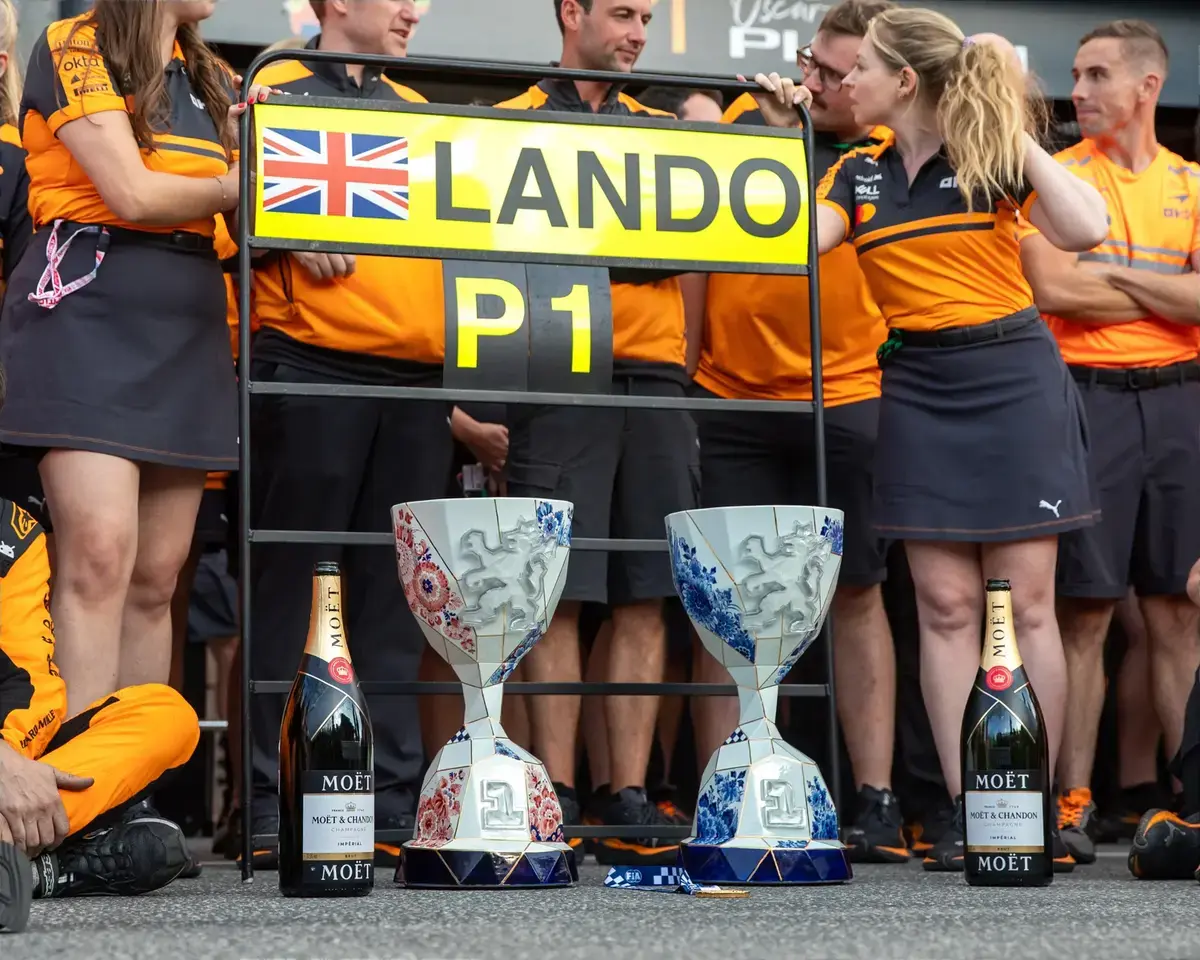
McLaren won at Zandvoort, its second win in a row after Budapest, and the temptation is to file that under simple continuation of form. But Motorsport.com has dug into what actually happened under the skin, and it turns out the updates introduced either side of the summer break did more than plug an aerodynamic hole. They gave McLaren a genuine step forward, one that even caught the team itself off guard.
The Floor Was Never the Whole Story
McLaren’s strengths had already started showing at Barcelona, and Spa was arguably the car’s most convincing outing yet. The pattern is obvious once you look for it: the faster and longer the corner, the better the MCL40 looks. That is not the same as saying pure top speed wins it races, but the correlation with high-speed, high-load corners is hard to ignore.
The latest upgrade package gave the car the extra downforce needed to turn those sections from a strength into an outright weapon. McLaren technical director of engineering Neil Houldey admitted the team itself was surprised by how well it worked in the high-speed sections, exceeding internal expectations. When your own engineers are pleasantly stunned by their own upgrade, you know something has clicked that wasn’t entirely planned.
The Wheel Rims Nobody Talked About
Buried underneath the floor and brake duct headlines was a quieter change: new front wheel rims. Houldey had flagged it before the weekend, almost as an afterthought.
“We introduced a small change to the rear section of the floor to generate a bit of extra load, along with some minor tweaks to the rear brake ducts. We also have new front wheel rims, which will help us build more temperature in the tyres. These updates are not significant in terms of lap time, but they do make us slightly more competitive.” – Neil Houldey
Modest words for something that quietly solved one of McLaren’s biggest headaches of the season: getting temperature into the front tyres.
Monaco Exposed the Weakness This Was Built to Fix
Team principal Andrea Stella pointed out after the race that Budapest and Zandvoort are both high-downforce circuits that suit the car’s natural characteristics. Monaco did not. McLaren went there hoping to fight at the front, as it had the previous year, and instead finished outside the podium, undone by a lack of downforce and by tyres that simply refused to switch on at the front axle.
That front tyre temperature problem was not new. It had already surfaced in Australia and China, where the car suffered pronounced graining. Japan was the exception, where graining was not an issue and fresh asphalt handed the MCL40 its first podium of the season. The pattern across the year has been consistent: whenever the front axle struggles to find heat, McLaren struggles full stop.
Rim Pockets, Rule Changes and a Clever Loophole
This is the genuinely interesting bit for anyone who enjoys the technical arms race behind the podium photos. Wheel rim development is open again this season under the new regulations, and that has handed engineers a subtle but powerful lever over tyre temperature and pressure management. Custom internal cavities inside the rim, sometimes called pockets by the people who design them, let engineers passively control how air moves and how heat transfers into the tyre.
At Zandvoort, McLaren went to work specifically on retaining more heat inside the rim structure and pushing it through to the tyre more effectively. Only the front rim was changed, built by long-time partner Enkei, and it arrived alongside a more closed wheel cover designed to cut the cooling effect of air hitting the assembly and to trim drag while it was at it.
The rear rim stayed untouched, and there is a simple reason why. Rear tyre degradation was already a live issue across the weekend, visible in both the sprint and the race. The last thing McLaren needed back there was more heat retention when the priority was keeping temperatures under control through traction zones and high-speed sections. Strong gusts at Zandvoort were already making the cars slide through the fast corners and out of the slower ones, exactly where extra downforce and controlled temperatures matter most.
Why This Actually Mattered on Track
The clearest evidence came in qualifying. Lando Norris nailed pole on his final Q3 run while rival teams were still fighting to get temperature into their tyres and needed an extra lap to do it. Front-axle graining had been a genuine concern heading into the weekend, and while it ultimately proved minimal across the field, the real battle was simply getting the tyres into their working window over a single lap. McLaren, thanks to its rim work, got there first and stayed there.
Monza Is the Test That Actually Matters Now
None of this means McLaren has suddenly built the complete package. Stella has been careful not to overclaim, telling reporters that his approach is to take things race by race rather than declare McLaren the team to beat. Monza brings low drag and heavy braking into the equation, two things Stella has openly admitted are not obvious strengths of the MCL40. If the car can hold its own on the long straights and through the chicanes this week, McLaren’s recent form starts to look like genuine all-round pace rather than a car that simply loves fast corners and generous downforce.
Max Verstappen has already shown at Monza in the past that raw car characteristics can be overridden by a driver having the weekend of his life, so nothing is guaranteed either way. But if McLaren rolls into the paddock this weekend and struggles on the straights, the wheel rim trick that won them Zandvoort will be remembered as exactly what it was: a clever, track-specific fix rather than a universal upgrade. Free practice gets underway on Friday at 10:30 UTC, with qualifying on Saturday at 14:00 UTC, check the calendar for your local time. Monza will tell everyone, McLaren included, whether this is a title car or just a very good one on the right kind of circuit.