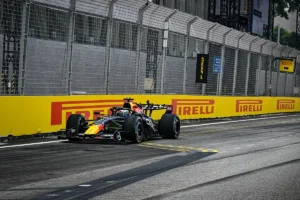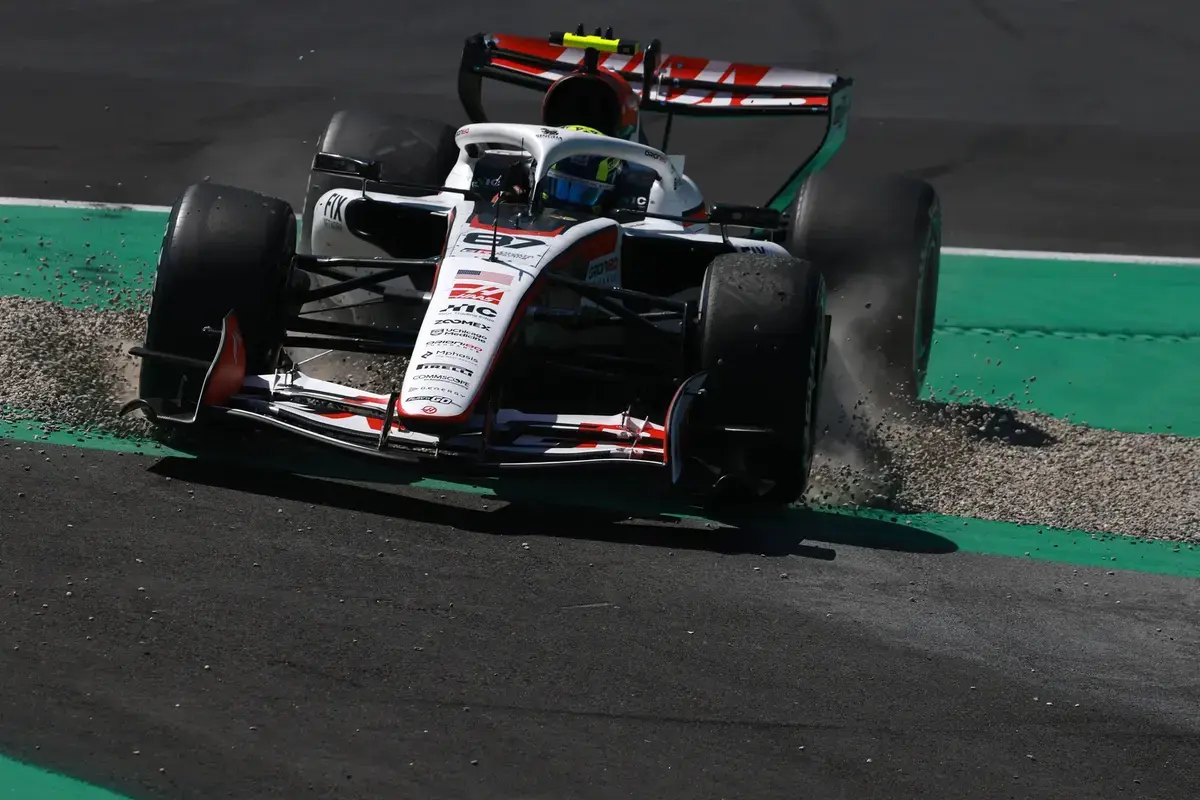

Ferrari built a shiny new engine for its home race and could only spare Haas one copy of it. That single fact turned Ayao Komatsu’s weekend into an exercise in diplomacy, and the team principal has now had to explain, in some detail, why Oliver Bearman got the upgrade and Esteban Ocon didn’t.
It’s the sort of decision that sounds trivial until you remember Monza rewards raw horsepower more than almost anywhere else on the calendar. Sitting on a power upgrade in the garage because you’re worried about hurting someone’s feelings isn’t really an option when the straights are this long.
One Engine, Two Drivers, No Easy Answer
The regulations are clear enough on paper: when Ferrari rolls out an ADUO-boosted power unit for itself, one example has to be made available to each customer team. Haas took the patient route back in Barcelona, waiting until it had enough units to give both Oliver Bearman and Esteban Ocon the new engine at the same time. This time, with Monza on the horizon, that patience wasn’t an option.
Komatsu didn’t dress it up as anything other than what it was: a scarcity problem dictated by Ferrari’s own production limits, not some grand strategic call by Haas.
“Customers need to have ‘A’ unit. The last time around we didn’t [give it to one driver]; we waited until we had enough engines to introduce it for both drivers together. But this time, Monza is a very power-sensitive circuit, so it’s a shame to have performance sitting in a garage, right?” – Ayao Komatsu
Read between the lines and Ferrari itself doesn’t come out of this looking especially generous. Komatsu was blunt about the fact that Maranello produced barely enough units to tick the regulatory box, nothing more.
“It would have been better if two engines were available at least, but Ferrari’s pushing like hell to get as much performance on the engine as possible. Of course, they want to introduce it at Monza, right? But that means they got the minimum quantity, so it is just to satisfy the regulation.” – Ayao Komatsu
That’s worth sitting with for a second. Ferrari is chasing every last tenth against Mercedes, who arrive at Monza having topped the second practice session, and even Lewis Hamilton has admitted he’s worried the new engine won’t be enough to close the gap. When the works team is stretching its own supply chain to breaking point just to get one upgraded engine onto the grid at its home race, customer teams were always going to be an afterthought.
Why Bearman Got the Nod
Komatsu’s explanation for picking Bearman over Ocon wasn’t really about who’s the faster driver or who Haas rates more highly for the future. It came down to a rota, and by his account, it genuinely was Ocon’s turn to sit this one out.
Ocon had already been prioritised for two separate upgrades earlier in the season, a brake package and a power steering revision, both of which Komatsu says were handed to the Frenchman first because he was struggling more with those specific issues.
“It’s not an aerodynamic upgrade, like items we had such as a CI brakes test, and Esteban was struggling more with brakes, so considering the Montreal upgrade we gave to Ollie, we decided to give the brake upgrade to Esteban first, and in terms of the power steering, we had another upgrade in Budapest.” – Ayao Komatsu
“We decided to give that to Esteban because he was more vocal about it and he was struggling more on the power steering, so the last upgrade we gave to Esteban, and this time, it was Ollie.” – Ayao Komatsu
So the logic, as Komatsu tells it, was a straightforward taking of turns. Ocon has had the last two favours, Bearman gets this one. Neat in theory, but anyone who’s watched a Formula One garage operate knows these things rarely feel as clean from the inside as they sound in a press conference.
A Brake Update Is Not an Engine at Monza
Here’s the awkward bit Komatsu can’t really argue away: not all upgrades are created equal, and everyone in the paddock knows it. A brake tweak or a power steering fix is a quality of life improvement. An ADUO-boosted engine at the most power-hungry circuit on the calendar is the difference between fighting for points and watching the midfield disappear up the road on the straights.
Ocon has, by Komatsu’s own account, been first in line for the smaller stuff. He’s now last in line for arguably the single biggest performance item Haas will hand out all season, at the one track where it matters most. Calling that an even trade requires a fairly generous reading of the word “fair”.
To his credit, Komatsu didn’t try to sell it as perfectly equitable. He was refreshingly honest about the limits of the whole exercise.
“There’s no point bullshitting, right? We operate as transparently as possible, and of course you can’t please everyone every time, but we don’t have any hidden agenda. We don’t have any personal agenda for one driver or another. So we’ve been building that relationship.” – Ayao Komatsu
“Perhaps of course, Esteban won’t be happy not to get the power unit number four straight away. But this is the best for the team, and then this is the fairest way you can do it. But then nothing is completely fair, right? So all you can do is be transparent and upfront about it.” – Ayao Komatsu, speaking to media including RacingNews365
What This Actually Costs Haas
Haas sit seventh in the constructors’ championship with 21 points, scraping for scraps behind Racing Bulls and Alpine, and every tenth of a second at a circuit like Monza genuinely matters to that fight. Bearman arrives sitting 13th in the drivers’ standings with 18 points to his name, Ocon sitting 18th on 3, and neither man is exactly swimming in results this season.
Whether one race’s worth of extra horsepower actually shifts that picture is another matter. Monza rewards raw pace more than most circuits, but qualifying pace without race pace to match it counts for very little once the lights go out. Haas has bet that Bearman is the one who can extract the most from it right now, and Komatsu’s rota logic gives the decision a coat of fairness that will satisfy nobody entirely, least of all Ocon himself.
What’s clear is that Ferrari’s own production squeeze has effectively outsourced an awkward internal decision to Haas, forcing Komatsu to play diplomat over a problem Maranello created by building just enough engines to tick a regulatory box. Ocon won’t be thrilled, and there’s nothing in Komatsu’s explanation that should change that.