
The 2026 Monaco Grand Prix is the gift that keeps on giving, and not in a good way. Weeks after the chequered flag, the result is still not settled, and now it is heading to the FIA’s International Court of Appeal in Geneva. Buckle up, because this one has legs.
What Is Actually Being Appealed?
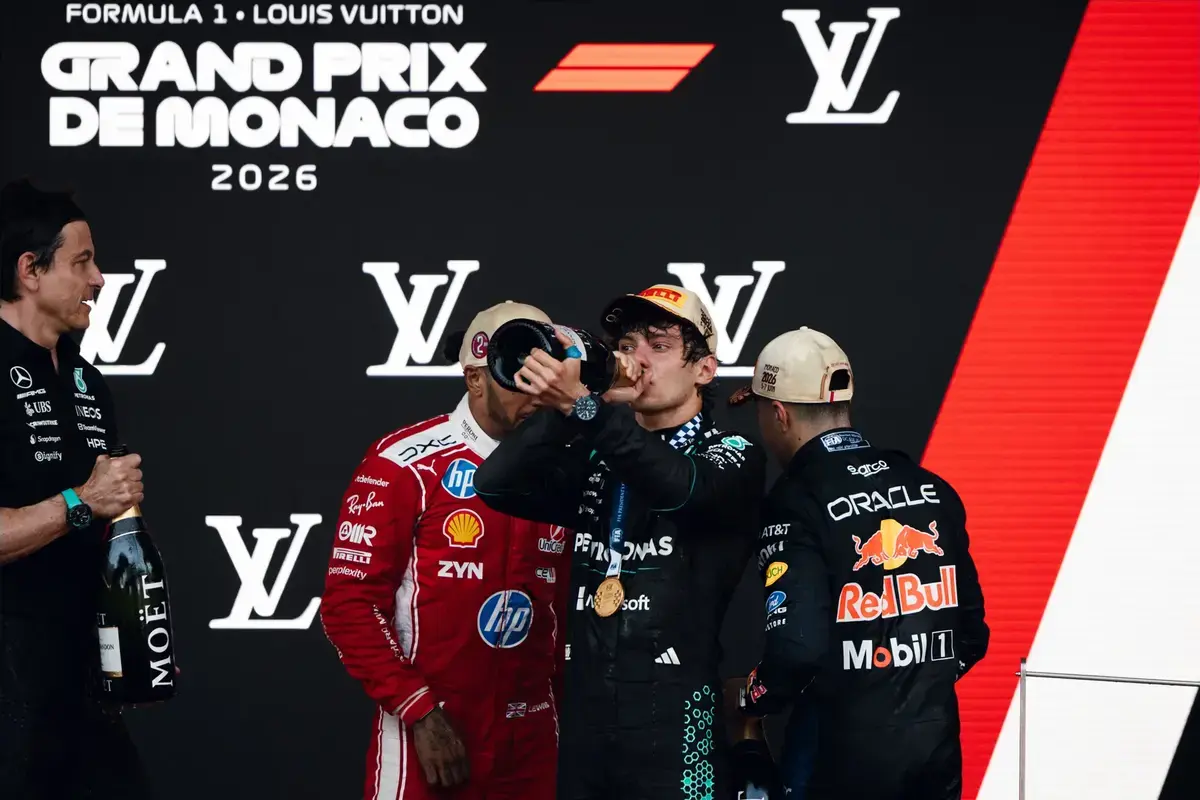
After Monaco’s timing loop produced faulty pit lane speed readings, the stewards handed penalties to several drivers based on bad data. Pierre Gasly was one of them, but with a crucial difference: his two five-second penalties were applied after the race, dropping him from third to seventh. The other affected drivers served their penalties during the race itself, where they had real, irreversible consequences on strategy and position.
Alpine successfully argued for a Right of Review before Barcelona, and Gasly’s penalties were scrapped. Back came the podium. Gone went Isack Hadjar‘s third place and one of Oscar Piastri‘s hard-earned positions. McLaren and Red Bull were, understandably, furious.
The ICA: F1’s Highest Legal Bench
Both teams have now formally lodged appeals with the FIA’s International Court of Appeal, paying a non-refundable 5,000 euro fee and a 20,000 euro bond each. The ICA, chaired by Lauren Anselmi, is the sport’s most senior independent judicial body. It can confirm, amend, or entirely overturn steward decisions.
The timeline is brutal. Each side gets 15 days to file documents, the FIA then gets 15 days to respond, and the hearing cannot take place until 15 days after that. If everyone uses their full allocation, the earliest possible hearing date is 31 July. That is more than 54 days after the race. Red Bull have bigger problems on track right now, but this fight clearly matters to them on principle.
“The retrospective removal of penalties creates a situation where some competitors are disadvantaged for having acted in compliance with the rules.” – McLaren
The Precedent Problem
McLaren’s real concern is not just Monaco’s points. It is the door this decision cracks open. If penalties not served during a race can be wiped clean afterwards, what stops teams from calculating that it is strategically smarter to absorb a post-race challenge than to pit and serve a penalty in the moment? That is a genuinely troubling question, and several other teams have reportedly voiced the same worry privately.
F1’s History of Creative Legal Gambits
F1 teams have form when it comes to inventive evidence. Ferrari once submitted Karun Chandhok’s Sky Pad analysis to fight Vettel’s 2019 Canadian GP penalty. The stewards dismissed it as a third-party opinion. Red Bull used social media footage from the official F1 account to land Hamilton a grid penalty at the 2020 Austrian GP. That one actually worked. They also commissioned simulator runs to recreate the 2021 British GP crash, only for stewards to rule the footage was manufactured rather than discovered. Alpine, brilliantly, overturned Alonso’s 2022 US GP penalty simply by pointing to the FIA’s own admission that Haas had filed its protest 24 minutes late. And Mercedes, who initially filed their own review request over George Russell’s Monaco penalties, quietly withdrew it after talks with the FIA and Formula 1 Management.
The ICA will almost certainly focus on the fairness principle rather than reversing the result outright. McLaren and Red Bull likely know that. But setting a precedent that says retrospective penalty reversals cannot disadvantage drivers who complied with the rules in real time? That would be worth 25,000 euros to any team in the paddock.