
Stefano Domenicali has found a new way to make an engineering headache sound like a bold vision for the future. Facing questions at Monza about F1’s next fuel-flow regulations, the sport’s chief executive floated trimming race distances, and framed it as a gift to young fans with short attention spans rather than what it actually is: a fix for a power unit format nobody particularly likes.
Fewer laps, more spin
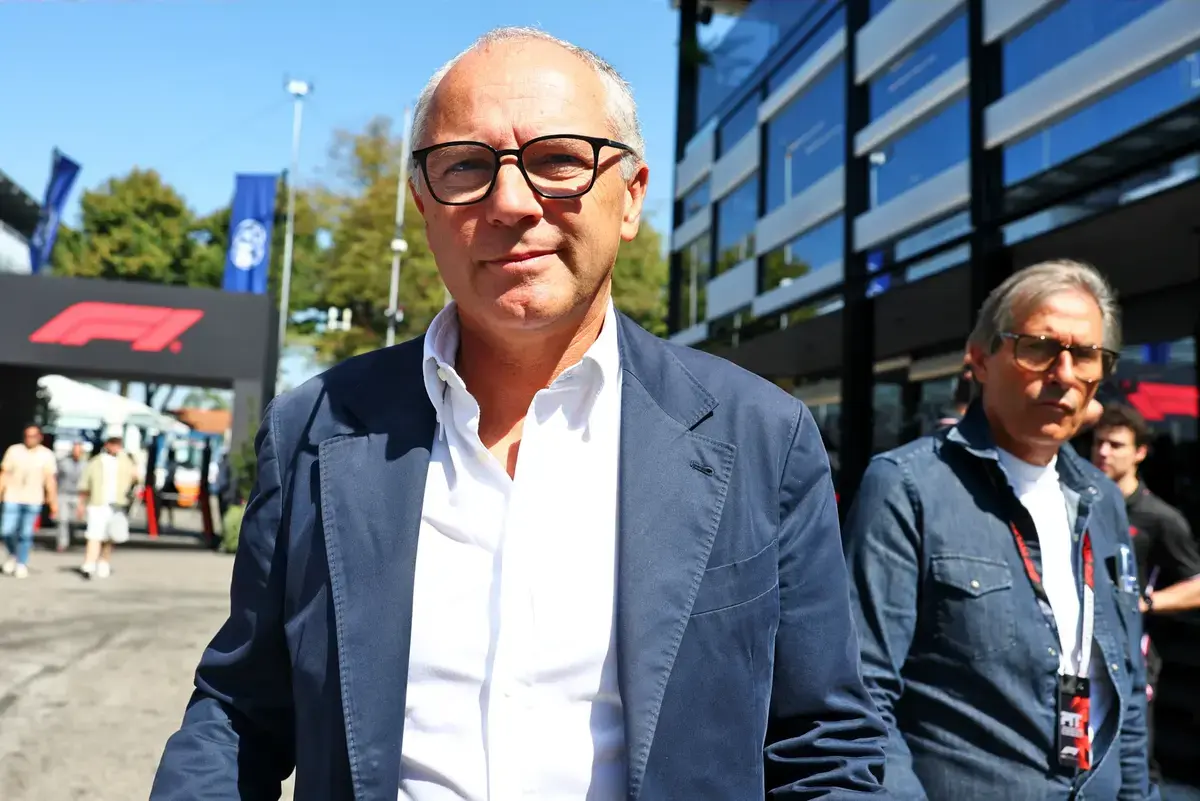
Speaking to media at Monza, Domenicali made clear he has no objection to shaving a few laps off grands prix.
“My position is very simple and starts from a technical consideration. If we are talking, as it seems, about a few laps, for me it also goes in the direction of the fact that young people tend to be less and less present for long things. I don’t think there would be a negative effect if we are talking about reducing by two or three laps. If it became something more significant it would be a different discussion, but in this perspective I am not opposed.” – Stefano Domenicali
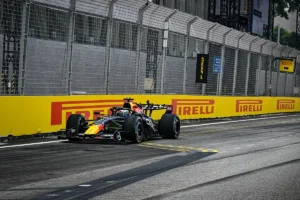
Notice the sleight of hand. The reason races might get shorter has nothing to do with Gen Z attention spans and everything to do with fuel tanks. Teams have unanimously backed cutting the maximum race distance from 305km to 290km from 2027, with Monza’s already-shortened 260km left untouched. That is a five per cent cut, translating into two to four fewer laps depending on the circuit.
The real reason: nobody wants to redesign a fuel tank
The trigger is a rebalancing of the power unit split. The current 50-50 division between combustion and electrical power, the very thing that has left cars energy-starved at tracks like Monza this weekend, according to Oscar Piastri’s warning about chaotic energy management this weekend, is shifting back towards the internal combustion engine. From 2027 the split moves to 58-42 in favour of the ICE, before settling at 60-40 in 2028.
More combustion power means more fuel burned, which means either bigger tanks or shorter races. Given that teams are already committed to 2027 chassis built around existing tank dimensions, and nobody fancies a costly mid-cycle redesign, shortening every race by a uniform margin was, by all accounts, the least painful of several unappealing options. Cutting only the races that were most fuel-critical would have kept the format’s unpopularity in the headlines every time it happened. Standardising the shorter distance makes the whole conversation disappear faster.
So when Domenicali talks about young fans losing interest during “long things,” he is not wrong that F1 has been chasing a younger, more distracted audience. He is just attaching that argument to a decision that was made for entirely different reasons. The Formula 1 CEO gets to look progressive while the sport quietly patches over a technical rulebook that drivers have been complaining about since it landed.
Sprint races, but not every weekend
Domenicali used the same Monza media session to defend the sprint race format, admitting he was sceptical when it was introduced.
“I am the first who, as a Formula 1 dinosaur, had doubts when we proposed this. But the data did not contradict it: promoters, media and fans, in the vast majority, have digested the format and consider it dynamic.” – Stefano Domenicali
He ruled out following MotoGP’s model of a sprint every weekend, saying sprints will remain “fewer than half” of the calendar. The justification leans on the same demographic pitch: a Friday that already means something for viewers who want instant content, while acknowledging that longtime fans, himself included, still enjoy a traditional practice session. It is a neat straddle, though one wonders how long F1 can keep expanding sprint weekends while insisting it still respects the purists.
Chasing younger, more female audiences
The demographic shift Domenicali cites is real, at least by his own numbers: around 40% of F1’s audience is now female, and the average age has dropped from roughly 57 to 34. Part of that, he argues, is down to the effect of Kimi Antonelli, whose emergence has coincided with a spike in interest, particularly in Italy.
“I have to tell the truth, the numbers are surprising me because they are growing strongly. Kimi has brought not only competitiveness on track, but also a wave of people who did not follow Formula 1 before. He is a young man who faces an enormous responsibility with a lightness typical of young people.” – Stefano Domenicali
Antonelli, who leads the drivers’ championship with 242 points heading into this weekend’s Italian Grand Prix at Monza, is racing with a Valentino Rossi-inspired helmet this weekend, a neat bit of timing for a CEO keen to talk up home-grown appeal in front of an Italian crowd.
Manufacturers, independence and the fear of being left behind
Beyond race distances, Domenicali touched on the bigger regulatory picture. F1 and the FIA are already thinking about the generation of power units that follows the current rules, in a landscape that has shifted away from the electrification-first assumptions that shaped this ruleset.
“When the regulatory change we are experiencing today was addressed, it seemed that the future was defined by electrification. Today that is no longer the case. It is up to us to understand how to react and interpret this change in the right way.” – Stefano Domenicali
He was blunt about F1’s dependence on manufacturers, warning that a mass exit would be catastrophic.
“On the one hand we must guarantee the presence of the manufacturers, but on the other, if they were to have different priorities, we must understand how to manage to be independent. If the manufacturers decided to leave today, we would have a big problem.” – Stefano Domenicali
That is a remarkably candid admission for a man usually selling confidence, and it explains the appetite for simpler, cheaper technical solutions that do not leave the sport hostage to any one manufacturer’s boardroom mood.
Calendar ambitions and the Qatar-Abu Dhabi question mark
Domenicali also flagged Africa, China, South America and the Far East as regions with room for growth, hinting at fresh announcements on Africa specifically. Closer to the present, he acknowledged that Qatar and Abu Dhabi remain under scrutiny, with safety and operability the deciding factors on whether either survives on the calendar. Imola has already been mentioned as a possible replacement if either race falls away.
None of this changes the fact that the loudest headline out of Monza, the one about shorter races, is really a story about fuel flow rates dressed in the language of youth engagement. F1 unanimously agreeing to something is rare enough that it is worth asking why: in this case, it is because cutting laps is far cheaper than redesigning a car. Domenicali’s framing makes for a better press conference than “we did the sums and this was less expensive,” but the sums are the real story here, whatever gets said about the attention spans of the next generation.