
While the paddock obsesses over engine notes and aero philosophies for F1’s next rulebook, there’s a quieter crisis brewing in the workshops of Brembo. The Italian brake giant has just admitted that months of development work on its 2027 braking system are effectively worthless, all because the FIA couldn’t make up its mind quickly enough on a numbers change that sounds trivial but isn’t.
A Year’s Work, Binned
Brembo race engineer Andrea Dellavedova didn’t sugarcoat it in an exclusive interview with RacingNews365. Brembo had already started sketching out its braking system for F1’s next era, only to discover that the FIA’s decision to change the combustion-to-electric power ratio for 2027 means a chunk of that work is now scrap paper.
“Yeah, because now we have done half a year, so we understand more, and we were focusing on some direction. As next year the energy ratio will change, what we learned this year will not be that useful for the new development.” – Andrea Dellavedova
Read that again. A supplier that every single team on the grid depends on is saying, in plain terms, that the groundwork it laid for next year’s cars is being torn up because the goalposts moved. Not once, but in two stages: 58:42 for 2027, then 60:40 for 2028, confirmed by the FIA in June after what was clearly a drawn-out and messy consultation process.
Building Blind While the Rules Wobble
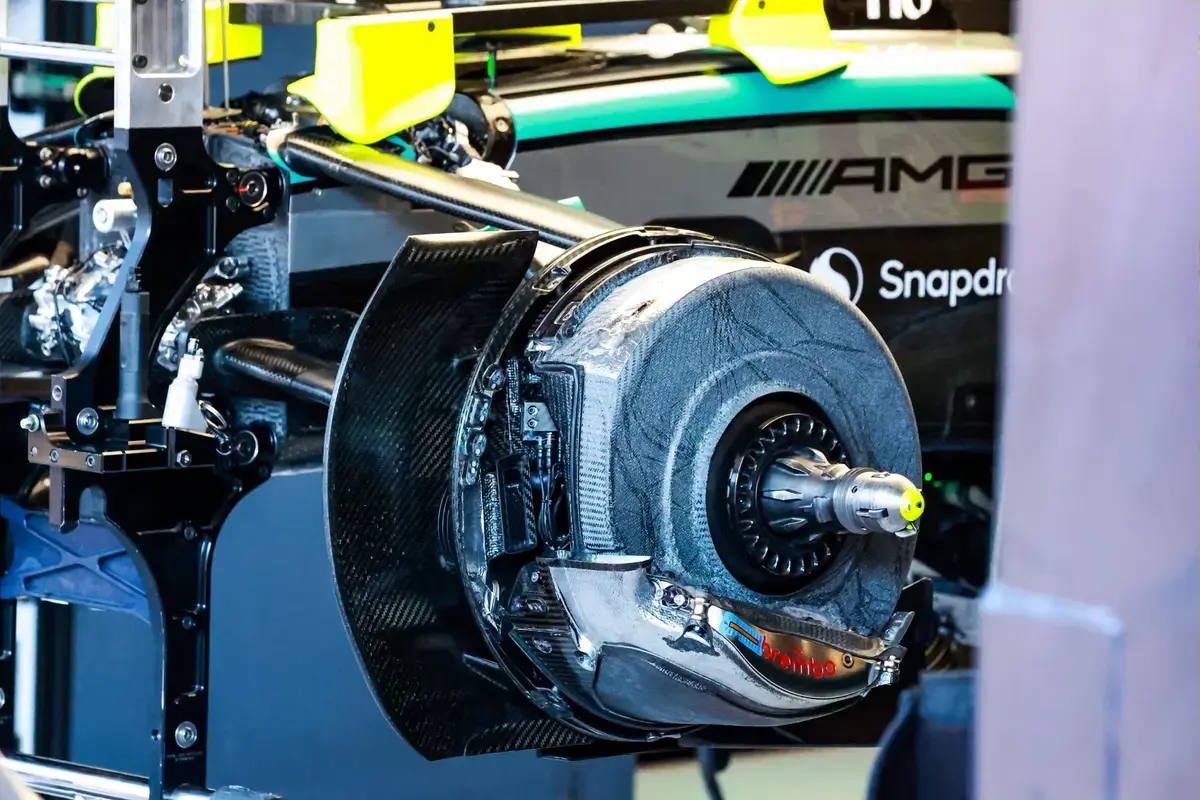
This is the bit that should worry anyone who thinks F1’s next rules era is going to arrive smoothly. Brembo isn’t just tweaking a spreadsheet when the ratio shifts. Carbon brake discs and callipers are physical products with punishing lead times, and Dellavedova was explicit about just how unforgiving that process is.
“This year we already started to think about the 2027 braking system, but now we have to think newly about the system, and we cannot use all the info that we discovered this year for the next one.” – Andrea Dellavedova
Brembo now has to essentially start again on a system it thought it understood, at the exact moment the sport wants everything locked down and ready for the grid. There’s a certain irony in a governing body that spent years talking up the meticulous planning behind F1’s new rules era, only for one of the sport’s most critical suppliers to reveal that the planning has, in practice, been reactive and rushed.
Blaming the Timing, Not Just the Rule
Dellavedova was careful not to attack the substance of the ratio change itself. What he attacked was the timing, and fair play to him, because that’s the part that actually matters to an engineer with a factory to run.
“Being in a very fast environment, the more time we have to develop the new system, the better it is. If the communication would happen some weeks before… it’s always easier, because we have to design and test the prototype, and then launch the production.” – Andrea Dellavedova
Weeks. That’s the margin Brembo is working with, in an industry where carbon discs need to sit in ovens through lengthy curing processes and callipers require extended machining time before anything even reaches a test bench. Dellavedova laid out the mechanics of it without much drama, but the subtext is damning.
“The time horizon is very short, because the teams need the components for early next year. It’s something that takes time, both designing and producing our components. From the design to the production phase, it takes months; it’s not something that you can do in weeks, because the process itself of producing the disc and the carbon material is very long, because they have to spend time in the oven, with several processes.” – Andrea Dellavedova
He continued, pointing out that even the metal components can’t just be rushed through.
“Also, the calliper itself, they have to spend a lot of time on the machine. Then there is also the testing. Sometimes we do the testing and the production in parallel.” – Andrea Dellavedova
Running testing and production side by side isn’t a sign of efficient planning. It’s what you do when you’ve run out of road and have no choice but to gamble on parallel workstreams instead of a sensible, sequential process. That’s not innovation, that’s damage control dressed up as flexibility.
Everyone’s Problem, Not Just Brembo’s
It’s tempting to file this under “supplier moans about deadline”, but that misses the point entirely. Brembo’s braking system sits underneath every car on the grid, from McLaren at the front to whichever team is scrapping for the final points at the back. If the supplier building the discs and callipers is working off compressed timelines and half-finished data, that filters straight down into reliability and performance for every driver on the 2027 grid, including championship leader Kimi Antonelli.
This isn’t an isolated headache either. The 2027 rules have already forced teams to juggle current-season development against next year’s chassis and power unit demands, and Honda has separately admitted to driveability flaws in its upgraded engine heading into this weekend. The pattern is becoming familiar: components and systems arriving at the grid with less runway than anyone would like, because the FIA’s rule-making process keeps running later than the sport’s suppliers can comfortably absorb.
A Deadline the Sport Set for Itself
The FIA will point to the complexity of getting a two-step power ratio change right, and there’s something to that. Rushing a decision that shapes engine philosophy for years is arguably worse than a late but considered one. But that argument only goes so far when the people actually building the hardware are on record saying the timing has left them with weeks, not months, to react.
Brembo will get there. It always does; it’s been doing this long enough to muscle through short lead times before. But “muscling through” isn’t the same as designing a system properly, and if the FIA keeps treating suppliers as an afterthought in its rule-making calendar, 2027 risks arriving with braking systems built on compromise rather than confidence. That’s not a great look for a rules reset the sport has spent years selling as the smart, considered path forward.