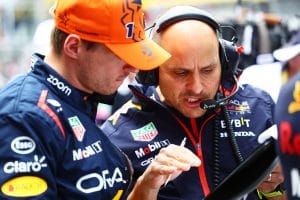
Oliver Bearman finished his rookie season 13th in the championship. Two places ahead of race-winner Esteban Ocon. Six of his nine points finishes came after the summer break. Fourth in Mexico after battling Max Verstappen. Sixth in Sao Paulo. That’s quite the transformation for someone who spent the season’s first half collecting 11th-place finishes like they were reward points at a petrol station.
The 20-year-old Brit has revealed his secret weapon. Mental preparation. Thirty minutes before every session, he stops obsessing about car setups and lap time gains. Starts focusing on where his head’s actually at. Because apparently spending endless hours chasing that extra tenth whilst ignoring your mental state doesn’t work brilliantly when you’re a rookie thrown into Formula 1’s shark tank.
Who knew psychological preparation mattered in a sport where hundredths of seconds separate glory from embarrassment?
When Nine Consecutive Pointless Races Teach You Everything
Bearman went nine grands prix without scoring after Australia. That’s two months of collecting precisely zero championship points whilst his Haas teammate occasionally troubled the scorers. The floor upgrade in Austin helped change things, obviously. But Bearman insists the transformation came from something more fundamental than aerodynamic improvements.
“Since the summer break, I tried to add a bit more structure to my weekends, how I go about the weekends. Often I was spending a lot of time. Before the summer break, when we know that we’re like this to even be out of Q1, I spent the whole time focussing on how can I improve my driving, how can I improve the car set-up to find that half a tenth. Spending really no time thinking about where my head is at prior to getting in the car and setting goals for each session.” – Oliver Bearman
That’s properly vulnerable from someone who just completed his first proper F1 campaign. Admitting you spent the entire first half obsessing about technical minutiae whilst completely ignoring mental preparation takes genuine self-awareness. Most rookies would blame the car, the team, or bad luck. Bearman’s pointing directly at his own approach and explaining what changed.
The British youngster now dedicates half an hour before sessions to purely mental work. No setup discussions. No data analysis. No engineering conversations. Just clearing his head and establishing session goals. Revolutionary stuff in a paddock that treats drivers like glorified test equipment.
The “I Finished P11 Four Times” Defence Nobody Expected
Asked whether he could’ve applied this mental framework from race one onwards, Bearman delivered the most honest rookie assessment you’ll hear. Four or five consecutive 11th-place finishes early on wasn’t terrible driving. It was inconsistency. And the only way to discover what actually works? Making those mistakes first.
“It’s easy to say I could go back and put that process, but that’s just me being a second year driver. That’s the actual difference. There’s a lot of changes that I would have done, a lot of differences I would have made to what I did, but how can I do that without the knowledge of what works and what doesn’t.” – Oliver Bearman
Fair point, actually. Everyone’s brilliant with hindsight. Bearman’s acknowledging that rookies need exploratory phases where they discover personal preferences through trial and error. F1’s completely different from Formula 2 or any junior category. The commitments, media obligations, engineering complexity, and performance margins demand approaches that only experience can teach.
The mistakes he references weren’t just on-track incidents. Australia brought crashes. Monaco and Silverstone delivered red flag violations that triggered costly grid penalties. The British GP dropped him from eighth on the grid to 18th after what he called a “silly” mistake. Those wounds still hurt, clearly. But Bearman’s allowing himself space for errors because he understands his position as someone still learning the sport’s highest level.
When Mexico Validates Everything You’ve Changed
The Mexican Grand Prix delivered Bearman’s breakthrough performance. Fourth place. Proper battles with Verstappen through the esses. Leading inside the top six early on after launching brilliantly from his Q3 grid position. That drive reminded everyone why Ferrari’s backed him through their junior programme for years.
Team boss Ayao Komatsu had challenged Bearman before the flyaway races to deliver consistent speed. The talent was undeniable. Harnessing it across every session at every weekend? That was the target. What followed between Singapore and Las Vegas ticked every box Komatsu wanted. Points in Singapore. Ninth in Austin. Fourth in Mexico. Sixth in Brazil. Tenth in Las Vegas.
That’s six consecutive points finishes from a rookie who’d previously gone nine races collecting nothing. Qatar brought mechanical heartbreak with a pit stop issue ending his race. Abu Dhabi saw him miss Q3 by the finest margins. But the trajectory’s pointing entirely the right direction heading into winter.
The 2026 Reset That Might Actually Help Him
Bearman faces another completely new car in 2026. That’s two different regulation eras across his first two F1 seasons. Most rookies get years of familiarity with one formula before everything changes. Bearman gets thrown into regulatory resets immediately. His response? Maybe that’s actually beneficial because everyone’s starting fresh.
“The other drivers have had more years than me in this car, so maybe it’s good to reset things a little bit! Generally, I feel like this car has suited me quite well, but I’m excited to see how next year’s car drives.” – Oliver Bearman
That’s impressive perspective from someone who could easily complain about timing. Instead, he’s focusing on what he can control. His own performance. The solid foundations established during 2025. The improvements he’s demonstrated. The clearer idea of what he wants from the car and team heading into year two.
Haas has been bringing upgrades and finding performance lately. The aerodynamics department’s working effectively. Whether that translates into 2026 competitiveness remains entirely theoretical until Barcelona testing provides actual data. But Bearman’s finishing his rookie campaign ahead of his race-winning teammate in the standings. That’s called making a statement regardless of machinery.
When Being a Rookie Actually Means Learning
What’s refreshing about Bearman’s assessment is the honesty. He’s not claiming perfection. Not suggesting he’s figured everything out. Not pretending eighteen months of F1 experience makes him a polished veteran. He’s acknowledging there’s still plenty to learn whilst being aware of that fact.
The structure he’s added works. The momentum and rhythm he’s found matters. But it’s not just one thing that changed. It’s experience accumulation. Understanding the sport better. Knowing how to approach weekends more effectively. Those lessons only come through racing, through mistakes, through difficult periods where nothing clicks.
His winter involvement with the team will increase compared to last year. More input on the steering wheel design. Closer oversight of development directions. Actual opinions about what he wants rather than accepting whatever’s provided. That’s the difference between being a rookie passenger and becoming an established driver contributing to the team’s direction.
Whether Haas delivers competitive 2026 machinery remains the question nobody can answer. But Bearman’s doing everything within his control to maximise whatever they provide. Starting with that revolutionary concept of spending thirty minutes focusing on mental preparation instead of chasing tenths that don’t exist without proper headspace.
Who knew rookie development involved more than just engineering data?