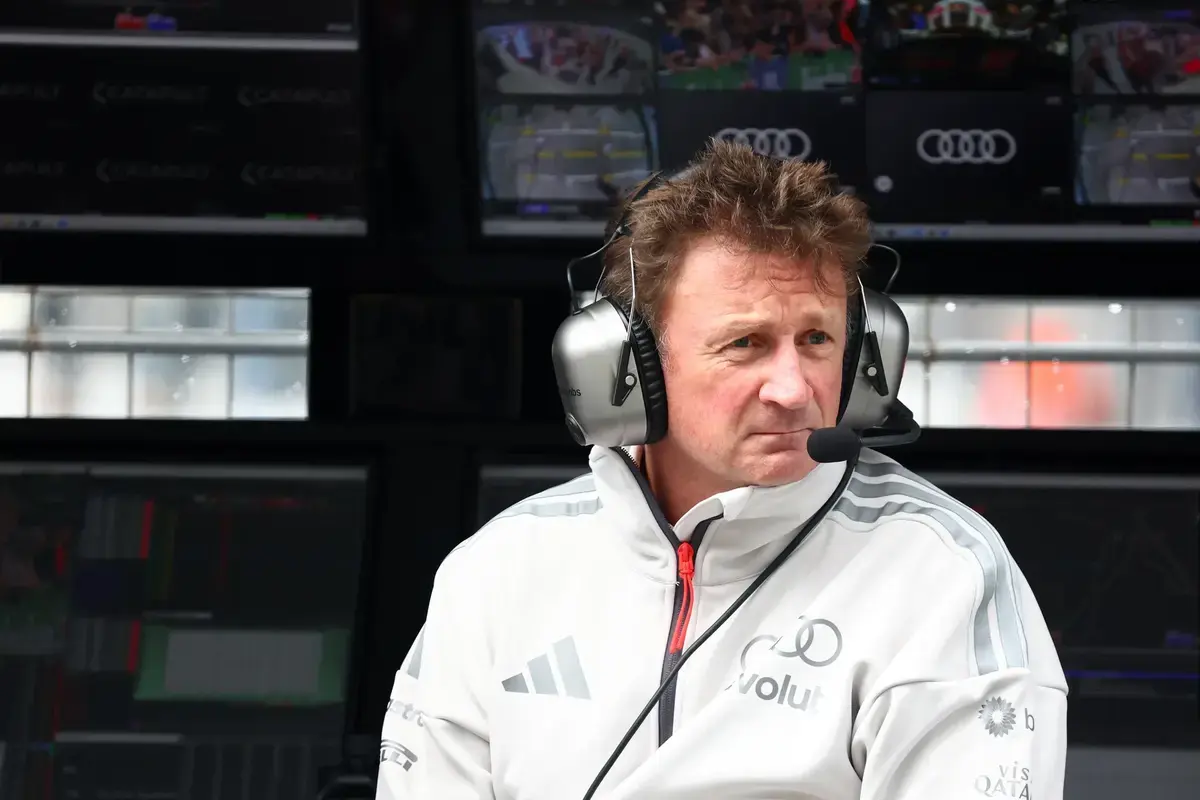

Four points finishes in a row and Audi suddenly looks like a team that has figured something out. Its own racing director is not having any of it. Allan McNish has taken a sledgehammer to the growing optimism around the German manufacturer, warning that the run is about to hit a wall named Monza.
It is a refreshingly blunt admission from a team that, like every other newcomer, could easily have leaned into the feel-good narrative. Instead, McNish has decided to manage expectations before Monza manages them for him.
A Run Built on Opportunism, Not Pace
Audi’s climb to eighth in the constructors’ standings has been built on scraps rather than sustained form. Gabriel Bortoleto opened the season with ninth in Australia, then endured seven races of near-misses, a string of elevenths that never quite turned into points. Nico Hulkenberg fared no better early on, twice finishing just outside the top ten.
Then came the turnaround. Bortoleto scored back-to-back eighths at Silverstone and Spa, and Hulkenberg followed with ninth in Hungary and eighth at Zandvoort. Suddenly Audi sits on 16 points, just five behind Haas in the constructors’ table, a gap that could be worth a serious chunk of prize money by the end of the year.
McNish, though, is not pretending this was some grand masterplan unfolding on schedule. Speaking to the media, including RacingNews365, he admitted even the team was surprised by how Zandvoort played out.
“After lap one, I didn’t necessarily think we were going to be in this position. But we take it when we can.” – Allan McNish
That is not the sound of a team riding a wave of technical progress. That is the sound of a team that has got good at capitalising on chaos, safety cars and other people’s misfortune, which is a perfectly valid way to score points in Formula 1, but not one you can plan a season around.
Why Monza Is the Great Leveller
McNish’s pessimism about the Italian Grand Prix is not false modesty, it is basic physics. Monza demands low drag and serious horsepower, with barely any wing on the cars to hide behind. Every straight-line weakness gets amplified rather than masked, and if Audi’s power unit is lacking, Monza will not be kind.
“Monza, that could be one of the more difficult ones for us, in the same way that Silverstone and Spa were, especially Spa. From a pure pace point of view, it is a little bit tougher.” – Allan McNish
It is a notable admission given that Silverstone and Spa, both high-speed venues, are exactly where Bortoleto scored his two eighth-place finishes. McNish’s point is that those results came despite the pace deficit, not because it disappeared. Chaos, strategy and a bit of luck papered over the cracks. Monza, with its unique demands, might not offer the same opportunities to hide.
No Illusions About What Comes Next
McNish was not interested in leaving any wiggle room for optimism. He repeated the warning almost word for word, as if worried the message might not land the first time.
“Races are coming up where we won’t be in the points. It’s very unlikely. I hope we are, but it’s not going to be every single one to the end of the year.” – Allan McNish
That kind of honesty is rare in a paddock built on spin, and it is worth noting given how often teams talk up their trajectory regardless of the results. McNish’s approach is the opposite: manage expectations downward so that any points feel like a bonus rather than an entitlement.
It also fits the wider story of Audi’s debut season. The team arrived with grand five-year ambitions and the patience to match, fully aware that year one in a new regulation cycle was never going to be glamorous. That patience is being tested by a midfield that has become brutally unpredictable, not helped by Isack Hadjar’s injury troubles at Red Bull, which have only added to the churn further up the order.
The Money Behind the Modesty
Five points might not sound like much, but in the constructors’ championship it is the difference between financial comfort and scraping by. Every position in that table is worth serious prize money, and for a team the size of Audi, still building infrastructure and hiring at pace, that matters more than pride.
Audi’s 16 points have come from just a handful of scoring finishes rather than consistent top-ten pace, which tells its own story. Haas, by contrast, has accumulated its total more steadily. That contrast is exactly why McNish is refusing to celebrate: a team living off opportunism can look brilliant for a month and forgettable for the next three.
Monza will be the first real test of whether Audi’s underlying pace has genuinely improved or whether the last month was simply a run of favourable circumstances. If McNish’s instincts are right, and there is no reason to doubt a man who has clearly done this sums before, Audi’s name may well vanish from the points column again before it reappears. That is not pessimism. It is just someone in this sport being honest for once, which these days counts as a small miracle in itself.