
Fernando Alonso has just told the world he might stop racing. He has also told the world he is never leaving. Both statements are true, and if that sounds contradictory, welcome to the strange emotional logic of a two-time champion who has clearly made peace with his own mortality behind the wheel while refusing to let go of the project he helped build.
Speaking to media including RacingNews365, Alonso confirmed he is weighing up whether to extend his career into a 25th season in 2027 or call time at the end of what would be his fourth year with Aston Martin. Whatever he decides, he insists it changes nothing about his relationship with the team.
“I will be with this team in one role or in another for the long term, so it’s not about myself or about who is driving next year, or if I’m driving next year or three more years. I don’t know.” – Fernando Alonso
It’s a strikingly calm way to talk about the end of a driving career that has run to 437 starts. Most drivers cling to the seat until it’s prised from their hands. Alonso is out here calmly negotiating his own succession plan, as though retirement were just another strategy call.
The Third Title Fantasy
Alonso still talks about winning a third world championship as the “ultimate dream”, the kind of achievement that would put him alongside Jack Brabham, Jackie Stewart, Niki Lauda, Nelson Piquet and Ayrton Senna. It’s a nice thought. It’s also, by his own admission, wildly detached from where Aston Martin currently sits.
“Is that possible? I don’t know how long it will take to achieve that performance for this team; it’s going to be a very long time. Maybe I’m not behind the wheel, but that’s something that is all in my head.” – Fernando Alonso
Read that again. Alonso is openly conceding that by the time Aston Martin is genuinely capable of fighting for a title, he may well be watching from the pit wall rather than the cockpit. That’s not pessimism, it’s arithmetic. The team is currently tenth in the constructors’ standings with three points, all scored by Alonso himself, while he sits nineteenth in the drivers’ championship. Nobody builds a title-winning car on that kind of foundation in a hurry.
One Race of Hope Doesn’t Fix a Season
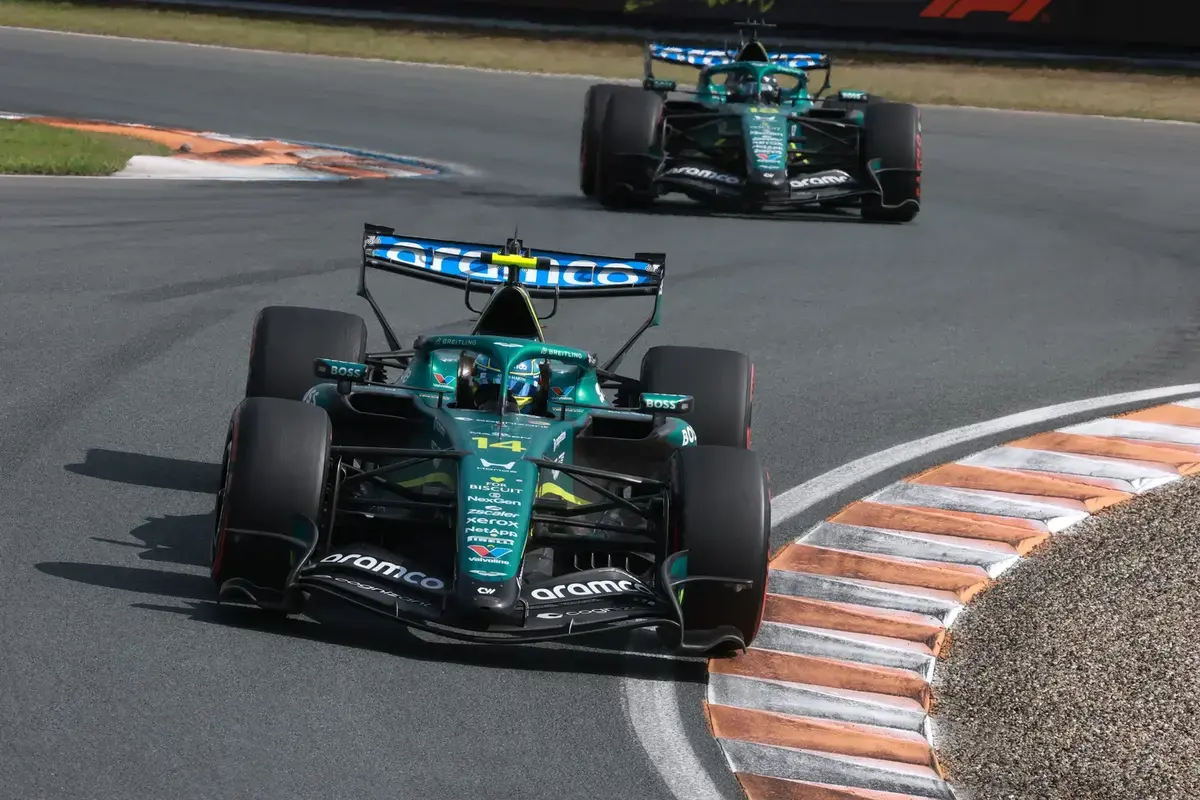
The context for all this soul-searching is a ninth-placed finish at the Dutch Grand Prix, Alonso’s best result of the year, which tripled the team’s points total from one to three. It arrived after Aston Martin brought a long-awaited upgrade package for its Honda power unit to Zandvoort, following a B-spec chassis update introduced at the Hungarian Grand Prix.
Former Haas boss Guenther Steiner, speaking on The Red Flags Podcast, was blunt about where the credit should go. He admitted that after watching the team struggle through Friday and Saturday sprint sessions, he assumed Aston Martin’s early-season promise had been overstated, only for Alonso’s one-stop strategy in the race itself to rescue the weekend.
“This was here a Fernando special, by doing it with one stop. That saved them. He could keep a decent pace and what’s helping them right now is that there are really three backmarker teams that are far off everyone else.” – Guenther Steiner
That’s a fairly pointed way of saying the car still isn’t good enough, and that the result flattered both the driver and the depth of the current grid’s bottom end. Lance Stroll, running the same upgrades, qualified 18th, was 19th in the sprint, and was later forced out of the Grand Prix after picking up damage in a chaotic opening lap that also saw Max Verstappen crash out.
Alonso’s Own Verdict Is Less Rosy Than the Result
Even Alonso wasn’t pretending the podium is close. Speaking to Sky Sports F1 after the race, he was candid about how far the car and its Honda engine still need to go, particularly on driveability and straight-line speed.
“Generally speaking, in terms of driveability we’re still not where we want to be. The downshifts and engine braking seem a bit random, corner by corner. So we still need to fine-tune it and, with the lack of power, we’re still losing a lot on the straights.” – Fernando Alonso
He added that he trusts both Silverstone and Sakura, the Aston Martin and Honda bases, to get on top of it, which is either genuine faith in Honda or the sort of diplomatic patience you’d expect from a driver who has already decided his future lies with the team regardless of what the stopwatch says. Given Alonso’s declared intention to stick around “in one role or another”, it’s probably both.
A Loyalty Pledge With an Expiry Date on the Racing, Not the Relationship
What makes this whole situation genuinely interesting isn’t whether Alonso drives in 2027. It’s what happens to Aston Martin’s ambitions once he isn’t the one dragging results out of a car that, by his own description, still can’t decide how it wants to brake into a corner. Team owner Lawrence Stroll and design chief Adrian Newey have built a project around long-term title ambitions, and Alonso’s willingness to stay on in some capacity suggests he sees value in shepherding that project even from outside the cockpit.
But there’s a difference between loyalty and leverage. Alonso staying “for the long term” costs Aston Martin nothing if he’s not driving; keeping him in the car costs performance if the team genuinely believes a younger driver gives it a better shot at the title he’s chasing. The two-time champion has essentially told his own employers that he’ll happily step aside if the numbers say so, which is either remarkably selfless or a very shrewd way of making sure nobody pushes him out before he’s ready to go himself.
Either way, Aston Martin now has a driver on record saying the title dream might be realised without him behind the wheel. That’s a strange thing for a competitor to say out loud, and an even stranger thing for a team to hear from the man who just top scored their entire season by himself.