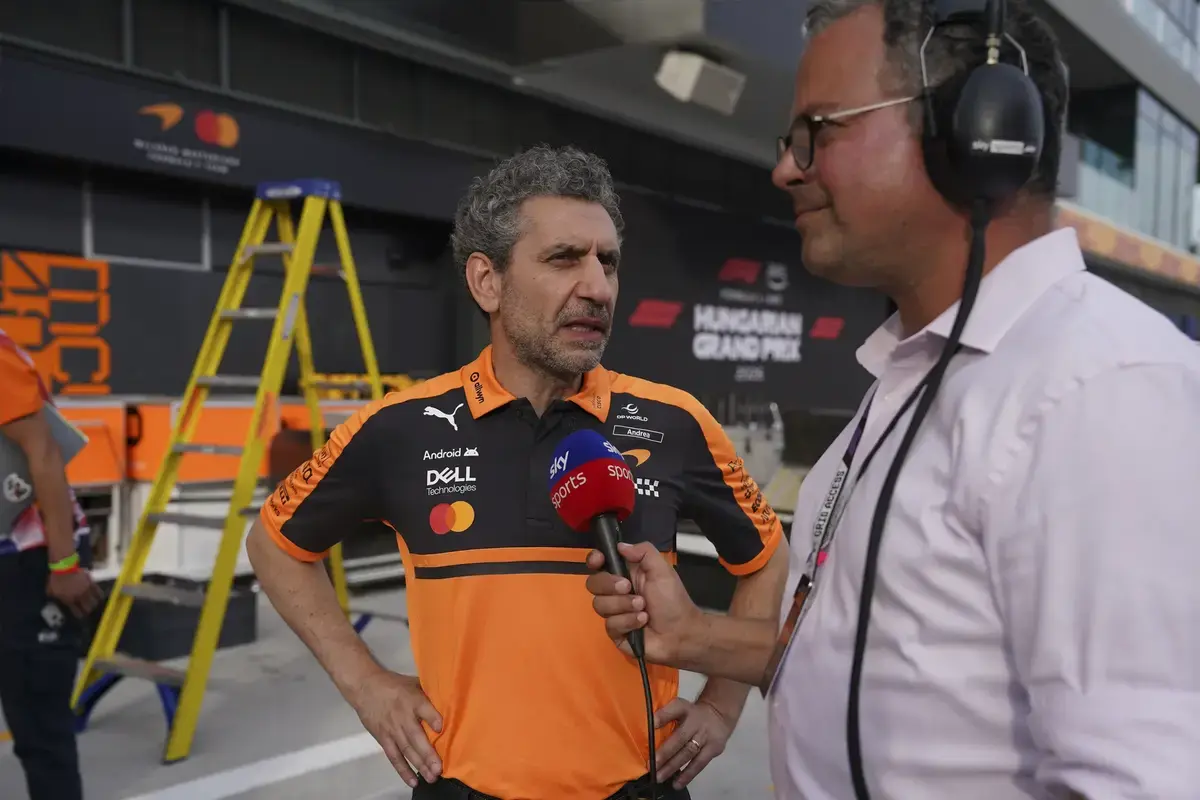

Andrea Stella does not do outrage often. But accuse his team of rigging a court verdict through a compromised judge, and you get a reaction. McLaren’s team principal has hit back at Flavio Briatore’s claims that the International Court of Appeal panel was biased in McLaren’s favour during the Monaco Grand Prix penalty saga, calling the allegations insulting and warning that whoever made them will have to answer for them.
Briatore’s Accusation, in Brief
The background here is simple enough. Briatore, Alpine’s executive advisor, used a press conference at Monza to claim that one of the four judges on the panel, Filippo Marchino, had undisclosed links to McLaren through the McLaren Special Operations division and was, in his words, nasty during proceedings. Alpine had already lost the appeal that reinstated Pierre Gasly’s time penalties and stripped him of his Monaco podium for a second time.
Stella Draws a Line
Stella was not interested in relitigating the substance of Briatore’s claim. He went straight for the character of the accusation itself, telling media including RacingNews365 that the direction of the conversation was damaging to a team he believes has earned a different kind of scrutiny.
“I find that this conference, going in this direction, is quite insulting for McLaren.” – Andrea Stella
He did not stop there. Stella made clear that anyone throwing around claims of judicial bias in public needs to be ready to stand behind them.
“For the reputation of a team that deserves a lot of respect, and if anybody makes those kind of allegations, which seem quite serious, they are going to have to take the responsibility for what they are saying in a public forum.” – Andrea Stella
It’s a pointed response, and a fair one on its own terms. Briatore did not present evidence of wrongdoing by the judge in question so much as a photograph and a charity donation, then invited the room to draw its own conclusions. Stella’s counter is essentially: fine, but say that with your chest, because reputational damage cuts both ways.
Defending the Process, Not Just the Team
Stella also pushed back on the idea that the entire hearing process deserves the scepticism now being aimed at it. He argued the International Court of Appeal operated properly and that questioning its integrity in this way sets an unhelpful precedent.
“The hearing, the whole International Court of Appeal, was conducted to the highest standards, and we should not question this phase like it’s been done.” – Andrea Stella
That’s a convenient position for McLaren to hold, given the verdict went their way. But it’s also not an unreasonable one. If governing bodies can be publicly accused of bias every time a decision doesn’t land in a team’s favour, with no real evidence beyond an old photo, the whole appeals system starts to look less like sporting justice and more like a popularity contest decided in press conferences.
Why McLaren Actually Wanted This Ruling
Stella was keen to frame the appeal as being about more than the two extra points McLaren picked up when Oscar Piastri moved up to fourth. According to Stella, the real motivation was clarity around Article 1.1.1 of the International Sporting Code, the foundational rule that everything else in the regulations hangs off.
“We had concerns which were beyond the fact that we might have lost two championship points. We were concerned about the application of sporting quality and fairness, and this is important.” – Andrea Stella
He also pointed out that McLaren and Red Bull were not the only ones with a stake in the room, insisting the wider grid needed the ruling as much as the two protesting teams did.
“This is not only important for McLaren. In fact, not only Red Bull, but all teams were present in the hearing because this was a very important moment, in terms of clarification as to how we apply the rules, as to how we apply consistency.” – Andrea Stella
Whether every team on the grid genuinely cares about pit lane timing loop methodology as a matter of sporting principle, or just cares about the precedent it sets for their own future protests, is a fair question. Stella’s version paints McLaren as guardians of the rulebook. The more cynical read is that a points swing in your favour is always easier to dress up as a matter of principle.
A Saga That Refuses to Die
Either way, this ruling has now dragged on for months since the original Monaco weekend, through multiple reversals, and into a Monza paddock press conference where Briatore was still fuming about it. Stella’s insistence that the process was clean does not settle the argument, it just moves it into a new phase, one where Alpine’s next move, legal or otherwise, will decide whether this becomes a genuine credibility problem for the FIA’s appeal system or simply fades as another paddock spat that outlived its news value weeks ago.