
Honda has done something refreshingly rare in Formula 1: told everyone the truth before the weekend rather than after it. Its message ahead of the Italian Grand Prix is simple. Do not expect much. Monza will hurt.
That is not spin from a struggling manufacturer trying to manage expectations for the sake of it. It is a straightforward acknowledgement that a circuit built almost entirely around straight-line speed is the worst possible stage for a power unit that everyone, Honda included, admits is still short on outright grunt.
A Track That Punishes Weakness
Monza does not care about your chassis philosophy or your driveability gains. It cares about horsepower, and it does not forgive those who are short of it. With its long straights and only 11 corners, it carries one of the highest full-throttle ratios of the season, meaning the margin for hiding a weak engine simply does not exist.
“Monza is a unique circuit with one of the highest full-throttle ratios on the 2026 calendar, with its long straights and only 11 corners. At this track, how you distribute the limited energy across these sections becomes crucial, and this is especially amplified in qualifying.” – Shintaro Orihara
Orihara, Honda’s chief F1 engineer, is not sugar-coating anything here. Every joule of energy deployment becomes a public examination of where a power unit stands, and qualifying in particular will strip away any illusions Honda might have had about closing the gap overnight.
The Spec 2 Reality Check
Honda introduced its upgraded power unit at the Dutch Grand Prix, ending a wait that had stretched through a difficult start to the season. It arrived not long after Aston Martin rolled out a heavily revised car of its own, and together the pairing has hauled itself off the bottom of the constructors’ table and into a position where regular points are at least plausible rather than fantastical.
But Orihara is not pretending the spec 2 unit has closed the gap to the front.
“The lap times at Monza are highly sensitive to power. With the introduction of our spec 2 engine in Zandvoort, we have made a step forward in terms of performance, but we need to be realistic about the upcoming weekend as we know that we are still behind our competitors in terms of overall power.” – Shintaro Orihara
That is about as candid as engine manufacturers get in public. There is no attempt to dress up a step forward as a leap, and no suggestion that Monza will be anything other than uncomfortable viewing for the green cars.
Driveability Over Results
Rather than chase a result that Honda itself suggests is unlikely, the focus at Monza is shifting towards something less glamorous but arguably more useful long-term: making the engine easier to drive and more consistent under load.
“Our key focus at the Italian Grand Prix is to improve driveability. Since the Dutch Grand Prix, we have been working a lot on the dyno at HRC Sakura to improve this and, specifically, to achieve stable and consistent combustion control.” – Shintaro Orihara
Stable combustion control might not sell a single ticket, but it is the kind of unglamorous groundwork that eventually turns into lap time, once the raw power catches up. Honda clearly wants Monza to be treated as a data-gathering exercise rather than a scoreboard event.
“At Monza, we will be confirming the effect of that work and carrying out further tuning, which will give us more competitiveness in the coming races.” – Shintaro Orihara
Note the phrasing: competitiveness in the coming races, not this one. Monza has effectively been written off as a showcase and repurposed as a test bench with grandstands attached.
Alonso’s Ninth and the Limits of Progress
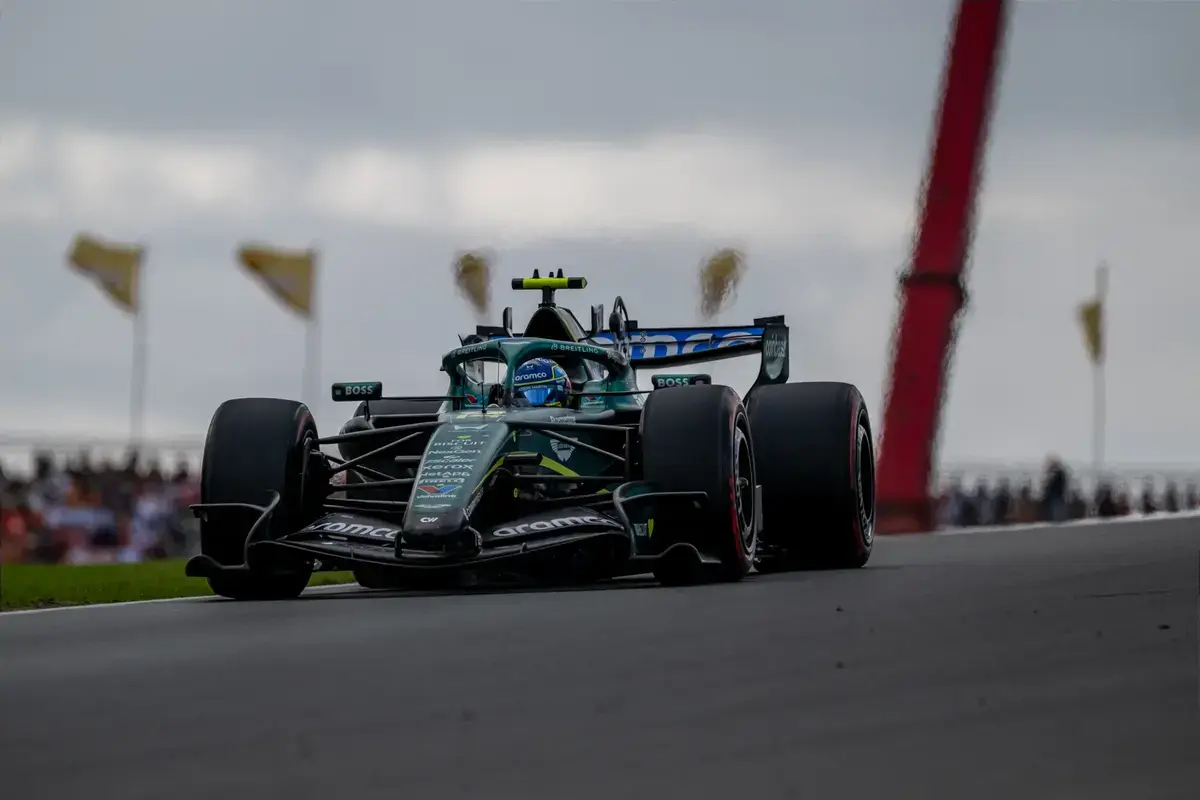
Aston Martin’s last outing offered a glimpse of what the new package can do when the circuit cooperates. Fernando Alonso brought the car home in ninth at the Dutch Grand Prix, a result that will have felt like a minor triumph given where Aston Martin started the year. Whether that translates into anything at Monza is another matter entirely, given the track’s brutal appetite for raw power over cornering finesse.
It is worth remembering just how far Aston Martin has had to climb. The team currently sits on 3 points in the constructors’ championship, and Alonso himself has scored only 2 points across recent races, sitting 239 points adrift of the championship leader. Nobody at Aston Martin is pretending this is a title fight. It is a fight for relevance, one race weekend at a time.
Realism as a Strategy
There is something almost admirable about a manufacturer publicly conceding it is beaten before a single lap has been driven this weekend. It denies the paddock the usual pantomime of false optimism followed by post-race excuses. Honda has simply said: we know where we stand, and Monza will confirm it.
Whether that honesty translates into faster engines by the time the calendar reaches tracks that suit Aston Martin’s chassis better remains to be seen. For now, Monza looks set to be less about chasing points and more about quietly banking data while the power deficit gets sorted out on a dyno in Sakura rather than on track. Practice for the Italian Grand Prix gets underway at 10:30 UTC on Friday, check the calendar for your local time, and Aston Martin fans would do well to lower their expectations before then, not after.