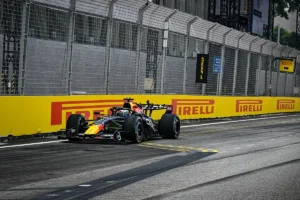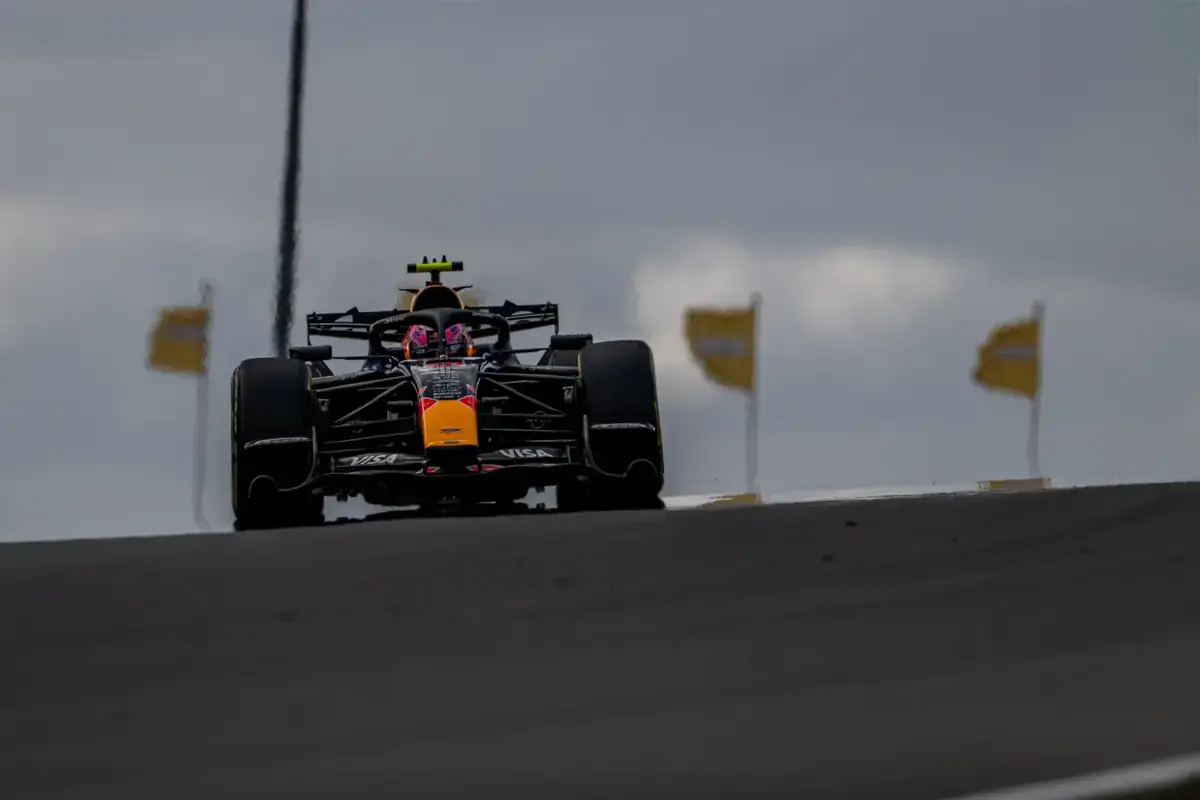

Everyone wanted to talk about redemption, pressure and career-saving lap times. Liam Lawson wanted to talk about the seat. Not the metaphorical one Red Bull ripped from under him in 2025, but the literal one he had to fold himself into at Zandvoort, in a car that wasn’t built with him in mind.
After Isack Hadjar was ruled out of the Dutch Grand Prix with a wrist injury, Lawson was pulled from Racing Bulls and dropped back into the Red Bull cockpit he’d been unceremoniously evicted from less than a year earlier. He qualified eighth, just 0.115 seconds behind Max Verstappen, and finished seventh in the race, the best result of anyone not driving for McLaren, Mercedes or Ferrari on a weekend where the RB22 was, by most measures, the fourth-fastest car on the grid. By any sensible reading, that’s a job well done under horrible circumstances.
So naturally, when asked to reflect on the weekend, Lawson didn’t reach for the obvious narrative about proving people wrong. He talked about not being able to get comfortable in someone else’s office chair.
Not the Aero, the Ergonomics
Lawson was candid that the aerodynamic gulf between the RB22 and his usual VCARB03 was significant, hardly a shock given the two cars are built to entirely different philosophies and sit in different parts of the grid. But according to Lawson, that wasn’t actually the hard part. Drivers are professionals; they adapt to a car’s balance and behaviour reasonably quickly, or they don’t last long in this sport. What you can’t just switch off in a weekend, he explained, is years of fine-tuning a cockpit to fit your body.
“There are always things; I mean the car is completely different aerodynamically. And there are always things, personally as drivers, we try and make our cars as comfortable for us, and there are some things that when you switch a car for a weekend, you just can’t automatically change those things.” – Liam Lawson
He went further, pointing to specifics he wasn’t willing to share, which is its own small tell. Teams don’t like admitting exactly how bespoke these cockpits are, because it undercuts the idea that any of their contracted drivers could jump into any of their cars at a moment’s notice. Lawson’s comments, made to media including RacingNews365, suggest that isn’t quite true.
“There is stuff in this car that isn’t the same as [the Racing Bulls] in terms of driver comfort that I’ve had to get my head around. Without being too specific, that’s the stuff that has probably been the most challenging.” – Liam Lawson
The Bit Nobody Talks About
It’s a small admission, but it says something bigger about how F1 teams manage their driver pool. Red Bull loves to present its junior and reserve drivers as interchangeable parts, plug one in, pull one out, next race please. Lawson’s comments quietly puncture that. A seat isn’t just a seat. Pedal box position, seating angle, steering wheel reach, all of it gets moulded around a driver over months, sometimes years. Asking someone to be instantly at home in a car set up for a different body and a different set of habits, then judging their lap times against a driver who’s had all season to get comfortable, is not exactly a fair fight. That Lawson still qualified within a tenth of Verstappen makes the whole exercise look even more impressive, not less.
The Career Stakes Were Real, Even If Lawson Won’t Say So
Lawson’s own framing was measured and technical, but the broader context around his return was anything but low-stakes. Broadcaster Will Buxton, speaking on the Up To Speed podcast, was blunt about what a poor showing would have meant, as noted by Motorsport.com.
“I don’t think you can underestimate or undervalue the pressure that would have been on him, that he would have been putting on himself to step back into a team where he had turned up and tried everything but had been fired after two races. If he turned up there and qualified at the back of the grid and was nowhere all weekend, that’s pretty much career done.” – Will Buxton
That’s not hyperbole dressed up as analysis. Lawson was dropped by Red Bull after just two race weekends in 2025, one of the more brutal driver decisions the team has made in recent memory, and a below-par return at Zandvoort would have all but confirmed the harshest reading of that call. Instead, he out-qualified expectations, finished ahead of every driver outside the sport’s current big three teams, and did it in a car that, by his own account, didn’t even fit him properly.
What It Actually Changes
None of this rewrites Lawson’s championship prospects. He sits well down the order on 49 points, a distant figure from the sharp end of the grid, and Zandvoort was a one-off appearance rather than a seat swap. But it does complicate the story Red Bull likes to tell about its driver pipeline being ruthlessly meritocratic and endlessly flexible. If the car itself works against a returning driver in ways the team won’t fully detail, then judging Lawson’s Milton Keynes stint by the same yardstick as Verstappen’s feels a little rich.
Hadjar’s recovery timeline remains the deciding factor for whether Lawson gets another go in that seat before the season is out, with the paddock reconvening at Monza next week for the Italian Grand Prix. Whatever happens there, Zandvoort already did its job. It reminded Red Bull, and everyone else, that Lawson was never the problem the team made him out to be. The seat, quite literally, was.