
Carlos Sainz has found a tidy explanation for why half the grid’s pecking order has been turned on its head this year: it’s not the drivers, it’s the rules. Convenient, isn’t it?
Formula 1’s biggest regulation shake-up in years landed last winter, ripping up the ground-effect era and replacing it with active aero and a power unit split evenly between combustion and electrical power. New chassis philosophy, new engine management headaches, and suddenly team-mates who used to be evenly matched are miles apart, or vice versa. Sainz reckons that’s no coincidence.
The Theory: Blame the Regs, Not the Drivers
Speaking in an interview with Autosport, Sainz pointed to the widening and narrowing gaps between team-mates as proof that a car’s fundamental concept dictates who looks like a genius and who looks lost.
“Let’s start with one thing: it’s been impressive to see how much the performance balance between team-mates has changed. Not only between Antonelli and Russell, but also between Hamilton and Leclerc, and with Verstappen not being as dominant over Hadjar. I think it’s a lesson for everyone. We’ve had confirmation that when the fundamental concept of a car changes, the competitive picture can change as well.” – Carlos Sainz
It’s a neat theory, and it isn’t baseless. Kimi Antonelli leads the championship on 242 points while George Russell sits on 183, a gap that would have looked absurd a year ago. Lewis Hamilton has pulled 28 points clear of Charles Leclerc, and Max Verstappen no longer strolls past Isack Hadjar the way he once did against previous team-mates. Something has clearly shifted. Whether it’s purely the rulebook doing the shifting is a different question.
Sainz’s Own Case Study
Sainz has personal history here, and he’s not shy about using himself as Exhibit A. He insists the ground-effect regulations from 2022 onwards never suited his natural driving style, forcing him to adapt for years rather than simply extract pace.
“It happened when the ground-effect regulations came in. From 2022 onwards, for four years, I was never able to drive in my natural style. I adapted and still managed to achieve some good results, but I remain convinced that the Carlos who drove during the ground-effect era wasn’t the same Carlos who drove the 2021, 2020 or 2019 cars.” – Carlos Sainz
He’s careful to add he wasn’t slow, just working harder than he’d like to admit. Which is a fairly generous way of describing four years of fighting a car that apparently never wanted to cooperate. Now, with this year’s overhaul, he says the joy has returned.
It’s a theory that flatters everyone slightly. Drivers who’ve slipped down the order get to say the car changed underneath them, not that a younger rival simply out-drove them. Drivers who’ve surged get to enjoy the credit without anyone asking too many awkward questions about whether it’s really about the car or about them finally figuring out how to drive it. Handy, that.
The McLaren Years and the Myth of the Perfect Car
Sainz also leaned into the idea that certain cars simply click with certain drivers from the first lap, regardless of regulations. He recalled testing McLaren’s car for the first time at the end of 2018 and immediately feeling at home.
“At the final test of the season in Abu Dhabi, I got into their car for the first time and immediately felt that it drove in a way that was exactly in line with what I liked. I think during my two years with McLaren, you saw the best version of me, although I also really liked the Toro Rosso. I liked the Renault a little less, while I immediately liked the 2021 Ferrari and I always performed very well in that car.” – Carlos Sainz
He stopped short of claiming a team can engineer a car specifically to suit one driver, calling it instead a fortunate alignment when it happens. That’s probably the most honest line in the whole interview: sometimes it’s less science, more luck, and everyone dresses it up afterwards as insight.
Context: A Driver Fighting His Own Perfect Storm
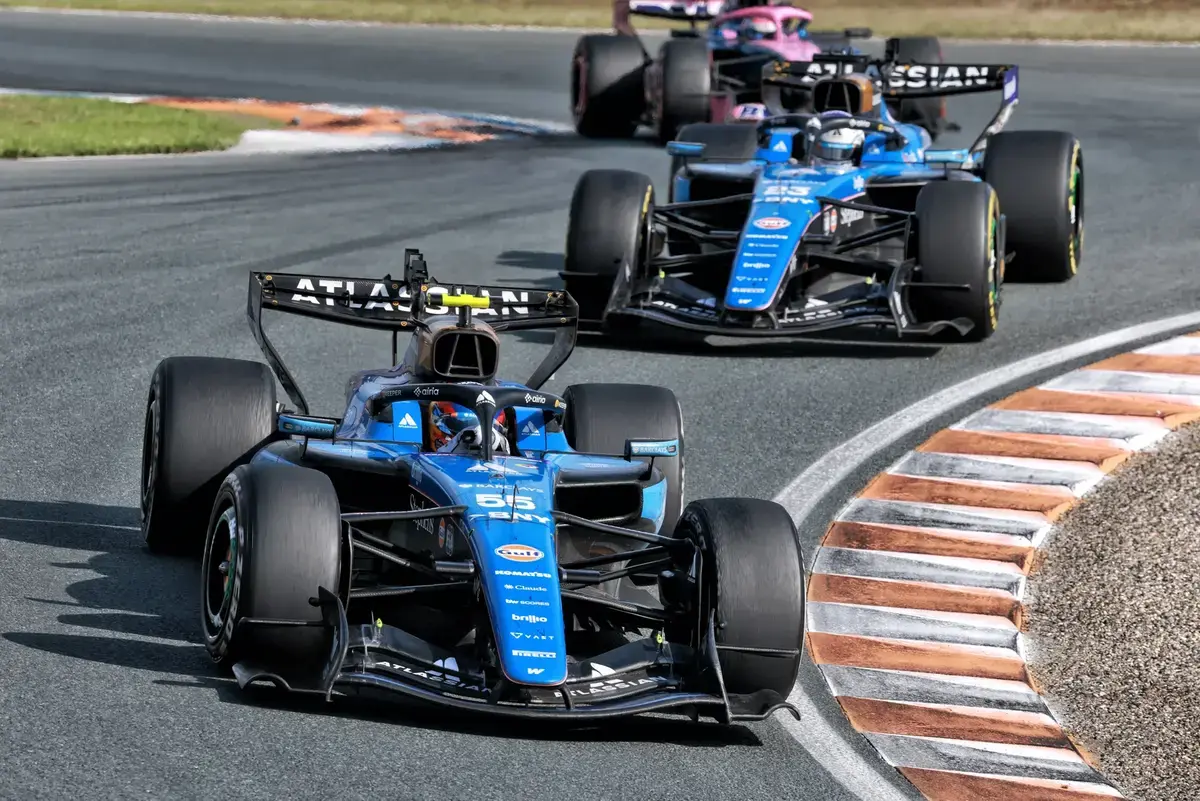
Sainz’s comments arrive against the backdrop of a Williams season he’s already described elsewhere as a “perfect storm” of problems, an overweight car, a late package, and a shortfall in downforce that undid the momentum built up in 2025. Williams has gone winless in points for six consecutive weekends since Monaco, and sits ninth in the constructors’ table on 11 points, some way adrift of the midfield pack it was mixing with last year.
Despite that, Sainz signed a new multi-year deal with the team rather than exploring a switch elsewhere, telling reporters during the Zandvoort weekend that walking away mid-crisis simply isn’t his style. He was in a playful mood when pressed on contract details more broadly too, deflecting questions about exit clauses with a smile and pointing out that Formula 1 contracts stay confidential precisely because it keeps journalists and fans guessing. Fair play to him for the honesty, even if it doubled as a polite way of saying nothing at all.
A Theory That Suits Everyone, Which Is Exactly the Problem
There’s truth in what Sainz is saying. New regulations genuinely do reshuffle who’s comfortable and who isn’t, and the data this year, from Verstappen’s reduced margin over Hadjar to the gulf between Antonelli and Russell, backs that up to a point. But it’s also the sort of explanation that lets every driver, Sainz included, avoid the harder conversation about whether they’ve simply been out-performed by a team-mate who adapted faster. Regulations shift the furniture, but somebody still has to walk through the room without tripping over it, and this year some drivers are managing that rather better than others.