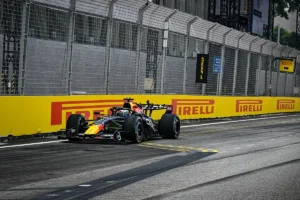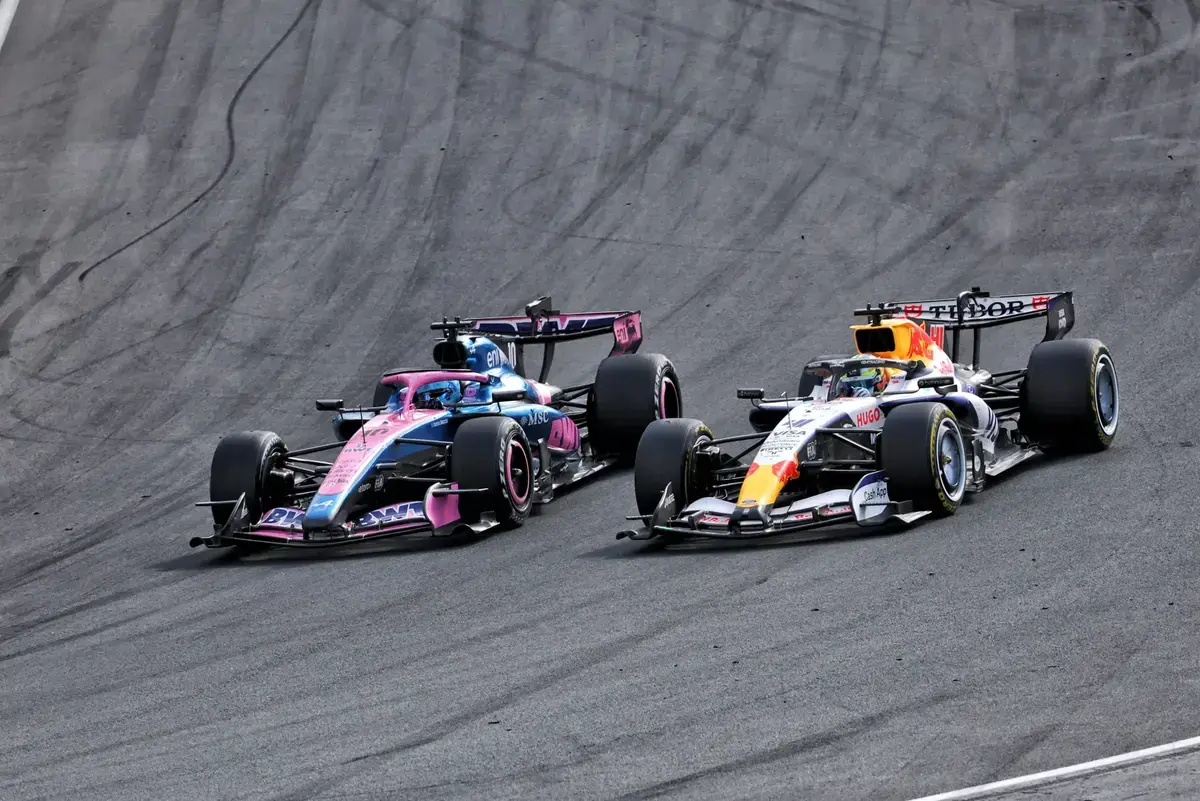

Arvid Lindblad did nothing wrong, except exist in the same postcode as Max Verstappen’s stricken Red Bull. For that, Formula 1’s stewards handed him a drive-through penalty that turned a likely points finish into another rookie learning experience nobody asked for.
The Racing Bulls driver has quietly put together one of the more impressive rookie seasons on the grid, sitting 11th in the championship with 23 points and top results of seventh in Monaco and at Silverstone. Zandvoort should have added another solid result to that pile. Instead it added a grievance.
Chaos, Then a Drive-Through
The trouble started on lap one, when Max Verstappen‘s race-ending crash triggered double-waved yellows and sent the entire field scrambling to avoid becoming part of the wreckage. In the confusion, cars were braking hard, swerving wide and generally trying not to die, which inevitably meant huge speed differentials through the corner. Lindblad, taking evasive action of his own, ended up passing Pierre Gasly heading into Turn 1. The stewards ruled it an overtake under yellow flags. Penalty issued, race compromised.
“We were in a really good position after the first lap,” Lindblad said, as reported by Crash.net. “I think the penalty’s a bit harsh. I think we can all agree it’s quite extreme.”
He didn’t dwell on it for long, at least not publicly. “But fine, it is what it is; there’s no point speculating about it now. It’s done,” he added. Which is the sort of restraint you’d expect from a driver who still had a race to finish, even if the stewards had already decided how that race would go.
The Argument for Leniency
Here’s the uncomfortable bit for the rulebook: nobody disputes that overtaking under double waved yellows is against the regulations. The regulation exists for good reason. But regulations written for orderly racing conditions don’t always translate cleanly to a lap one pile-up where half the grid is braking to avoid debris and the other half is trying to work out which way is safe.
Lindblad’s argument, essentially, is that he was doing exactly what drivers are told to do in these situations, getting himself out of danger, and got punished for the side effect of that manoeuvre rather than for any reckless intent. “It’s just a bit sad because I think that kind of ruined our race,” he said. “I’m just sad not to get any points, because I think I and the team, we deserved that. No doubt, without the penalty, we would have been P8.”
He wasn’t left arguing alone. F1TV pundit Alex Brundle backed the rookie’s reading of events, pointing out the practical difficulty of asking drivers to process multiple competing instructions mid-incident.
“I think it is harsh. The accepted way to go about it as a driver is if you’re effectively avoiding the crash, you avoid the crash and you do everything that you can to make sure that you don’t become part of the accident. It’s difficult to then add in extra things that the drivers have to be aware of during an incident to make sure that they don’t then pass a car secondarily to that.” – Alex Brundle
Brundle’s broader point deserves more attention than it will probably get from race control: context matters. A driver five car lengths from a crash, calmly picking his way past a slowing rival, is not the same as a driver who has just seen a Red Bull stuff itself into the barriers and is trying to avoid joining it. Treating both scenarios identically is administratively tidy and competitively unfair.
A Strong Season, One Bad Weekend
The frustrating part for Racing Bulls is that Lindblad actually raced well after the penalty. He clawed his way back through the field rather than sulking his way to the finish, which says plenty about a rookie who has spent the year quietly outperforming expectations. It just wasn’t enough to salvage points from a race where he’d genuinely earned some.
The Dutch Grand Prix itself will be remembered for Verstappen’s crash and its knock-on effects rather than for Lindblad’s misfortune, but Formula 1 has since confirmed it will review the chaotic start, which at least suggests the sport recognises the incident created problems beyond the obvious one. Whether that review produces any retrospective sympathy for Lindblad’s penalty is doubtful. Stewards’ decisions rarely get unwound after the fact, and Formula 1 has never been in the business of admitting it got a penalty wrong days after the chequered flag.
What it should prompt, though, is a harder look at how yellow-flag overtakes are judged in genuine chaos versus routine racing incidents. Lindblad’s rookie season has been built on consistency, not luck, and losing points to a penalty that even a respected pundit calls harsh is the kind of thing that quietly erodes trust in how the rules get applied. Racing Bulls will move on, and so will Lindblad. But somewhere in the FIA’s rulebook there ought to be room for the difference between overtaking to gain an advantage and overtaking to survive.