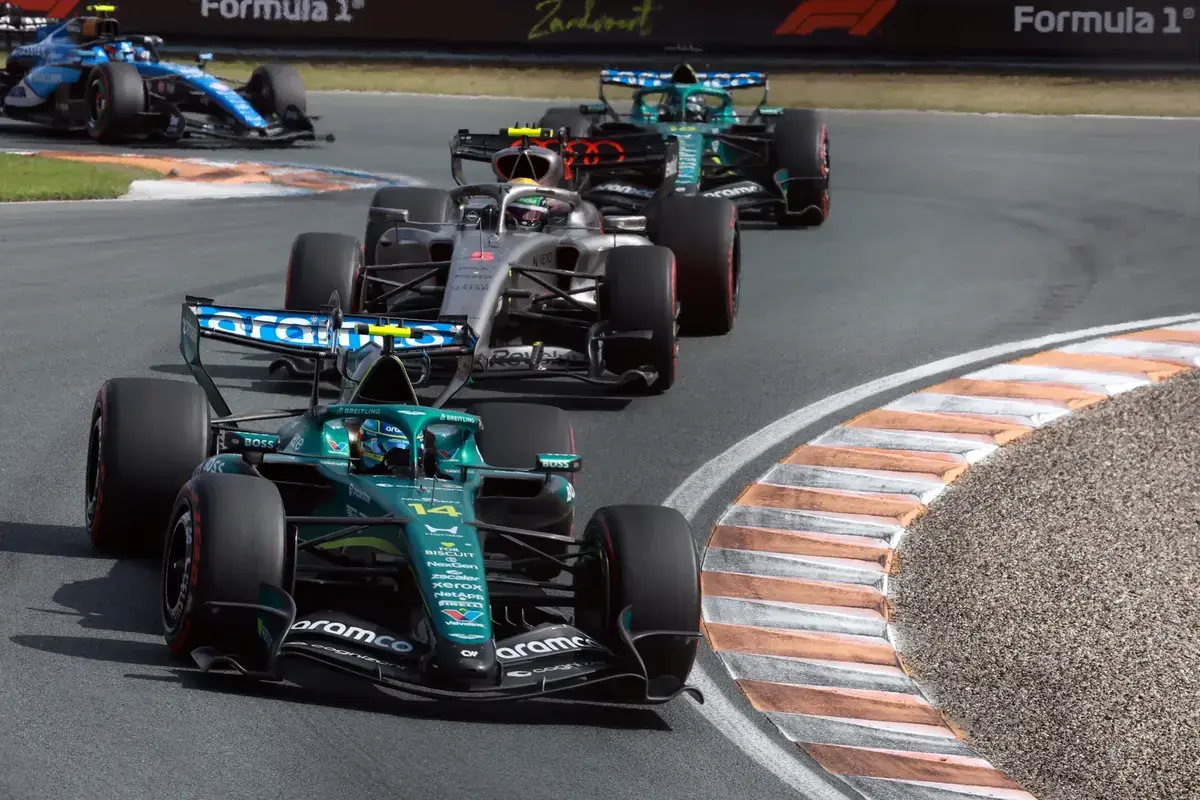

Fernando Alonso wants you to believe that whether Honda’s new engine is any good or not makes precisely zero difference to his future plans. Forgive the scepticism, but when a two-time world champion starts talking about correlation data and philosophical understanding instead of lap times, it usually means the actual numbers aren’t worth discussing.
Honda rolled out its first power unit upgrade of the season at the Dutch Grand Prix, a season in which both manufacturer and team have spent most of their time going backwards rather than forwards. Aston Martin, for its part, introduced a chassis upgrade in Hungary that was supposed to signal the start of a recovery. Neither update has done much to disguise a wretched campaign, and with Alonso still without a signed deal for 2027, the temptation to link his future to Honda’s competitiveness was always going to be irresistible for anyone watching from the outside.
Alonso Insists the Numbers Don’t Matter
Asked directly how much the new engine’s performance would weigh on his decision, Alonso was unambiguous, telling media including RacingNews365 that it simply isn’t a factor.
“Not important. I hope we see some benefit for sure in terms of power, drivability and the things that we were missing. But for me it’s more important, like in Budapest with the chassis side, to see that there is an understanding philosophy on what the needs are and a step forward.” – Fernando Alonso
That’s a carefully constructed answer, and a telling one. Alonso isn’t saying the engine is good. He’s saying he doesn’t need it to be good, just as long as everyone at Honda and Aston Martin can prove they understand what’s wrong. That’s the sort of thing you say when you’ve stopped expecting miracles and started managing your own patience instead.
Budapest as the Template
Alonso pointed back to the Hungarian weekend as the model for how he’s judging progress these days, not by results but by whether the sums on the simulator match what turns up on track.
“In Budapest, we knew that we would not compete for the top positions, but we wanted to check that the direction on the chassis side was the correct one and I think we did that. So, that’s something that is encouraging for the future that the correlation is good and what we expected was delivered.” – Fernando Alonso
There’s a certain grim honesty in that. Aston Martin isn’t pretending it can fight for podiums right now, and Alonso isn’t pretending otherwise either. What he’s actually assessing is whether the team’s engineering department can be trusted to deliver what it promises, which is a considerably lower bar than “can we win races” but an important one if you’re 45 years old and weighing up whether another year of this is worth it.
The Same Story, Different Component
Alonso applied the identical logic to the Honda engine upgrade, treating it as a data point rather than a scoreline.
“Now with the engine it’s the same thing. They made some changes to the engine so it would be nice to confirm that everything is working as expected and if it’s one tenth or one second it doesn’t matter really, the number. We are too far behind to really care about a number. We just want to see that what we expected is delivered.” – Fernando Alonso
“We are too far behind to really care about a number” is about as blunt an admission as you’ll get from a driver who’s still, on paper, deciding whether to stick around. Aston Martin sit tenth in the constructors’ championship with a solitary three points to their name this season, a return that makes Alonso’s diplomatic framing feel less like patience and more like damage control.
A Convenient Line to Take
It’s worth asking why Alonso is so keen to detach his contract talks from Honda’s on-track form. Partly it’s pragmatism: tying his future to a specific horsepower figure would be setting himself up to look foolish if the upgrade underdelivers, which given Honda’s season so far is not exactly a wild bet against. But it also lets him keep his options open without publicly torching the relationship with a manufacturer he’s stuck with for at least the immediate future.
The broader context here matters too. Aston Martin’s driver lineup and long-term project have become one of the more interesting subplots of a season in which half the grid’s contracts expire before next year. Alonso staying coy about Honda’s engine while staying coy about his own future isn’t a coincidence, it’s a negotiating position.
Reading Between the Lines
Strip away the diplomatic phrasing and what you’re left with is a driver managing expectations downward while keeping every door open. Alonso isn’t demanding Honda deliver a rocket ship, he’s demanding they prove they know what they’re doing, which is a much easier promise to keep and a much harder one to actually verify from the outside.
Whether that’s enough to convince him to sign on for another year remains to be seen. But if “we are too far behind to really care about a number” is the benchmark for success, Aston Martin fans might want to adjust their own expectations accordingly before the next race weekend arrives and the excuses start writing themselves all over again.